
Development Web portal for EU-funded digital whistleblowing project

Background
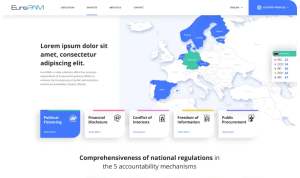
The DIGIWHIST project, funded by the EU, utilizes the EuroPAM database to enhance the confidence in governments and the efficiency of public expenditure across Europe. This objective is accomplished by providing civil society, investigative journalists, and civil servants with the data and resources they require to bolster transparency in public expenditure and hold public officials accountable in all EU and neighboring nations.
The Challenges
Prior to creating the project, we pinpointed the primary tasks that had to be executed:
- Create a plan for displaying various types of data in an easily accessible format.
- Carry out a thorough growth of all operative components of the venture.
- Design the UI/UX of the web portal for optimal user experience with the project.
- Create the layout of the web portal.
- The project's technical implementation, including the scripts for presenting data in an accessible way.
- Populating the venture with material.
The Process
The Promodex squad resolved to carry out the project in these steps:
- Develop a project plan and create a comprehensive specification.
- Analyze search queries to create the semantic core of the website.
- Construct a website organization based on the concept of the semantic core.
- Design the user interface and user experience of the project based on the analytics.
- Execute the design of a website.
- Execute the necessary work pool on the front and back end components.
- Verify the project by conducting load tests, evaluating usability, measuring performance, and assessing security.
- Populating the project with material.
Deliverables & Impacts
The Promodex staff were able to provide a ready-to-use solution within the space of 36 working days, from the customer's demand to the launch of the website, mobile application, and beyond.
- The website has attained the green zone on the PageSpeed Insights tool, a crucial factor for its SEO optimization.
- A unique javascript has been created to show graphs on the website's content pages.
- The website was overflowing with information, considering the immense amount of data that had to be displayed in a legible manner.


Audience
The project is intended for analysts, investment firms, consulting firms, analytical businesses, and any relevant associations.
Technologies
A group of 8 individuals were involved in the project's execution: a project manager, business analyst, marketer, UI/UX professional, front-end programmer, back-end programmer, content supervisor, and QA expert.
This project was implemented using the following technologies and frameworks/cms: PHP, Laravel, JavaScript, jQuery, WordPress, MySQL, HTML5, CSS3, and Bootstrap.
Opens correctly on desktop browsers:
- Chrome (63+);
- Firefox (58+);
- Opera (50+);
- Safari (10+);
- Edgе (12+).
Responsive version of the website:
- Full-width starts at 1200px;
- The tablet version starts at 768px wide;
- The mobile version starts at 320px wide.
It's free and takes 2 minutes. There are 1500+ digital agencies in the catalog that are ready to help in the implementation of your tasks. Choose and save up to 30% on time and budget!







Background
The DIGIWHIST project, funded by the EU, utilizes the EuroPAM database to enhance the confidence in governments and the efficiency of public expenditure across Europe. This objective is accomplished by providing civil society, investigative journalists, and civil servants with the data and resources they require to bolster transparency in public expenditure and hold public officials accountable in all EU and neighboring nations.
The Challenges
Prior to creating the project, we pinpointed the primary tasks that had to be executed:
- Create a plan for displaying various types of data in an easily accessible format.
- Carry out a thorough growth of all operative components of the venture.
- Design the UI/UX of the web portal for optimal user experience with the project.
- Create the layout of the web portal.
- The project's technical implementation, including the scripts for presenting data in an accessible way.
- Populating the venture with material.
The Process
The Promodex squad resolved to carry out the project in these steps:
- Develop a project plan and create a comprehensive specification.
- Analyze search queries to create the semantic core of the website.
- Construct a website organization based on the concept of the semantic core.
- Design the user interface and user experience of the project based on the analytics.
- Execute the design of a website.
- Execute the necessary work pool on the front and back end components.
- Verify the project by conducting load tests, evaluating usability, measuring performance, and assessing security.
- Populating the project with material.
Deliverables & Impacts
The Promodex staff were able to provide a ready-to-use solution within the space of 36 working days, from the customer's demand to the launch of the website, mobile application, and beyond.
- The website has attained the green zone on the PageSpeed Insights tool, a crucial factor for its SEO optimization.
- A unique javascript has been created to show graphs on the website's content pages.
- The website was overflowing with information, considering the immense amount of data that had to be displayed in a legible manner.
Audience
The project is intended for analysts, investment firms, consulting firms, analytical businesses, and any relevant associations.
Technologies
A group of 8 individuals were involved in the project's execution: a project manager, business analyst, marketer, UI/UX professional, front-end programmer, back-end programmer, content supervisor, and QA expert.
This project was implemented using the following technologies and frameworks/cms: PHP, Laravel, JavaScript, jQuery, WordPress, MySQL, HTML5, CSS3, and Bootstrap.
Opens correctly on desktop browsers:
- Chrome (63+);
- Firefox (58+);
- Opera (50+);
- Safari (10+);
- Edgе (12+).
Responsive version of the website:
- Full-width starts at 1200px;
- The tablet version starts at 768px wide;
- The mobile version starts at 320px wide.