
Scrum or Kanban: Which Agile Approach Drives Better Results to Boost Team Efficiency?
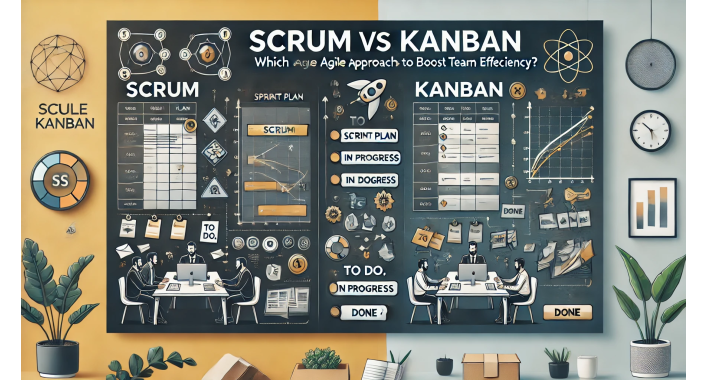
Efficient teamwork is critical to project success. Agile methodologies like Scrum and Kanban have revolutionized how teams deal with their assigned tasks, focusing on collaboration, flexibility, and productivity. Both Scrum and Kanban are proven Agile methods, but which one boosts team efficiency more effectively? Let’s examine and help you determine the right choice for your team.
While both Scrum and Kanban emphasize workflow optimization, their implementation strategies and focus areas differ. Scrum is more structured, offering a set of defined roles, responsibilities, and ceremonies that help guide teams through well-planned iterations or sprints. This approach can be particularly effective for teams needing clear guidelines and milestones to track progress. On the other hand, Kanban operates as a more fluid system that emphasizes continuous task management, allowing teams to respond to work in progress and adjust workflows on the fly.
As we explore these Agile methodologies further, we’ll look at how each approach can drive team efficiency, highlight their benefits, and offer insights into which one might be the best fit for your team’s workflow.
Understanding Agile: An Ultimate Methodology
Agile is a methodology that prioritizes adaptability, collaboration, and delivering incremental value to ensure customer satisfaction. Instead of rigid, long-term planning, Agile frameworks like Scrum and Kanban allow teams to work iteratively, adjusting strategies as they progress.
While Scrum emphasizes structured cycles (called sprints) and specific roles, Kanban emphasizes continuous workflow with minimal structure. Both are powerful, but they differ in approach and are suitable for different scenarios.
What is Scrum and Kanban
Scrum is an Agile framework built around iteration and collaboration. It divides work into fixed time periods (called sprints) and relies on daily team meetings and reviews to maintain progress.
There is top key features of Scrum like:
- Structured Time Intervals (Sprints) that typically lasts 1-4 weeks during which teams focus on completing specific tasks.
- Scrum introduces specific roles like the Product Owner, Scrum Master, and Development Team members.
- Teams assess progress during sprint reviews to identify challenges and opportunities.
Scrum is highly effective for projects with defined goals and clear deliverables but can be challenging in dynamic situations with frequent changes.
Kanban offers a more flexible Agile approach focusing on continuous delivery instead of structured sprints. It uses visual tools like Kanban boards to monitor workflows and ensure team members can focus on one task at a time. Here is some well known key features of Kanban:
- If we talk about workflow management, Kanban boards display tasks visually to make bottlenecks and progress clear.
- Teams can’t juggle too many tasks simultaneously, improving focus and reducing delays.
- Unlike Scrum's set sprints, Kanban allows tasks to be completed at their own pace for Continuous Delivery
Kanban is ideal for teams handling changing priorities or dealing with a constant flow of tasks.
Which Method Increases Team Efficiency More Better?
Scrum's Impact on Efficiency
Scrum boosts team efficiency by creating a structured environment with daily meetings, collaboration, and defined goals. This regular check-in system helps teams stay on track and identify blockers quickly. These are the benefits of Scrum that impact on efficiency:
- Improved focus with defined timelines and clear goals.
- Regular collaboration and accountability through daily stand-ups and reviews.
- Predictable delivery schedules by assessing progress every sprint.
Scrum is ideal for projects that involve innovation or when deadlines are essential.
Kanban's Impact on Efficiency
Kanban increases team efficiency by reducing task overload. By visualizing tasks and capping the number of active items (WIP limits), teams focus on completing one thing at a time rather than juggling multiple responsibilities. These are the advantages of using Kanban:
- Tasks can be adjusted as priorities change.
- Reduces multitasking by focusing on a limited number of tasks at any given time.
- Allows teams to optimize work without strict deadlines.
Kanban works well for support teams, operations teams, or projects with tasks that are less structured.




It's free and takes 2 minutes. There are 1500+ digital agencies in the catalog that are ready to help in the implementation of your tasks. Choose and save up to 30% on time and budget!