
What are the design elements on a website?
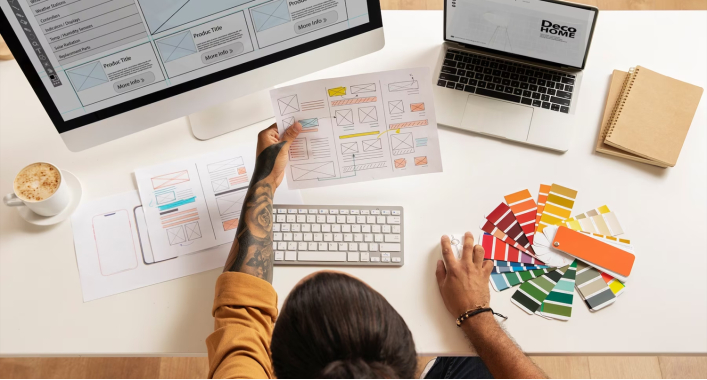
Creating a successful web design is not only an aesthetic decision but also a strategic necessity. In this article, we're going to look at what design elements are on a website so that you can raise the level of your web project. Understand what design elements are used on a website to create an attractive and effective web resource. In this article, we'll look at the key aspects, from fonts to navigation, to ensure the best user experience.
Visual elements
Colors: The color scheme of the website should be pleasing to the eye and match the theme of the site.
Typography: The font on the site should be easy to read and match the style of the site.
Images: The images on the site should be of high quality and relevant to the theme of the site.
Graphics: Graphic elements on the site can be used to improve the visual appeal of the site.
Layout: Website layout is the arrangement of elements on the page.
Animation: Animations can be used to improve the visual appeal of a website and attract users' attention.
Functional elements
Interactive elements: Interactive elements on a website can be used to improve the user experience.
Brand: The website design should be consistent with your company's brand.
Accessibility: The website should be accessible to all users, including people with disabilities.
Responsiveness: The website should be adapted for different devices, such as smartphones and tablets.
Other elements
Navigation: The website navigation should be simple and clear for users.
Content: The content on the website should be of high quality, useful and interesting for users.
SEO: The site should be optimized for search engines.
It is important to remember that website design is not only about visual appeal. It is also about making the site convenient, informative, and accessible to users.
Fonts and text
Choose a readable font. For a successful design, choose fonts such as Arial or Open Sans to ensure optimal readability.
Text size and placement. Balance the size of text for different devices to ensure readability and determine its optimal placement on the page.
Color palette
Brand consistency. Use colors that reflect the brand, creating consistency and recognizability.
Color psychology. Understanding the impact of colors allows you to create the right mood and emotions for your visitors.
Layout and navigation
Optimize the arrangement of elements. Create a logical and convenient layout so that users can easily find the information they need.
Intuitive navigation. Provide simple and clear navigation using menus and tooltips.
Graphics and images
Relevance to the content. Graphics should reflect the content of the site, enhancing its visual appeal.
Support for understanding the content. Images and graphics should help to understand the content by creating illustrations and graphs.



It's free and takes 2 minutes. There are 1500+ digital agencies in the catalog that are ready to help in the implementation of your tasks. Choose and save up to 30% on time and budget!