
Creating a SaaS IP telephony service from scratch:VoIP Service
ABOUT THE CLIENT
We were approached by one of our previous clients, a large hosting provider. The client had a very ambitious and promising idea: to launch a unique cloud-based VoIP service that would surpass all online telephony available on the market. We took on this B2B solution, even though this niche was new to us.
SERVICE USED
The client asked us to create a VoIP platform with a microservice architecture that would include several products for providing services on the SaaS model.

TECHNOLOGY USED
To implement web platform development for a brand-new VoIP service, we used the next tools and technologies:
- ReactJS framework
WORK APPROACH
The workflow was carried out according to the principles of Scrum with an iterative approach: in this way, we first focused on the development of key functionality, and then gradually improved it.
Meetings and phone calls with experts from the client took place at least weekly, and if necessary, daily. The business owner personally took part in the discussion of the results of the sprints and provided us with all the necessary feedback. In addition, we ensured the client with access to the task tracking of the development team.

CHALLENGE
At the time of the client's request, we did not have sufficient expertise in the field of VoIP, so we had to hire three VoIP engineers who were engaged in infrastructure development: setting up servers, deploying digital PBXs, and terminating trunks.
Also, although the client team was technically well-versed, in many ways their ideas about development were too primitive. In particular, they were convinced that creating the system they needed would be easy and fast. We had to defend the opposite point of view and insist on designing an advanced architecture that would provide the system with reliability and a long lifecycle. As practice has shown, this has benefited the project.
Moreover, as new features were developed, the client analyzed the business logic and added more and more new aspects to the task pool. As a result, since the start of work, the project has been greatly transformed and has significantly moved away from the original concept of the VoIP SaaS service.

SOLUTION
During the development process, we managed to create an intuitive and easy-to-integrate solution consisting of three main parts:
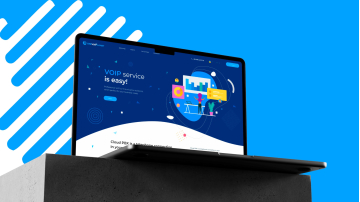
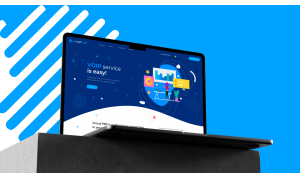
- web platform, a website with dynamic infographics that presents the service, sells VoIP features, and provides access to a personal account
- personal account, where users can quickly and easily (in comparison with competitive VoIP phone systems for business) replenish their account through a built-in billing tool, select a virtual number, choose additional services such as transfer, forwarding, and intercepting calls, as well as fine-tune their telephony
- a digital IP phone accessible directly from the browser, equipped with a dial pad, contact log, caller list, call recording functionality, etc.

RESULTS
Although we did not have relevant experience in the field of IP telephony, the VoIP development was successful. After 10 months of our work, the project was launched and fully met the client's expectations. Now, the client’s plans include expanding the geography of the service, as well as adding SMS messaging functions and ready-made modules for integrating telephony into popular CRM systems.
It's free and takes 2 minutes. There are 1500+ digital agencies in the catalog that are ready to help in the implementation of your tasks. Choose and save up to 30% on time and budget!


ABOUT THE CLIENT
We were approached by one of our previous clients, a large hosting provider. The client had a very ambitious and promising idea: to launch a unique cloud-based VoIP service that would surpass all online telephony available on the market. We took on this B2B solution, even though this niche was new to us.
SERVICE USED
The client asked us to create a VoIP platform with a microservice architecture that would include several products for providing services on the SaaS model.
TECHNOLOGY USED
To implement web platform development for a brand-new VoIP service, we used the next tools and technologies:
- ReactJS framework
WORK APPROACH
The workflow was carried out according to the principles of Scrum with an iterative approach: in this way, we first focused on the development of key functionality, and then gradually improved it.
Meetings and phone calls with experts from the client took place at least weekly, and if necessary, daily. The business owner personally took part in the discussion of the results of the sprints and provided us with all the necessary feedback. In addition, we ensured the client with access to the task tracking of the development team.
CHALLENGE
At the time of the client's request, we did not have sufficient expertise in the field of VoIP, so we had to hire three VoIP engineers who were engaged in infrastructure development: setting up servers, deploying digital PBXs, and terminating trunks.
Also, although the client team was technically well-versed, in many ways their ideas about development were too primitive. In particular, they were convinced that creating the system they needed would be easy and fast. We had to defend the opposite point of view and insist on designing an advanced architecture that would provide the system with reliability and a long lifecycle. As practice has shown, this has benefited the project.
Moreover, as new features were developed, the client analyzed the business logic and added more and more new aspects to the task pool. As a result, since the start of work, the project has been greatly transformed and has significantly moved away from the original concept of the VoIP SaaS service.
SOLUTION
During the development process, we managed to create an intuitive and easy-to-integrate solution consisting of three main parts:
- web platform, a website with dynamic infographics that presents the service, sells VoIP features, and provides access to a personal account
- personal account, where users can quickly and easily (in comparison with competitive VoIP phone systems for business) replenish their account through a built-in billing tool, select a virtual number, choose additional services such as transfer, forwarding, and intercepting calls, as well as fine-tune their telephony
- a digital IP phone accessible directly from the browser, equipped with a dial pad, contact log, caller list, call recording functionality, etc.
RESULTS
Although we did not have relevant experience in the field of IP telephony, the VoIP development was successful. After 10 months of our work, the project was launched and fully met the client's expectations. Now, the client’s plans include expanding the geography of the service, as well as adding SMS messaging functions and ready-made modules for integrating telephony into popular CRM systems.