
Darkstore - next-generation grocery retail
A few words about darkstores
It is commonplace for us to frequent shopping malls and grocery stores, as it is woven into our consumer-oriented lifestyle. Yet, going to the grocery store isn't always a pleasant family outing between gorgeous aisles of items. Shopping can be tiring and disheartening: queues, a mad dash to the checkouts with carts, and grumpy cashiers. From the viewpoint of retailers, traditional supermarkets have to be improved as well: too much funds are spent on renting space, a large staff and other expenses that come with retailing.
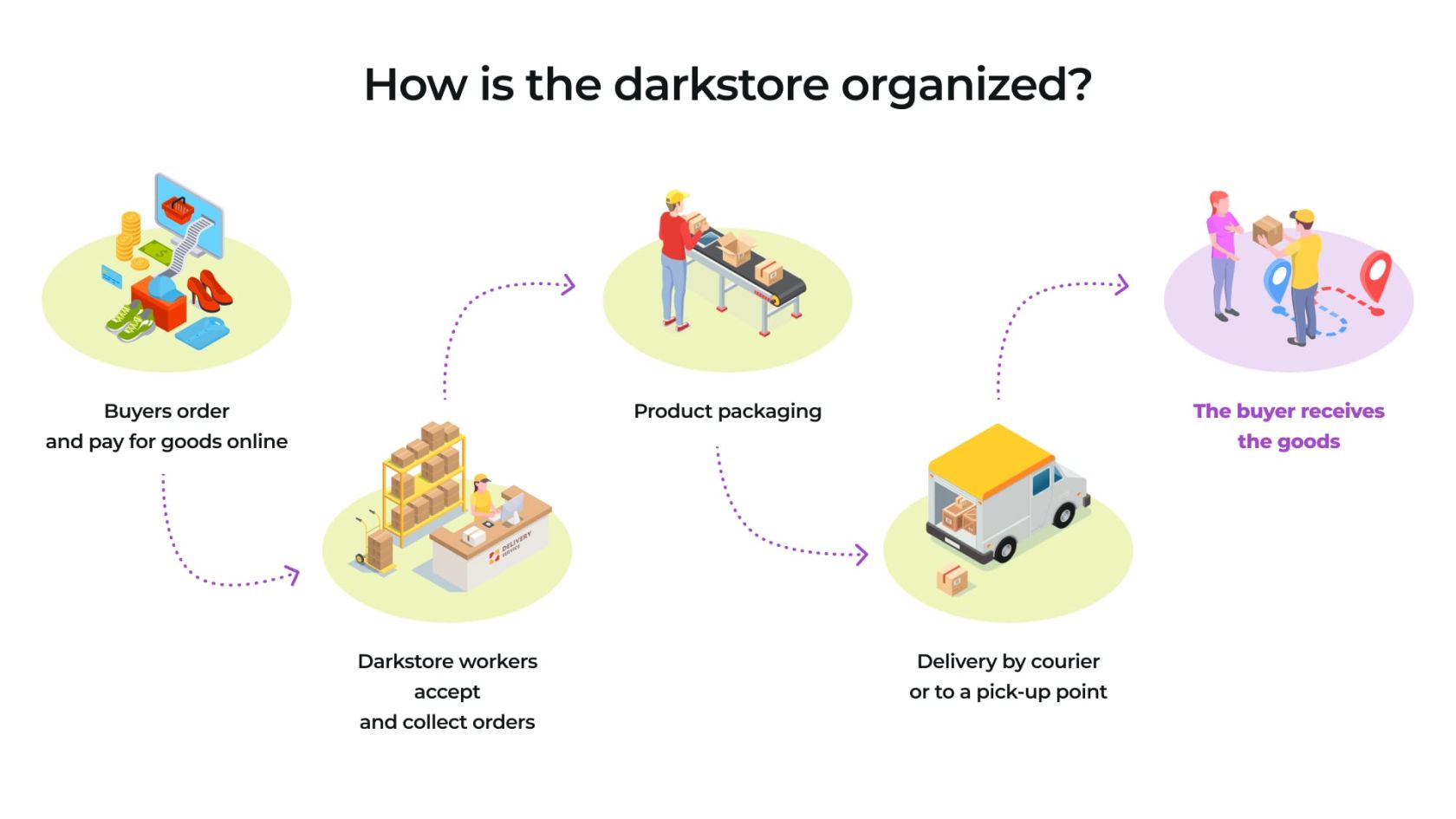
Businesses began searching for alternative means of retail and were successful in finding them. DarkStore was one of the most ingenious concepts, being a shop without a physical premises which depends on digital purchases and messenger delivery. Essentially, it is a combination of a normal e-commerce site and a food delivery courier like Amazon. Customers simply place their order on the app or website and the courier will deliver it to their front door in a short 15-20 minute timespan.
It is believed that the darkstore format was first conceived by British retailer Tesco in 2009, however the concept was too advanced for its time, and the market for such stores was limited. Recently, the format has seen a revival - the widespread use of smartphones and the pandemic have made it more pertinent than ever. As a result, similar businesses are flourishing in the UK (Jiffy), Germany (Gorillas) and other nations globally.
How we started creating adarkstore
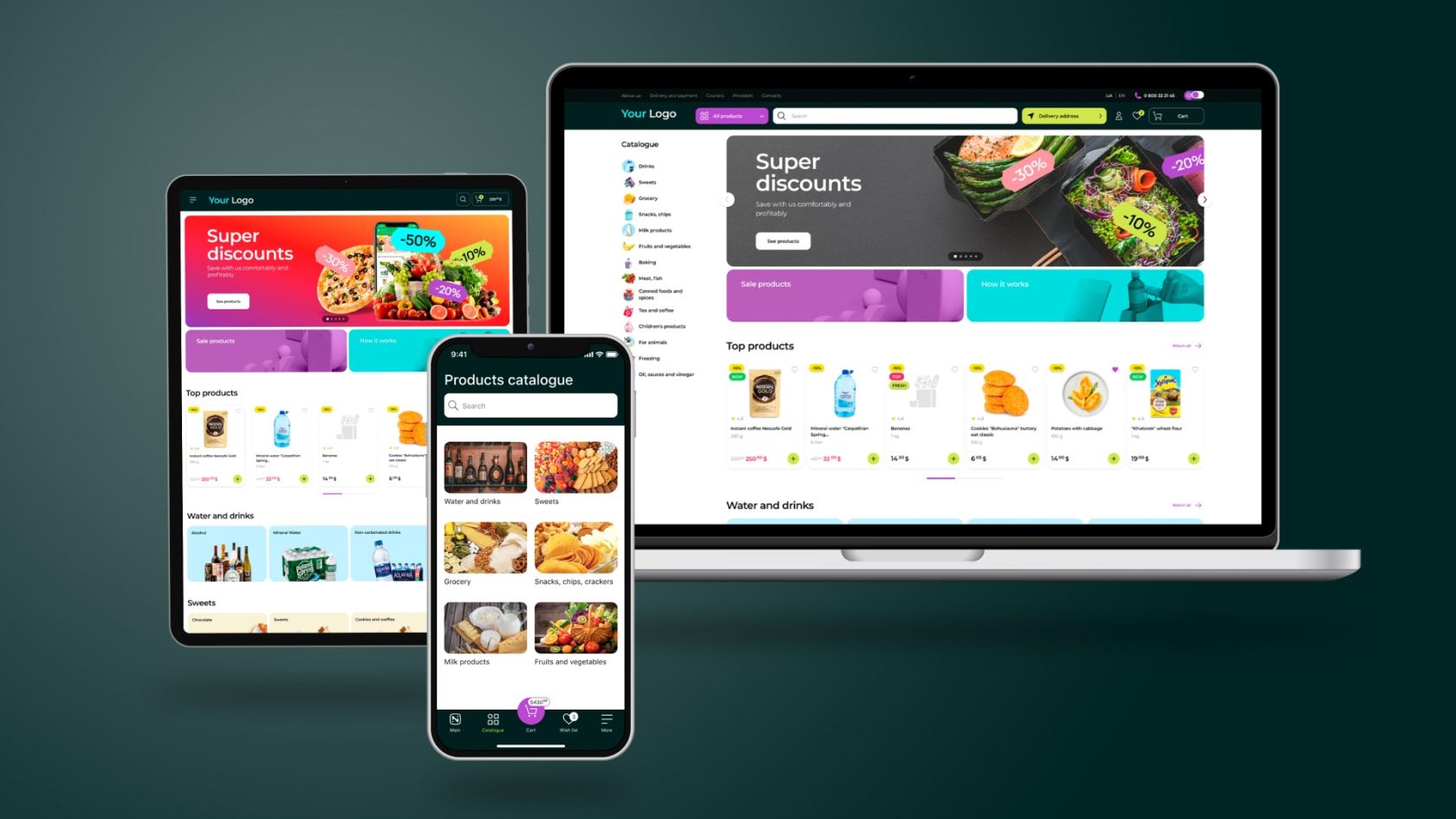
At the close of 2021, we had our initial discussion with the OnePrice people. In the three years that had passed, the retailer had accomplished remarkable success, constructing a chain of one hundred FMCG stores in the nation.
The client, however, had other plans and set a daring objective of launching the first darkstore that would stock the usual items. Prior attempts to implement such a service had not been successful enough to become popular.
The customer viewed 2022 as a pivotal moment for retail, when the business would initiate a competition for startups during the post-crisis economic bounce back. They required a fresh darkstore platform as soon as possible. We're discussing not just an e-commerce outlet, but a service with an expedited buying process and a speedier delivery.
The essential element is that the customer must have their goods delivered by courier within 15 minutes. This can be achieved by having an expansive network of mini warehouse outlets that cover anywhere a delivery has to be made. To have such an arrangement requires a system with good logistics and a reliable digital platform.
The concept was outlined swiftly: a website and a mobile app for e-commerce, as well as an app for couriers had to be built, all of which had to be linked together with one DarkStore Backend and combined with digital retail tools, such as 1C accounting, a CRM and a WMS.
How the technology was chosen
The ideas behind DarkStore are nothing new; the implementation of the service, however, is quite revolutionary. All the components of a darkstore have been used in e-commerce for a while, but what sets this service apart is the way it brings them all together.
- The site was developed through classic layout: HTML, CSS, native JavaScript.
- The cross-platform mobile apps were made in Flutter, using BLoC, Hive and Dart.
- The backend is written in PHP 8.1 (Laravel + Octane), PosgreSQL and Redis are used for database management.
Our developers had prior experience with these tools from their work on e-commerce products; this enabled us to drastically accelerate the development process.
How communication was managed
The team still had to work hard, though. Deadlines were stringent, so they opted out of their usual approach of tackling tasks in sprints.
We didn't feel breaking our three-month undertaking into sprints was feasible, so we made a shared task board and then stepped through the process: drawing out and accepting designs for each product, developing them, preparing presentations, and ensuring quality control.
The WEZOM team and the client's product manager had to maintain a steady connection throughout the development process, which necessitated daily communication. To ensure efficiency and responsiveness, they had to clarify various matters like 1C and CRM integration, requests for access to resources and documents, and details of the business logic. Despite the challenges posed by the outbreak of war, the team was still able to stay as a united unit.
Development Challenges
Often, the assigned duties ended up being far more intricate than at first thought. Despite their familiarity with technology, the team encountered unexpected snags while creating new modules, incorporating APIs, and using external applications.
The most difficult part was the mobile app development. This app is a fundamental part of the dark store system, since most users access it from their phones. The platform had to accomplish a complicated ordering process with multiple possibilities, as well as a lot of links with the business's other tools and databases. The API for Google Maps also presented certain issues, necessitating a thorough job for geolocation integration.
What do we have now
Despite the technical issues and conflict, the progress as a whole was able to meet the specified timeline. Unfortunately, the project has been temporarily suspended, resulting in a postponement of its launch.
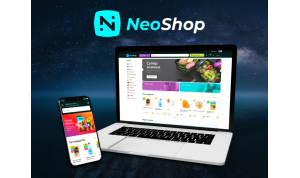
Nevertheless, as of today, NeoShop is technically ready for release. It consists of three products:
- DarkStore website
- A mobile app for customers (DarkStore app)
- Courier app (DarkStore courier app)
Let's take a closer look at each of them.
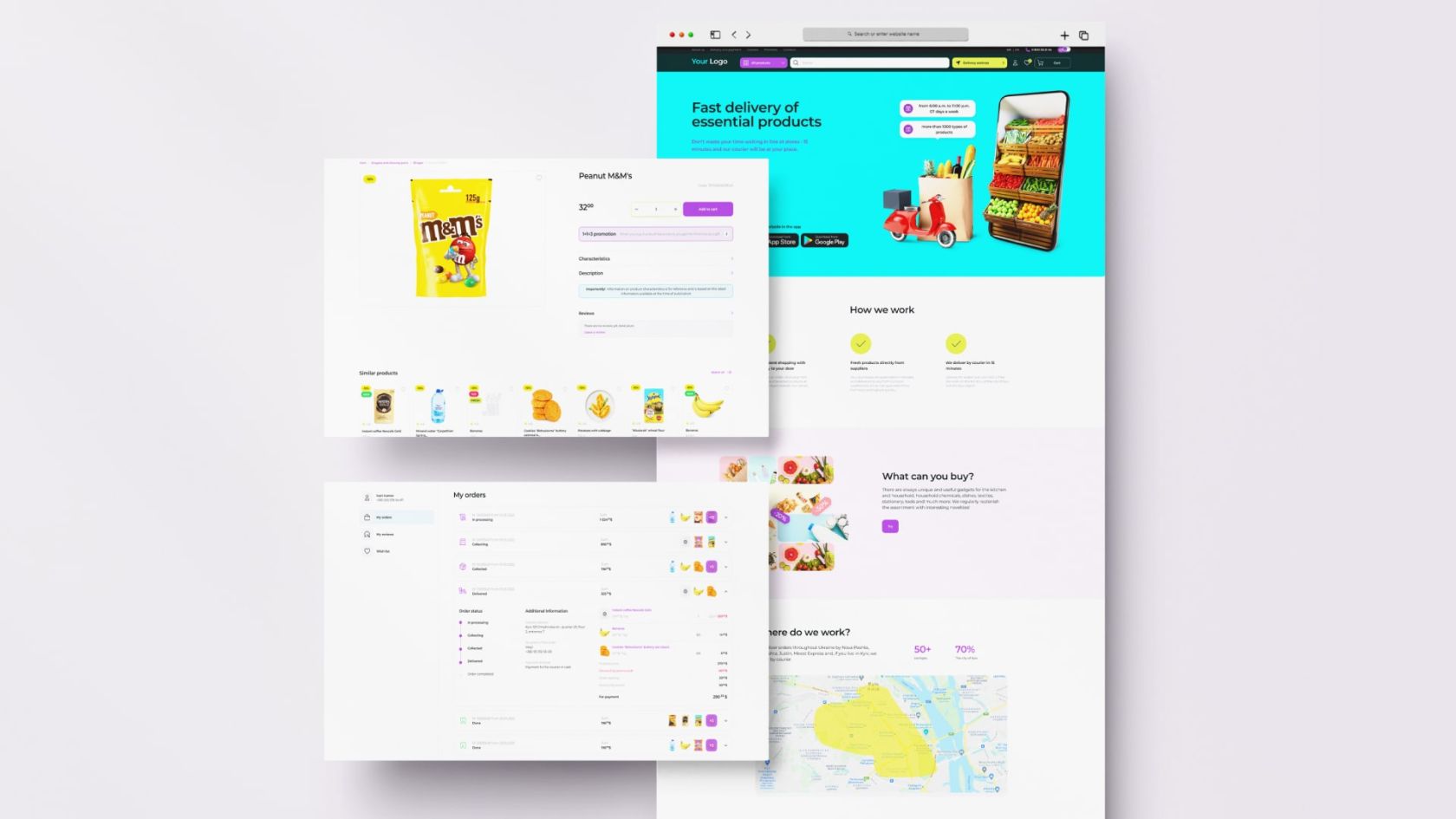
NeoShop's web platform brings together the functions of an e-commerce business and a company directory. On its pages, customers can browse through the products, create a shopping cart and put in an order, as well as enter their delivery address. Goods supply is linked to a particular darkstore with a dedicated delivery region. Couriers can go to the site to look for jobs and request an interview. Additionally, there is a designated page for suppliers and distributors who would like to collaborate with the store.
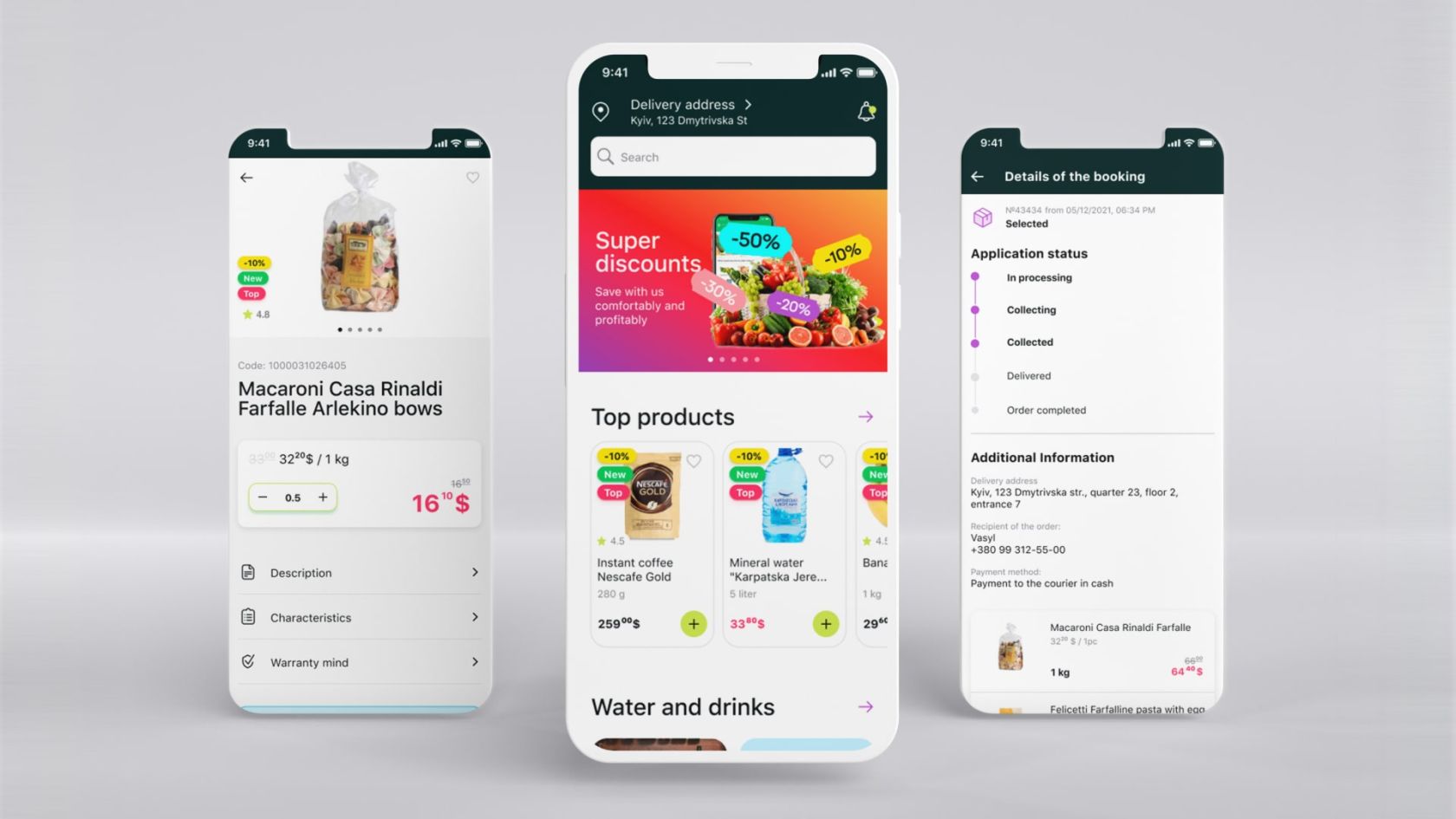
The NeoShop app is a fine illustration of a contemporary DarkStore mobile service. Put simply, it offers the same amenities as the website, with the addition of notifications. The experience of utilizing the app is a mixture of a traditional online store and a food delivery service. Following the placement of an order, the consumer is able to track the condition of the order in real-time: from compilation and assembly to ultimate delivery.
Delivery courier app is a simple and effective delivery tool that any employee can quickly learn without any problems. The platform gives the courier countless advantages: mapping, mobile notifications, simple accounting, and a personal account with a history of completed orders. The delivery card contains not only the address but also the amount and method of payment. The courier can immediately contact the recipient of the order and clarify the details.
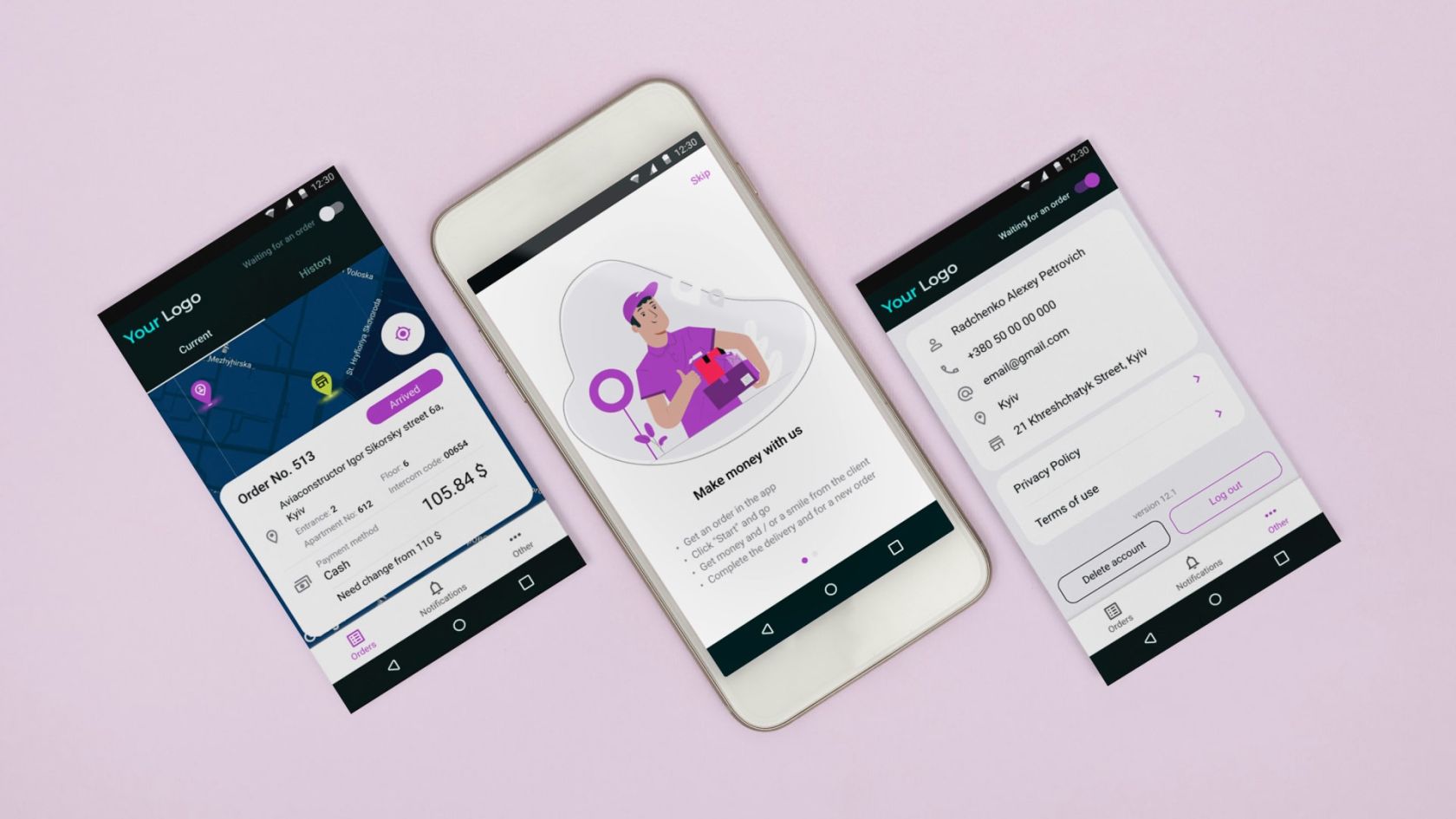
All these items are products of the same enterprise, which utilizes a shared backend. Additionally, there are integrated third-party applications such as Google Card APIs, payment services, 1C accounting programs, CRM, and warehouse management.
Why are darkstores influential?
It's a certainty that classic retail outlets will not vanish, as it is essential for companies to create awareness and maintain their physical presence. People also like the option of being able to check out the merchandise they are keen on, and frequently regard shopping as a fun way to spend the weekend.
Nevertheless, this is more applicable in the case of non-food retail (clothing, electronic items, etc.) and to a lesser degree for everyday items. When it comes to a regular weekday shopping trip for vegetables for soup, people are less likely to spend much time on it. Therefore, the darkstore format is a very appealing option. Moreover, offers many more benefits:
- Resilience to social upheaval. The experience of the past three years has shown that the emphasis on business online provides him a good margin of safety in any situation. Physical stores can close because of another pandemic, or military threats. But online delivery in such situations continues to work as long as it is possible to provide its logistics.
- Reduced costs. A traditional supermarket requires renting a spacious space in a busy location, as well as equipment for the sales floor and merchandising. In contrast to supermarkets, darkstores can be equipped in compact and unpresentable warehouses (DarkStore warehouse) as there will be no customers, no guards, and cashiers. Even the electricity bill will be lower. This is an obvious opportunity to save money.
- Smart stock control. Darkstore vitally needs real-time visibility into each warehouse's product inventory; without it, it's difficult to ensure the adequacy of the assortment in the application and the speed of delivery. But it also helps the retailer dispose of products more rationally – to increase inventory turnover, and reduce losses among stock balances. This is especially relevant in FMCG, where goods have a limited shelf life.
- Simplicity of management. Traditional supermarket requires a large staff. At the same time, sales staff work in a stressful mode, sometimes torn between the layout of goods, control of the queue, and questions of individual customers, which is detrimental to service. At the same time, darkstore requires only an operator, a picker, and a few sorters of goods, who will not be distracted by customers. This avoids additional costs and makes much more efficient use of employees' time.
The global economic crisis has impeded the progress of retail, however it has not been able to prevent it from continuing. As the economy strengthens, the online delivery market will experience an accelerated development, and we should expect to see an increase in startups over the next few years. Thus, retailers should start getting ready for the shift in the market. At the minimum, they should become familiar with the DarkStore software market and enhance their own online delivery service. Alternatively, they can go further and search for collaborators or experts to form their own darkstore network for the future.
It's free and takes 2 minutes. There are 1500+ digital agencies in the catalog that are ready to help in the implementation of your tasks. Choose and save up to 30% on time and budget!





A few words about darkstores
It is commonplace for us to frequent shopping malls and grocery stores, as it is woven into our consumer-oriented lifestyle. Yet, going to the grocery store isn't always a pleasant family outing between gorgeous aisles of items. Shopping can be tiring and disheartening: queues, a mad dash to the checkouts with carts, and grumpy cashiers. From the viewpoint of retailers, traditional supermarkets have to be improved as well: too much funds are spent on renting space, a large staff and other expenses that come with retailing.
Businesses began searching for alternative means of retail and were successful in finding them. DarkStore was one of the most ingenious concepts, being a shop without a physical premises which depends on digital purchases and messenger delivery. Essentially, it is a combination of a normal e-commerce site and a food delivery courier like Amazon. Customers simply place their order on the app or website and the courier will deliver it to their front door in a short 15-20 minute timespan.
It is believed that the darkstore format was first conceived by British retailer Tesco in 2009, however the concept was too advanced for its time, and the market for such stores was limited. Recently, the format has seen a revival - the widespread use of smartphones and the pandemic have made it more pertinent than ever. As a result, similar businesses are flourishing in the UK (Jiffy), Germany (Gorillas) and other nations globally.
How we started creating adarkstore
At the close of 2021, we had our initial discussion with the OnePrice people. In the three years that had passed, the retailer had accomplished remarkable success, constructing a chain of one hundred FMCG stores in the nation.
The client, however, had other plans and set a daring objective of launching the first darkstore that would stock the usual items. Prior attempts to implement such a service had not been successful enough to become popular.
The customer viewed 2022 as a pivotal moment for retail, when the business would initiate a competition for startups during the post-crisis economic bounce back. They required a fresh darkstore platform as soon as possible. We're discussing not just an e-commerce outlet, but a service with an expedited buying process and a speedier delivery.
The essential element is that the customer must have their goods delivered by courier within 15 minutes. This can be achieved by having an expansive network of mini warehouse outlets that cover anywhere a delivery has to be made. To have such an arrangement requires a system with good logistics and a reliable digital platform.
The concept was outlined swiftly: a website and a mobile app for e-commerce, as well as an app for couriers had to be built, all of which had to be linked together with one DarkStore Backend and combined with digital retail tools, such as 1C accounting, a CRM and a WMS.
How the technology was chosen
The ideas behind DarkStore are nothing new; the implementation of the service, however, is quite revolutionary. All the components of a darkstore have been used in e-commerce for a while, but what sets this service apart is the way it brings them all together.
- The site was developed through classic layout: HTML, CSS, native JavaScript.
- The cross-platform mobile apps were made in Flutter, using BLoC, Hive and Dart.
- The backend is written in PHP 8.1 (Laravel + Octane), PosgreSQL and Redis are used for database management.
Our developers had prior experience with these tools from their work on e-commerce products; this enabled us to drastically accelerate the development process.
How communication was managed
The team still had to work hard, though. Deadlines were stringent, so they opted out of their usual approach of tackling tasks in sprints.
We didn't feel breaking our three-month undertaking into sprints was feasible, so we made a shared task board and then stepped through the process: drawing out and accepting designs for each product, developing them, preparing presentations, and ensuring quality control.
The WEZOM team and the client's product manager had to maintain a steady connection throughout the development process, which necessitated daily communication. To ensure efficiency and responsiveness, they had to clarify various matters like 1C and CRM integration, requests for access to resources and documents, and details of the business logic. Despite the challenges posed by the outbreak of war, the team was still able to stay as a united unit.
Development Challenges
Often, the assigned duties ended up being far more intricate than at first thought. Despite their familiarity with technology, the team encountered unexpected snags while creating new modules, incorporating APIs, and using external applications.
The most difficult part was the mobile app development. This app is a fundamental part of the dark store system, since most users access it from their phones. The platform had to accomplish a complicated ordering process with multiple possibilities, as well as a lot of links with the business's other tools and databases. The API for Google Maps also presented certain issues, necessitating a thorough job for geolocation integration.
What do we have now
Despite the technical issues and conflict, the progress as a whole was able to meet the specified timeline. Unfortunately, the project has been temporarily suspended, resulting in a postponement of its launch.
Nevertheless, as of today, NeoShop is technically ready for release. It consists of three products:
- DarkStore website
- A mobile app for customers (DarkStore app)
- Courier app (DarkStore courier app)
Let's take a closer look at each of them.
NeoShop's web platform brings together the functions of an e-commerce business and a company directory. On its pages, customers can browse through the products, create a shopping cart and put in an order, as well as enter their delivery address. Goods supply is linked to a particular darkstore with a dedicated delivery region. Couriers can go to the site to look for jobs and request an interview. Additionally, there is a designated page for suppliers and distributors who would like to collaborate with the store.
The NeoShop app is a fine illustration of a contemporary DarkStore mobile service. Put simply, it offers the same amenities as the website, with the addition of notifications. The experience of utilizing the app is a mixture of a traditional online store and a food delivery service. Following the placement of an order, the consumer is able to track the condition of the order in real-time: from compilation and assembly to ultimate delivery.
Delivery courier app is a simple and effective delivery tool that any employee can quickly learn without any problems. The platform gives the courier countless advantages: mapping, mobile notifications, simple accounting, and a personal account with a history of completed orders. The delivery card contains not only the address but also the amount and method of payment. The courier can immediately contact the recipient of the order and clarify the details.
All these items are products of the same enterprise, which utilizes a shared backend. Additionally, there are integrated third-party applications such as Google Card APIs, payment services, 1C accounting programs, CRM, and warehouse management.
Why are darkstores influential?
It's a certainty that classic retail outlets will not vanish, as it is essential for companies to create awareness and maintain their physical presence. People also like the option of being able to check out the merchandise they are keen on, and frequently regard shopping as a fun way to spend the weekend.
Nevertheless, this is more applicable in the case of non-food retail (clothing, electronic items, etc.) and to a lesser degree for everyday items. When it comes to a regular weekday shopping trip for vegetables for soup, people are less likely to spend much time on it. Therefore, the darkstore format is a very appealing option. Moreover, offers many more benefits:
- Resilience to social upheaval. The experience of the past three years has shown that the emphasis on business online provides him a good margin of safety in any situation. Physical stores can close because of another pandemic, or military threats. But online delivery in such situations continues to work as long as it is possible to provide its logistics.
- Reduced costs. A traditional supermarket requires renting a spacious space in a busy location, as well as equipment for the sales floor and merchandising. In contrast to supermarkets, darkstores can be equipped in compact and unpresentable warehouses (DarkStore warehouse) as there will be no customers, no guards, and cashiers. Even the electricity bill will be lower. This is an obvious opportunity to save money.
- Smart stock control. Darkstore vitally needs real-time visibility into each warehouse's product inventory; without it, it's difficult to ensure the adequacy of the assortment in the application and the speed of delivery. But it also helps the retailer dispose of products more rationally – to increase inventory turnover, and reduce losses among stock balances. This is especially relevant in FMCG, where goods have a limited shelf life.
- Simplicity of management. Traditional supermarket requires a large staff. At the same time, sales staff work in a stressful mode, sometimes torn between the layout of goods, control of the queue, and questions of individual customers, which is detrimental to service. At the same time, darkstore requires only an operator, a picker, and a few sorters of goods, who will not be distracted by customers. This avoids additional costs and makes much more efficient use of employees' time.
The global economic crisis has impeded the progress of retail, however it has not been able to prevent it from continuing. As the economy strengthens, the online delivery market will experience an accelerated development, and we should expect to see an increase in startups over the next few years. Thus, retailers should start getting ready for the shift in the market. At the minimum, they should become familiar with the DarkStore software market and enhance their own online delivery service. Alternatively, they can go further and search for collaborators or experts to form their own darkstore network for the future.