
Best Dux-Soup Alternatives in 2026

Dux-Soup has served as an entry point into LinkedIn automation for years. The Chrome extension is easy to install, the pricing is low, and teams can start automating profile visits and connection requests within an hour. For users just testing whether LinkedIn outreach is worth investing in, that simplicity has real value.
But Dux-Soup's design reflects the era it was built in. It runs entirely through the browser — campaigns stop when the computer sleeps. There are no dedicated IPs, no cloud execution, no email outreach, and no conditional branching. For teams that have validated LinkedIn as a real pipeline channel and need infrastructure to match that commitment, Dux-Soup becomes the ceiling rather than the foundation.
This guide covers the best Dux-Soup alternatives in 2026 — tools that go further on safety, sequence sophistication, and reliability, with honest trade-off assessments for each.
Why Teams Look for Dux-Soup Alternatives
Dux-Soup's limitations are directly tied to its architecture. Most of the reasons teams move on are predictable and consistent.
Browser dependency. Dux-Soup runs exclusively as a Chrome extension. Campaigns execute only when the browser is open — every overnight run, every weekend, every business trip creates a gap. For teams running outreach as a continuous process, this is a structural problem no workaround fully resolves.
Account safety. Without dedicated IP infrastructure, LinkedIn sees Dux-Soup activity originating from the same address as regular manual browsing — sometimes shared across users on a common network. As LinkedIn has improved automation detection, extension-based tools have faced higher restriction rates than cloud-native alternatives.
No email outreach. Dux-Soup is LinkedIn-only. Teams that want to follow up unresponsive leads via email need a separate tool, adding cost and data sync overhead.
Limited sequence logic. The automation covers profile visits, connection requests, and basic follow-up messages. There is no conditional branching — every lead follows the same path regardless of how they responded.
Basic analytics. Reporting is thin. Per-campaign funnel data, A/B test results, and team-level tracking require additional tools.
No team features. Dux-Soup is designed for individual users. Managing outreach across a team — shared inboxes, per-rep dashboards, campaign attribution — requires workarounds or a different tool.
What to Look for in a Dux-Soup Alternative
The right alternative depends on how far you've outgrown Dux-Soup. A few questions worth answering first:
- Cloud execution: Do you need campaigns to run 24/7 without an open browser?
- Account safety: Is LinkedIn account restriction a current concern, or a risk to address before scaling?
- Channel scope: Is LinkedIn enough, or does your outreach strategy require email?
- Sequence sophistication: Do you need conditional branching, or would reliable linear sequences already be an upgrade?
- Team scale: Are you a solo user, or do you need dashboards and inbox management across multiple reps?
- Budget: Dux-Soup is cheap. Are you willing to pay more for meaningfully better infrastructure?
With those questions in mind, here are the tools that most credibly replace Dux-Soup.
Top Dux-Soup Alternatives You Should Consider in 2026
1. Dripify
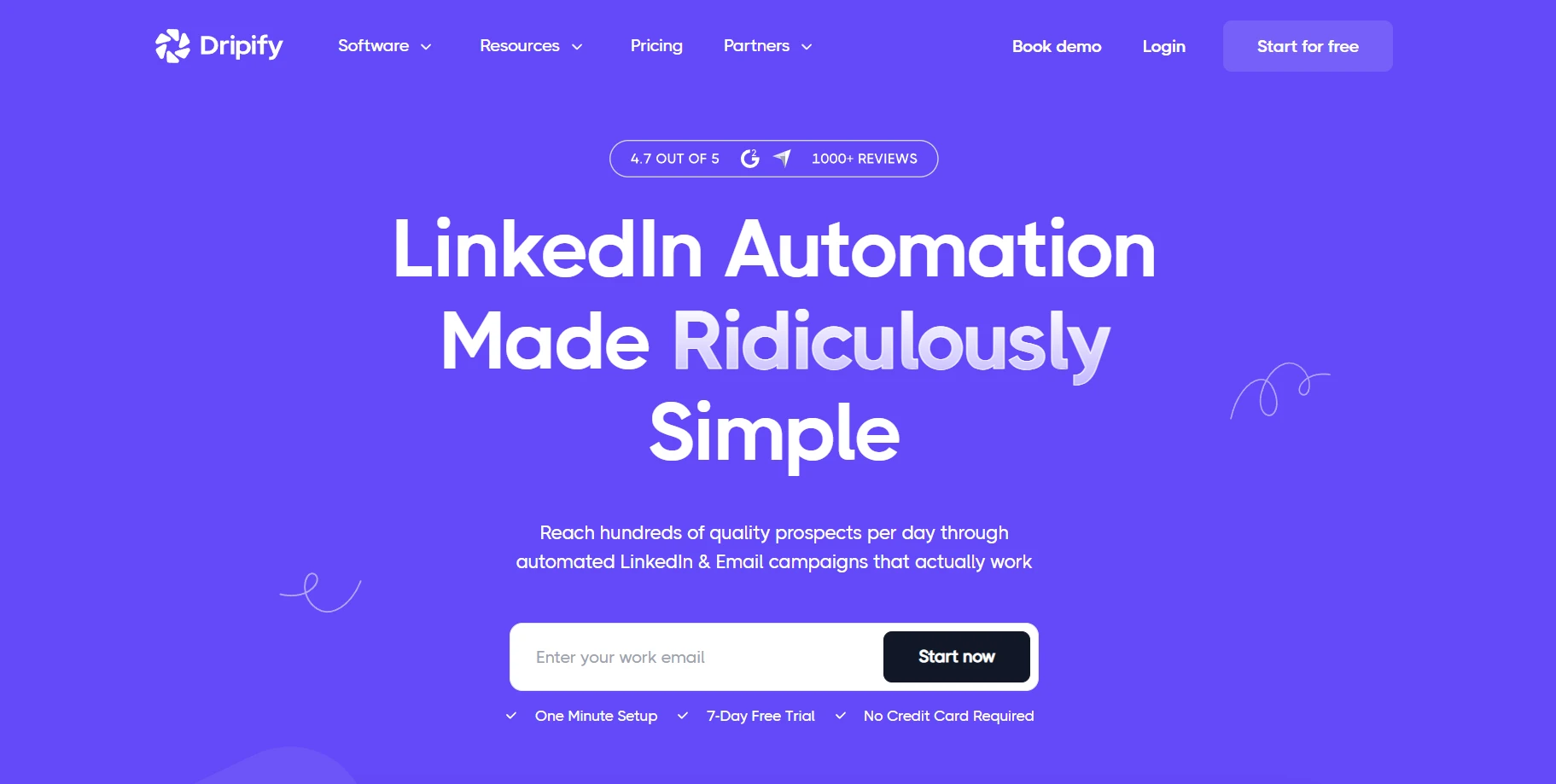
Best for: Sales professionals and teams ready to move from basic extension-based automation to cloud-native LinkedIn outreach with real infrastructure behind it.
Dripify is the most direct upgrade from Dux-Soup for teams that have validated LinkedIn as a pipeline channel and need a tool built to support it at scale. The difference starts at the infrastructure level: Dripify runs entirely in the cloud, assigns each user a dedicated IP address, and executes campaigns around the clock — whether the browser is open, the computer is asleep, or the team is offline. This removes the single most common operational frustration that Dux-Soup users encounter.
Account safety is a core design principle, not a feature added on top. Activity is patterned to mimic human behavior — varied timing, natural pacing, automatic daily limit enforcement — in a way that browser-extension tools cannot replicate without manual configuration and constant monitoring.
The sequence builder covers connection requests, messages, InMails, profile views, follows, and endorsements in multi-step workflows. Conditional branching creates distinct paths based on lead behavior — separate follow-ups for those who accepted versus didn't, replied versus stayed silent. This is a leap beyond Dux-Soup's behavior-blind linear sequences.
Analytics go significantly further: per-campaign acceptance rates, response rates, funnel conversion, A/B results, and team dashboards are all built in. The centralized inbox consolidates prospect replies so reps manage conversations without switching between tools. CRM integrations with HubSpot, Salesforce, and Pipedrive are native — reliable data flow without Zapier as a bridge.
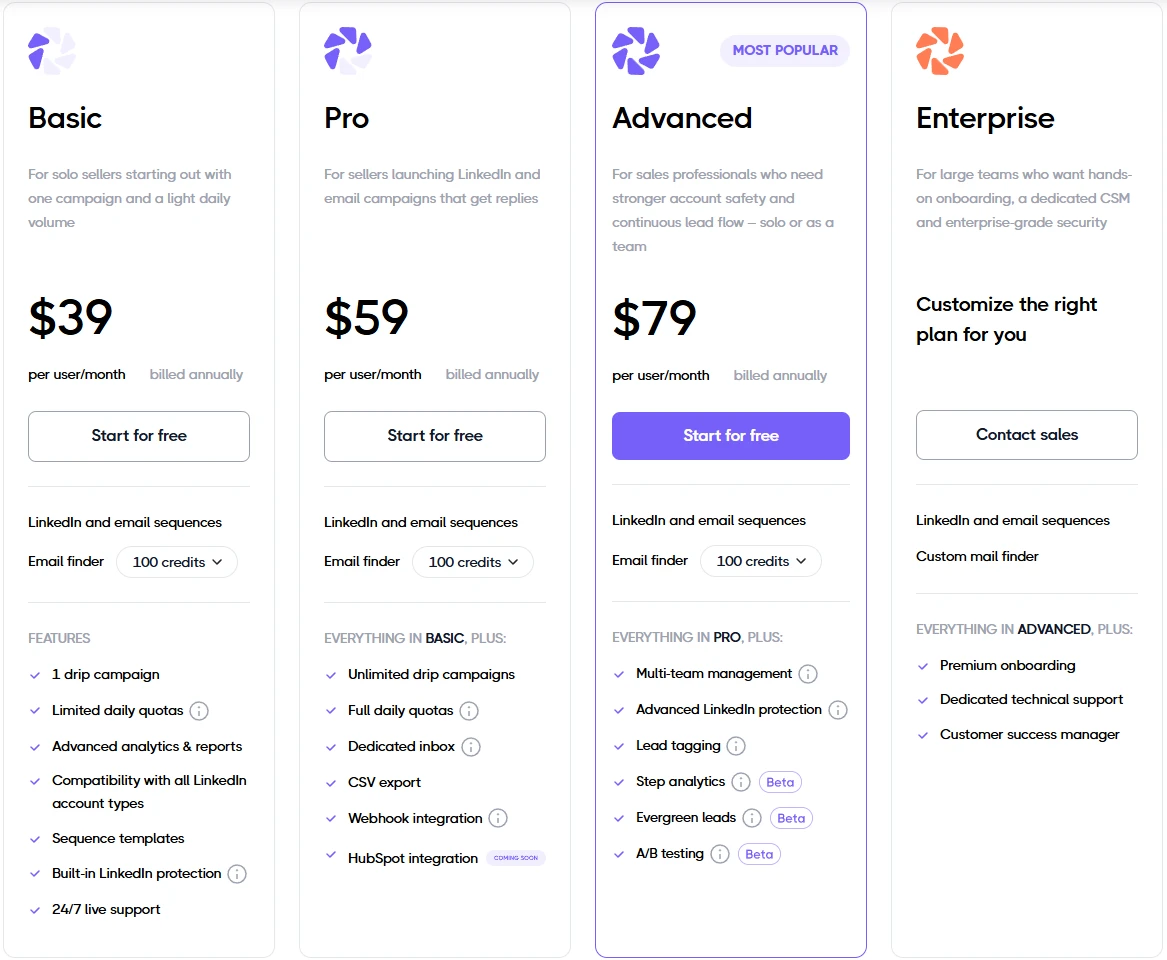
Pricing: Basic at $39/month, Advanced at $79/month, Enterprise at $159/month. Team plans with centralized billing available.
Integrations: HubSpot, Salesforce, Pipedrive, Zapier, and additional CRM connectors.
2. LinkedIn Helper 2
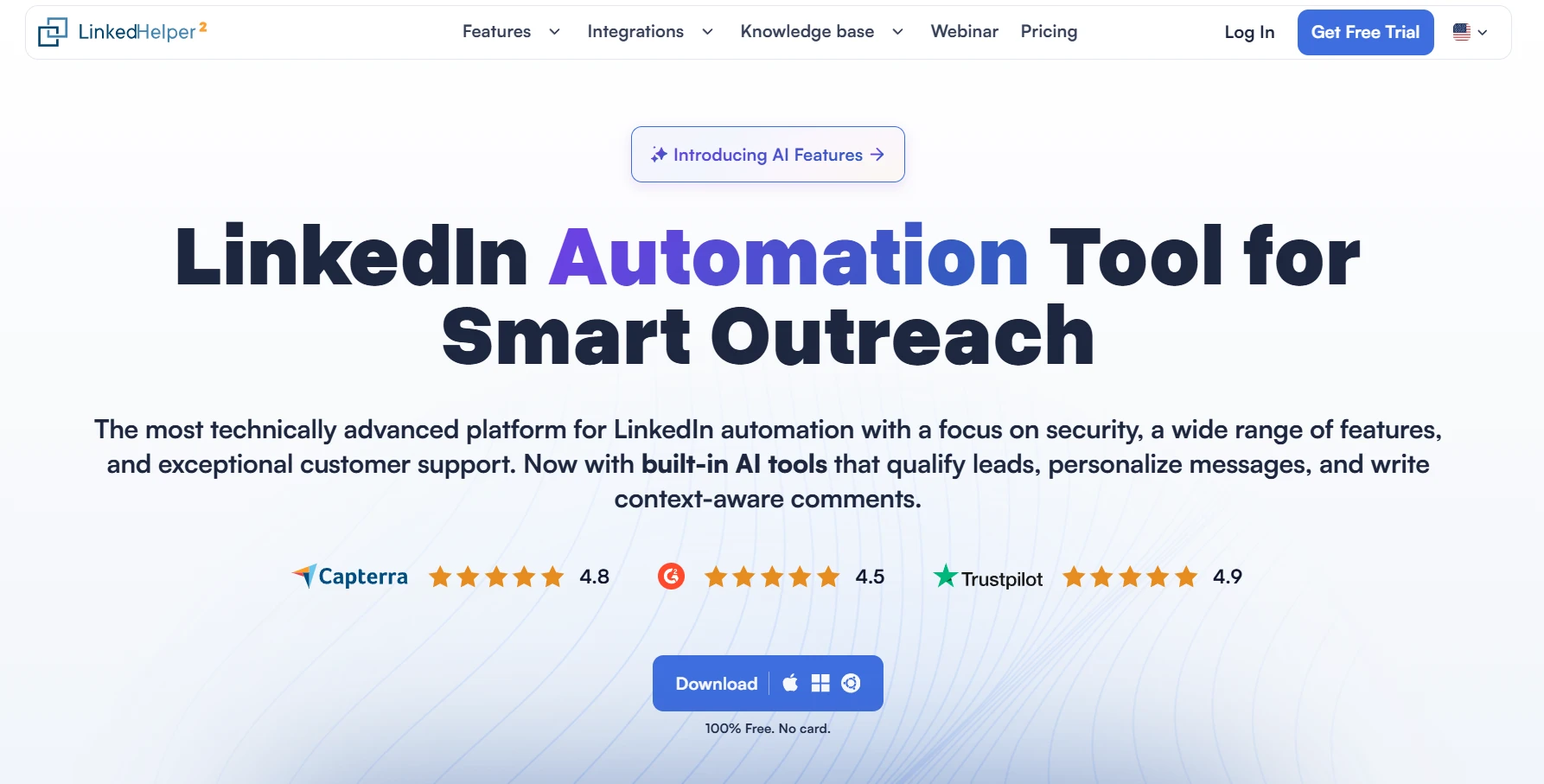
Best for: Budget-conscious users who want more configurability than Dux-Soup without a significant price increase.
LinkedIn Helper 2 is the closest alternative to Dux-Soup in positioning — low price, deep manual configurability, LinkedIn-only focus. It covers connection requests, messaging, endorsements, profile visits, and follow-up sequences with granular control that Dux-Soup doesn't offer.
The desktop application has a cloud option that reduces — but doesn't eliminate — the browser dependency concern. It is not a full cloud-native tool, but campaigns require less direct supervision than Dux-Soup. For technically comfortable solo users who want more control at a low price, it is a credible step up. For teams needing fast onboarding across multiple reps, the interface is likely to create friction.
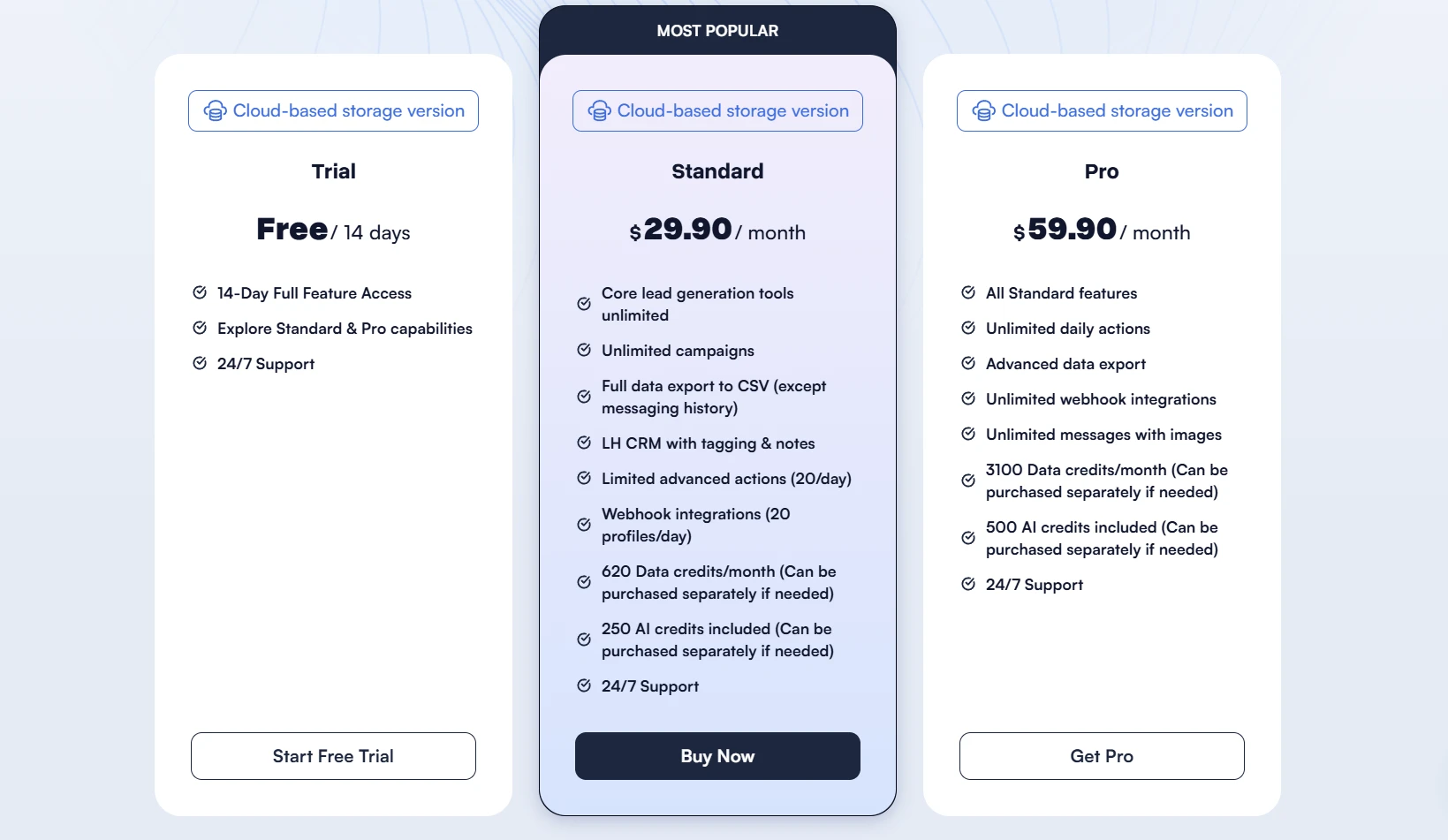
Pricing: Free trial available; paid plans from $29.90/month.
3. Octopus CRM
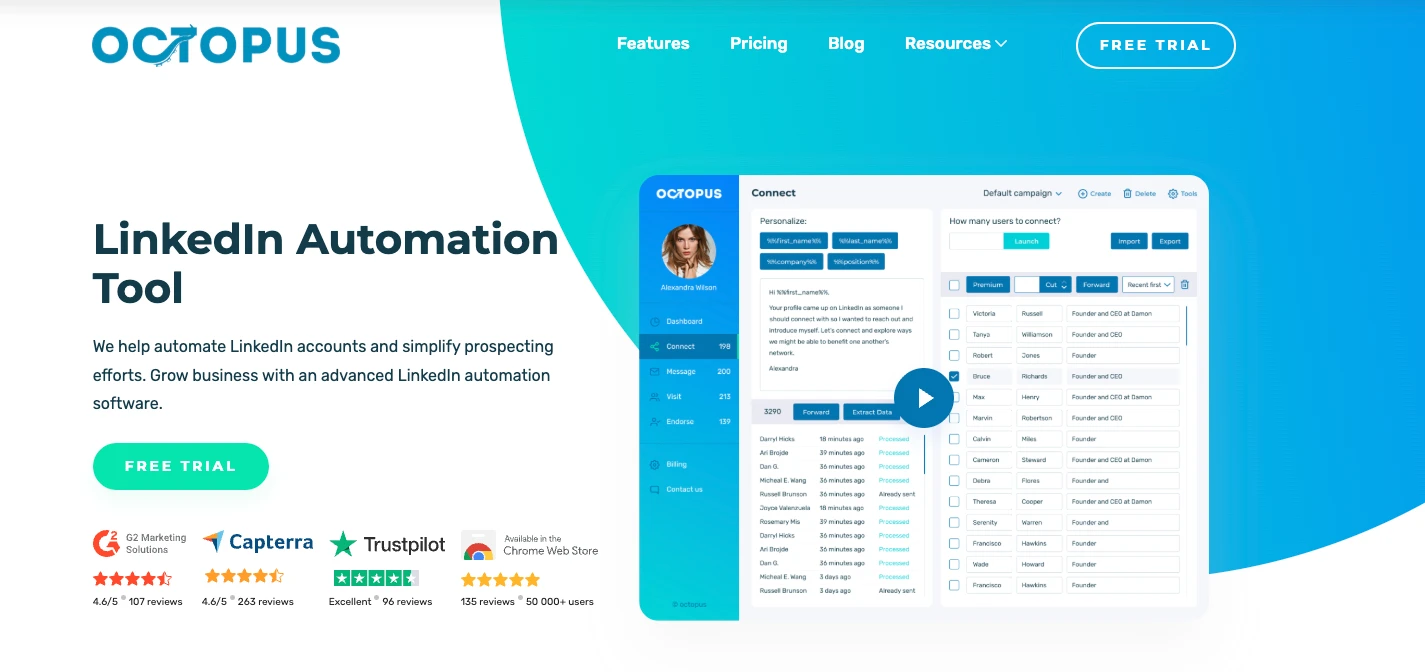
Best for: Users who are ready to move past Dux-Soup's most bare-bones interface and want a more structured approach to LinkedIn automation without a meaningful increase in monthly cost.
Octopus CRM and Dux-Soup target similar users — individuals who need LinkedIn automation at a low price point — but Octopus CRM delivers that in a more organized, less friction-prone package. The interface is cleaner, campaign setup follows a more logical structure, and a built-in analytics panel tracks acceptance rates and reply rates per campaign rather than requiring manual tracking alongside the tool. Connection requests, bulk messaging, profile visits, and skill endorsements are all covered at a starting price of $9.99 per month, making the cost difference from Dux-Soup's entry plan minimal.
Like Dux-Soup, Octopus CRM runs through a Chrome extension — campaigns require an open browser, there is no dedicated IP infrastructure, and account restriction risk scales with outreach volume. The practical ceiling is similar: neither tool is built for cloud-native execution or team-level outreach at scale. But for individual users who found Dux-Soup's interface too bare-bones, or who want cleaner per-campaign reporting without switching to a significantly more expensive cloud platform, Octopus CRM is a natural lateral step before making that larger commitment.
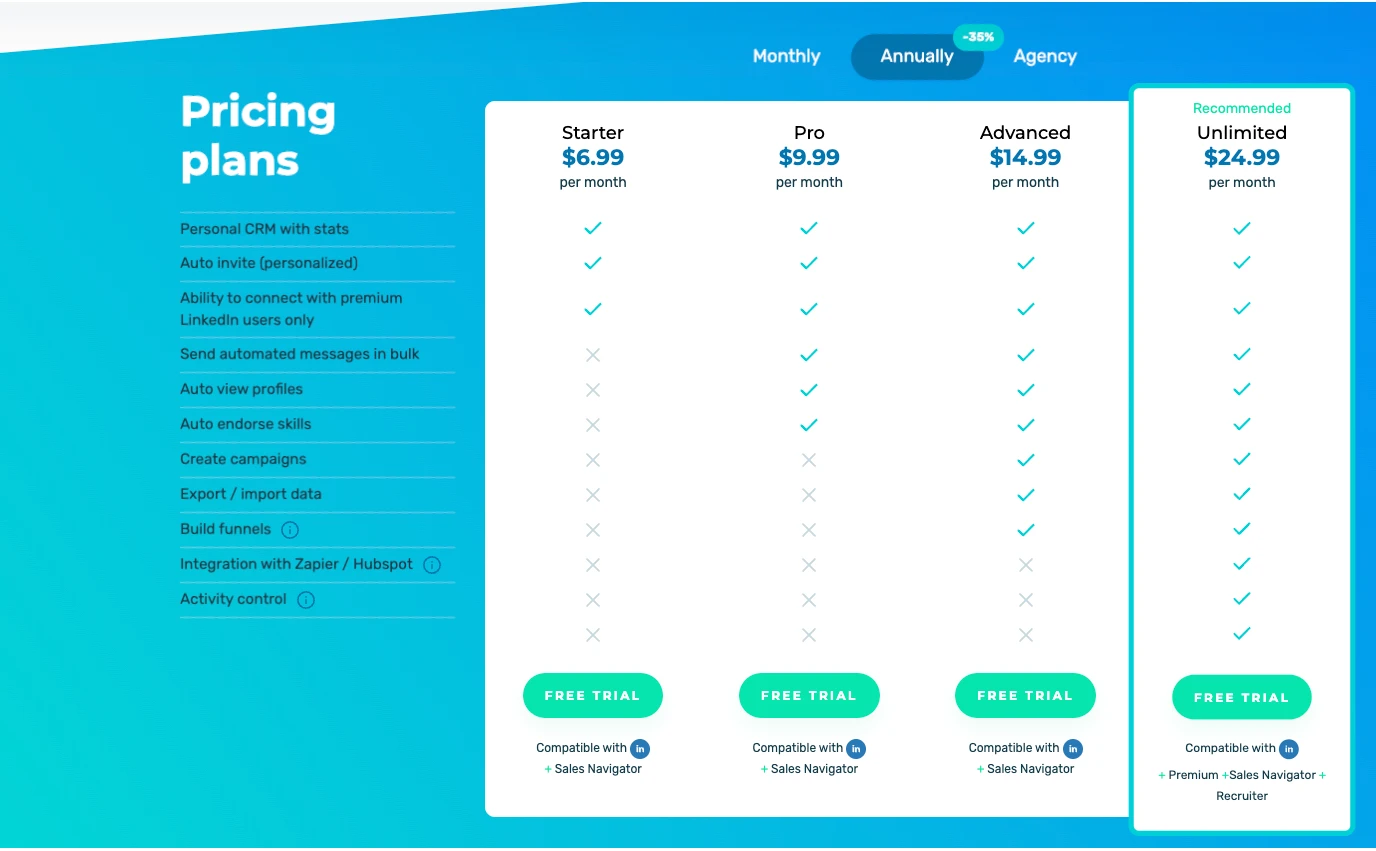
Pricing: ~$9.99/month per person.
4. Botdog
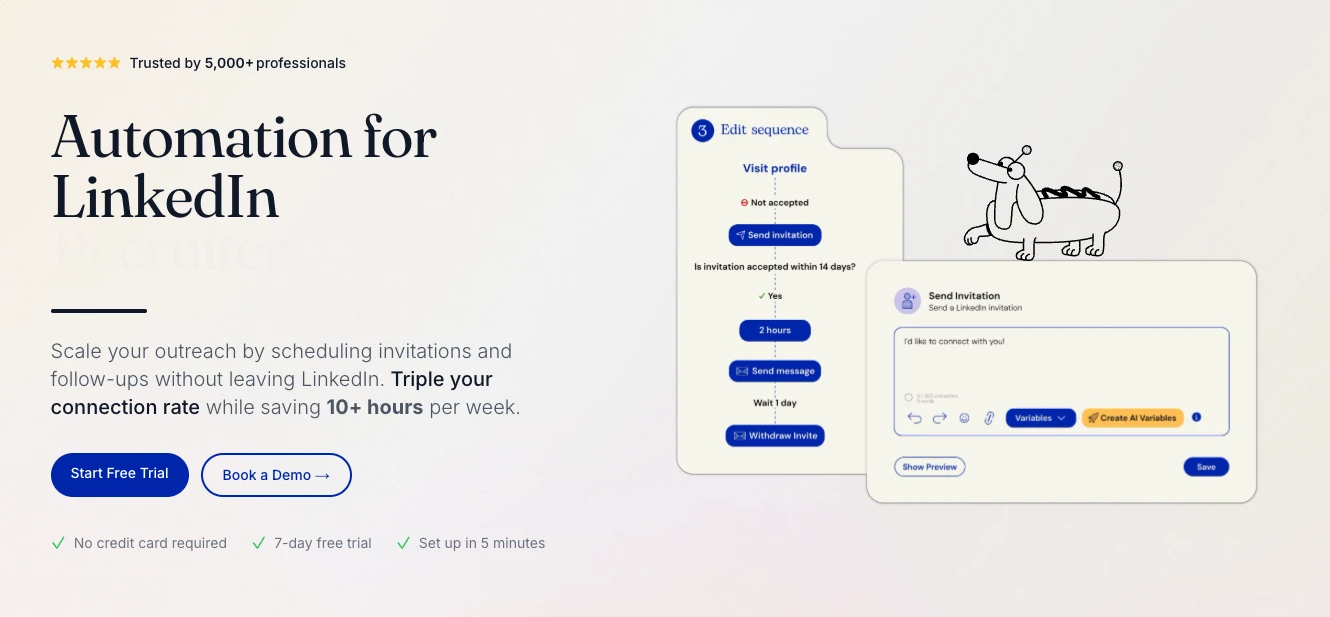
Best for: Dux-Soup users who want a cleaner, cloud-based upgrade that stays simple — no multichannel complexity, no enterprise pricing — while reducing the account restriction risk that comes with browser-extension automation.
Botdog is a cloud-based LinkedIn automation tool built around a deliberately narrow scope: safe, straightforward connection requests and follow-up messages sequences for individual sales reps and founders. Where Dux-Soup runs through a Chrome extension and requires an open browser to execute, Botdog operates from the cloud — campaigns run continuously without a local machine dependency, which removes the most common operational gap users encounter with extension-based tools.
The safety architecture reflects the same focus. Botdog enforces conservative daily limits by default, randomizes action timing to mimic natural human behavior, and avoids the shared-IP exposure that increases restriction risk for extension-based tools at higher outreach volumes. For Dux-Soup users who have experienced LinkedIn warnings as their outreach volume increased, the infrastructure difference is the most relevant reason to consider switching.
The feature scope is intentionally limited: LinkedIn connection requests, personalized message sequences, and basic campaign tracking. There is no email outreach, no conditional branching, no CRM integration, and no team dashboard.
For users whose outreach program has grown to a point where those capabilities matter, the tools higher on this list are the appropriate direction. For individual reps who primarily need reliable, safe LinkedIn connection and follow-up automation without additional complexity, Botdog is a focused and well-priced step up from Dux-Soup's extension-based model.
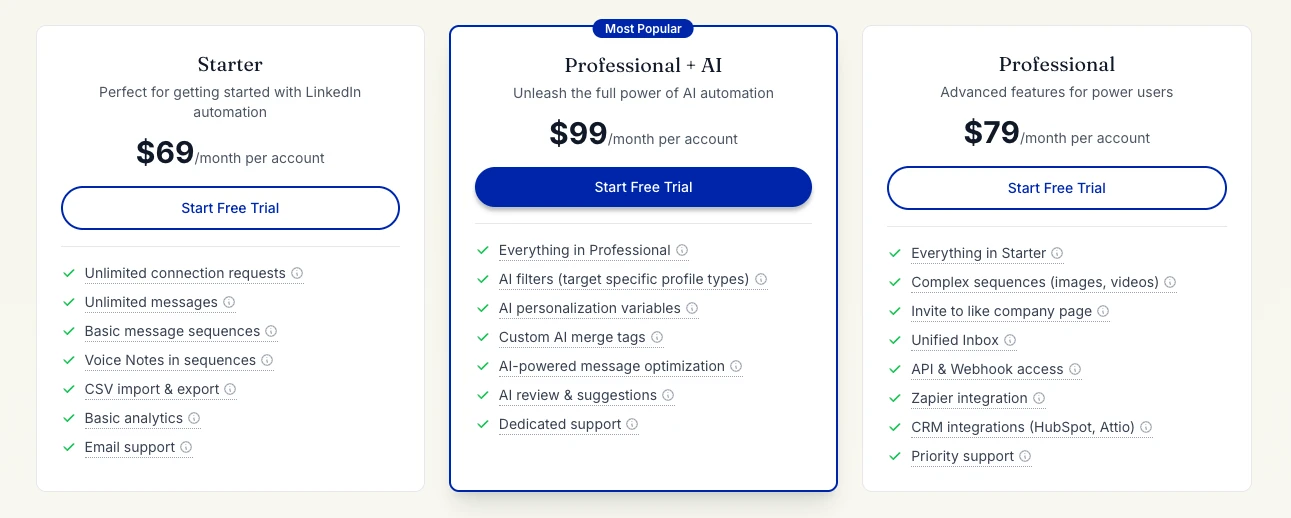
Pricing: From approximately $69/month per user (billed monthly).
5. Expandi
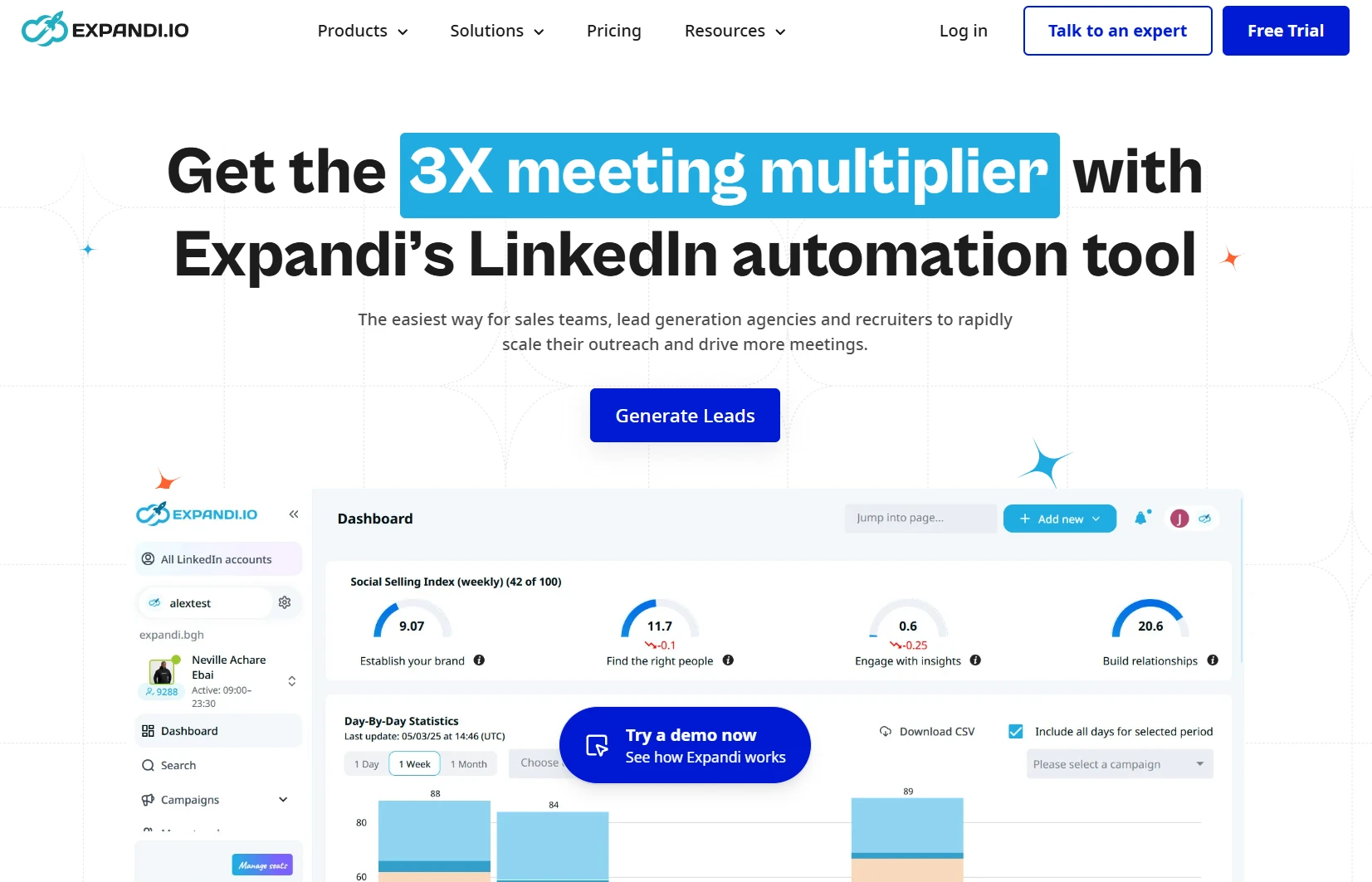
Best for: Growth marketers focused on creative personalization who are comfortable with a more complex setup process.
Expandi is one of the more feature-forward LinkedIn automation tools in the market, known primarily for its dynamic personalization capabilities — personalized images and GIFs embedded in connection requests and messages, hyper-targeted audience segmentation, and flexible campaign structures.
It supports multichannel sequences combining LinkedIn and email, which puts it in direct competition with La Growth Machine for teams that need both channels. The branching logic and audience filtering tools give experienced users significant control over campaign behavior.
The trade-offs are real: the interface is not intuitive, pricing is at the high end of the category, and customer support quality has been inconsistent based on independent user reviews. Expandi rewards teams that invest in configuration — and tends to frustrate those that don't.
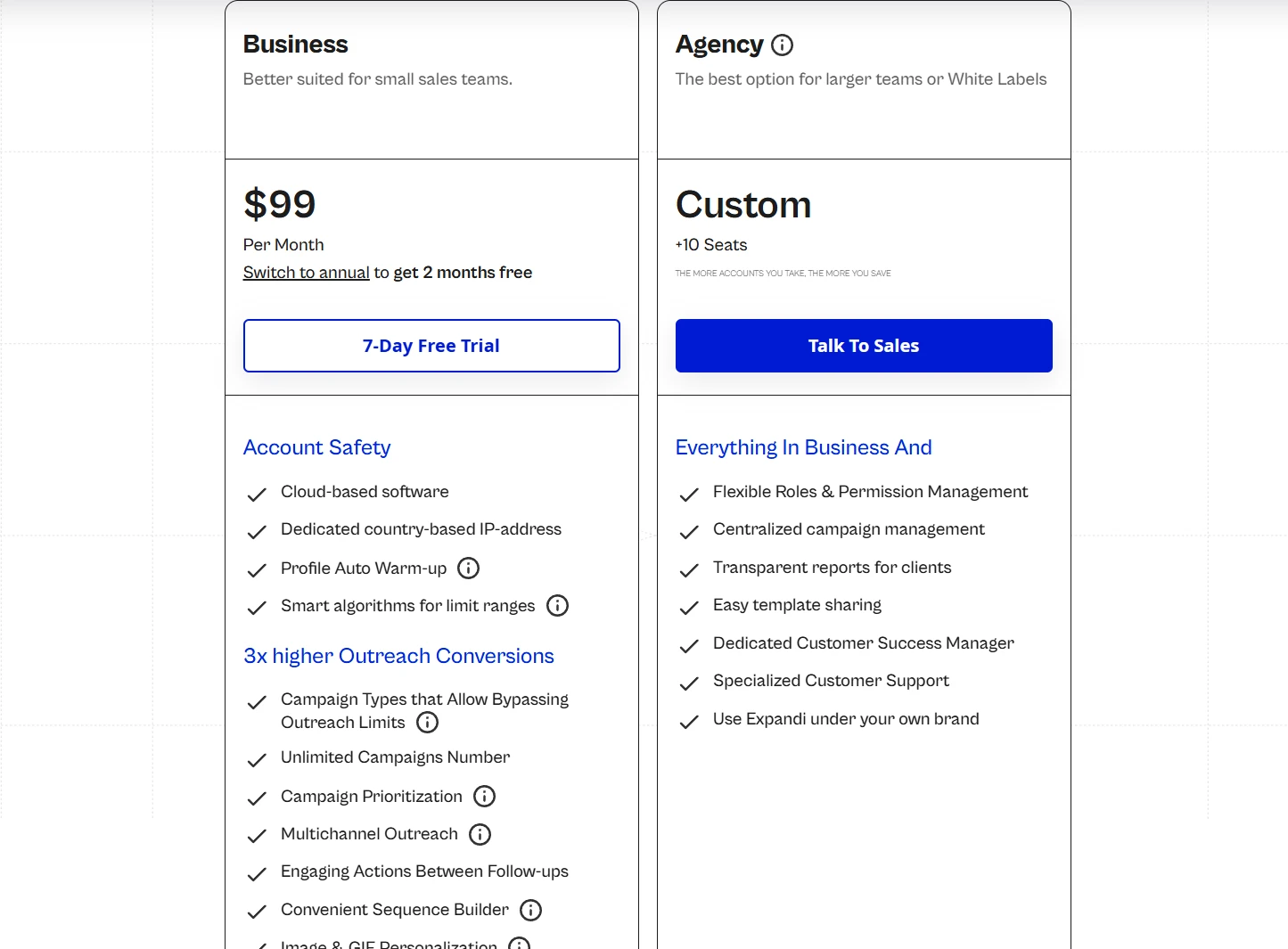
Pricing: ~$99/month per seat.
6. Lemlist
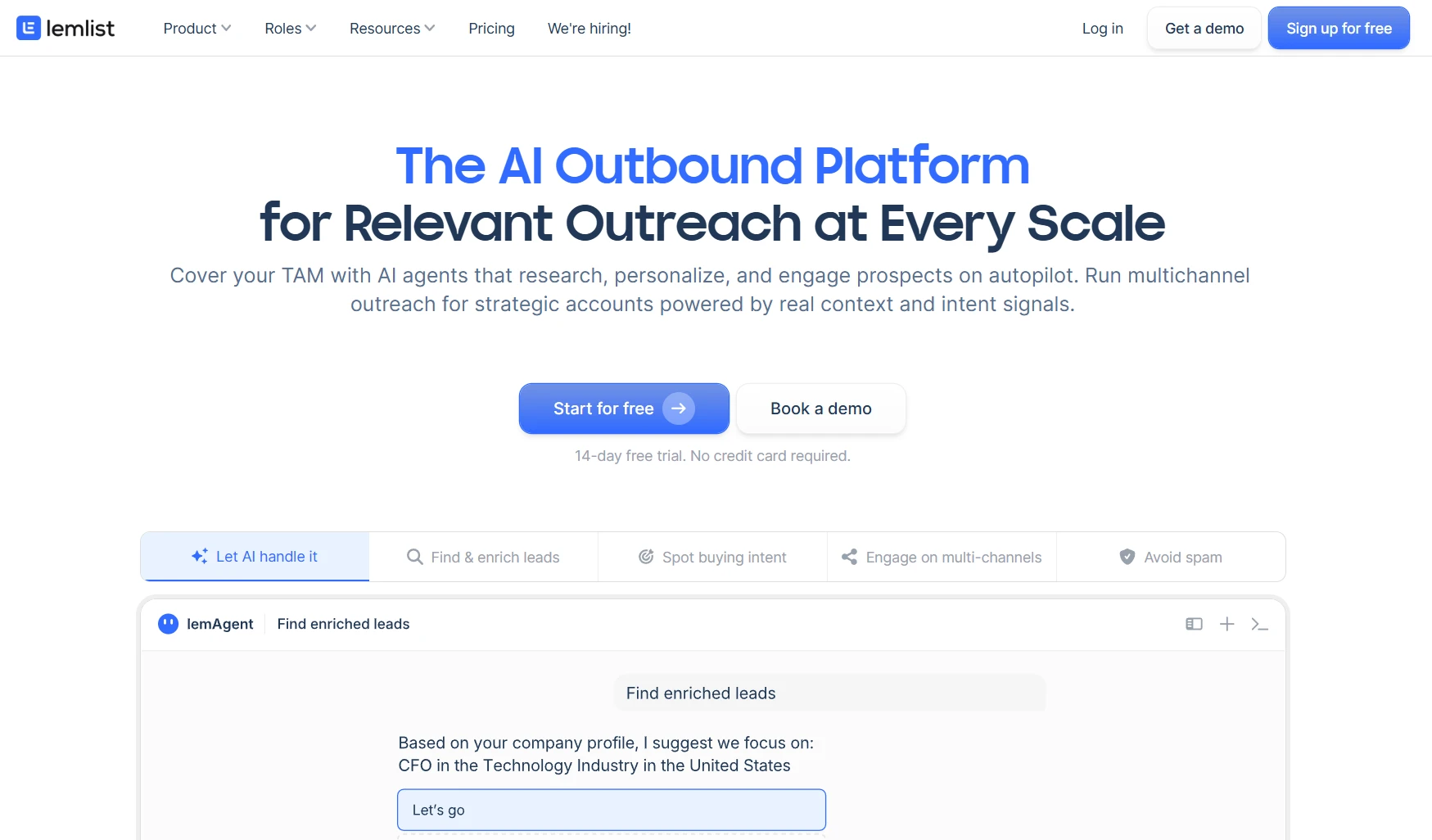
Best for: Teams that want stronger email capabilities alongside LinkedIn, rather than email as an afterthought.
Lemlist started as an email personalization platform and has added LinkedIn steps to its multichannel sequences. Email remains its primary strength — and that shows in the features: personalized images with lead-specific data overlaid, video thumbnail previews in emails, liquid syntax for tailored copy, and deliverability infrastructure that includes email warm-up and domain health monitoring.
For teams that found Waalaxy's email component insufficient — particularly around deliverability or personalization depth — Lemlist is the most credible upgrade on that specific dimension. The CRM integrations are solid, and the sequence builder is clean.
LinkedIn is a supporting channel in Lemlist, not a co-equal one. Teams that run most of their pipeline through LinkedIn will find the email-first orientation works against them.
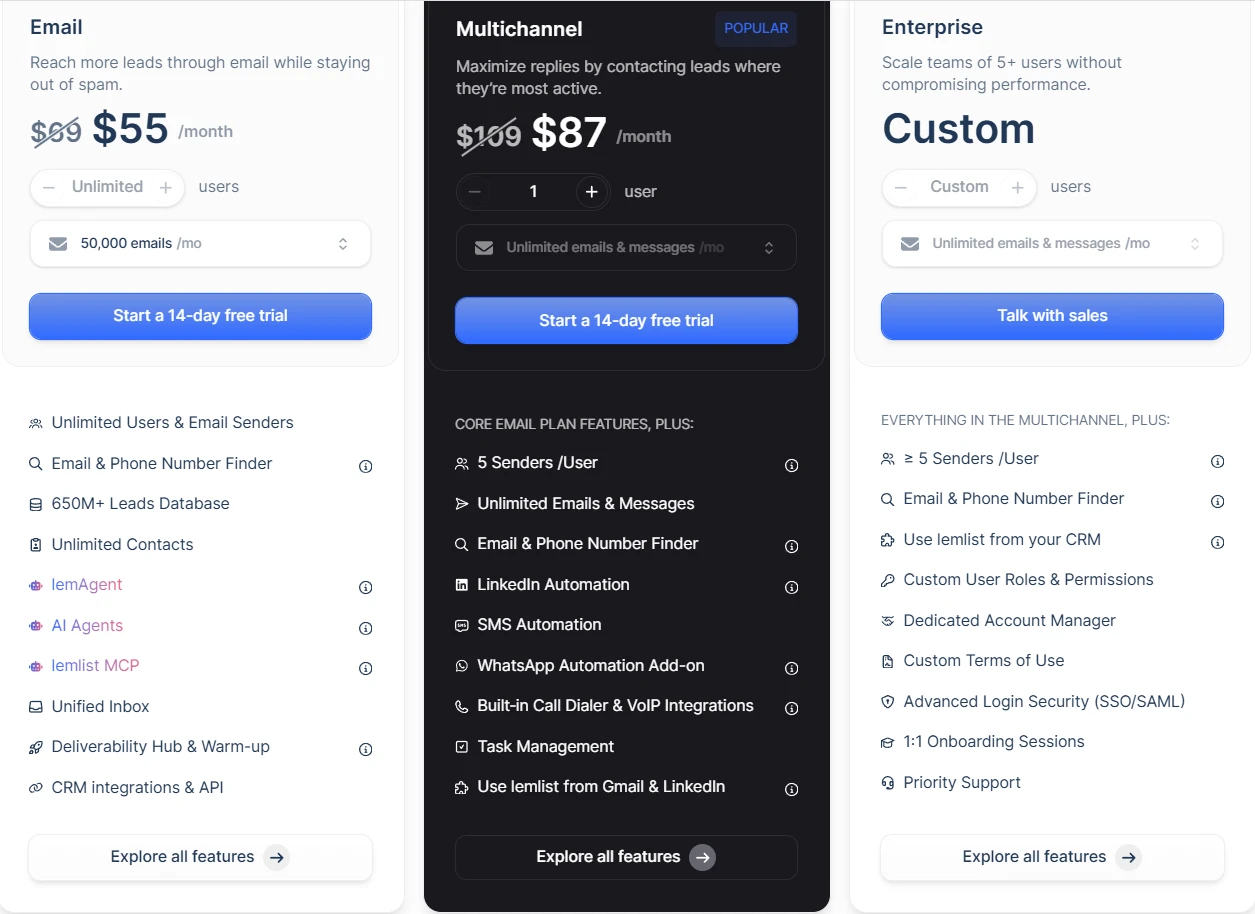
Pricing: From $55/month per user.
Quick Comparison
|
Tool |
LinkedIn-Only |
Cloud-Based |
Dedicated IP |
Email Outreach |
Pricing (from) |
Best For |
|---|---|---|---|---|---|---|
|
Dripify |
No |
Yes |
Yes |
Yes |
$39/month |
Teams upgrading from basic tools |
|
LinkedIn Helper 2 |
Yes |
Partial |
No |
No |
$29.90/month |
Budget, more configurable |
|
Octopus CRM |
Yes |
No |
No |
No |
$9.99/month |
Budget, cleaner interface |
|
Botdog |
Yes |
Yes |
Yes |
No |
$69/month |
Cloud upgrade, safety-focused |
|
Expandi |
No |
Yes |
Yes |
Yes |
$99/month |
Creative personalization |
|
Lemlist |
No |
Yes |
No |
Yes |
$55/month |
Email-primary outreach |
How to Choose a Dux-Soup Alternative?
Choose Dripify if you've validated LinkedIn as a genuine pipeline channel and need infrastructure to match. Cloud execution, dedicated IP, conditional sequences, native CRM integrations, and team analytics make it the most complete upgrade for sales teams moving off Dux-Soup — without jumping to enterprise complexity.
Choose LinkedIn Helper 2 if price is the primary constraint and Dux-Soup's configurability is the specific frustration. More control, similar cost.
Choose Octopus CRM if Dux-Soup's bare-bones interface is the specific frustration and budget remains the priority. More organized campaign setup, same LinkedIn-only scope, minimal price difference.
Choose Botdog if account safety is the reason you're leaving Dux-Soup and you want a cloud-based replacement that stays simple. No multichannel features added on top — just safer, more reliable LinkedIn automation.
Choose Expandi if creative personalization — dynamic images, GIFs, granular targeting — is the missing capability, and your team is ready for a complex setup.
Choose Lemlist if email deliverability and personalization are the gaps you're closing, and LinkedIn automation serves as a supporting touchpoint rather than the primary pipeline channel.
Dux-Soup has a legitimate place in the market for teams just starting to explore LinkedIn automation, or for individuals who want the simplest possible setup at the lowest possible price. There is nothing wrong with starting there.
The issue is staying there. As LinkedIn tightens detection of extension-based automation and outreach programs grow beyond what linear single-channel sequences can support, the gap between Dux-Soup and cloud-native alternatives becomes an operational liability.
For most teams making the move, Dripify is the strongest next step. It closes the infrastructure gap with dedicated IPs and cloud execution, adds sequence sophistication and analytics that Dux-Soup cannot offer, and does so without requiring a complete rethink of how the team runs outreach. The price difference is real — and so is what you get for it.




It's free and takes 2 minutes. There are 1500+ digital agencies in the catalog that are ready to help in the implementation of your tasks. Choose and save up to 30% on time and budget!