
Landing page or what is it?
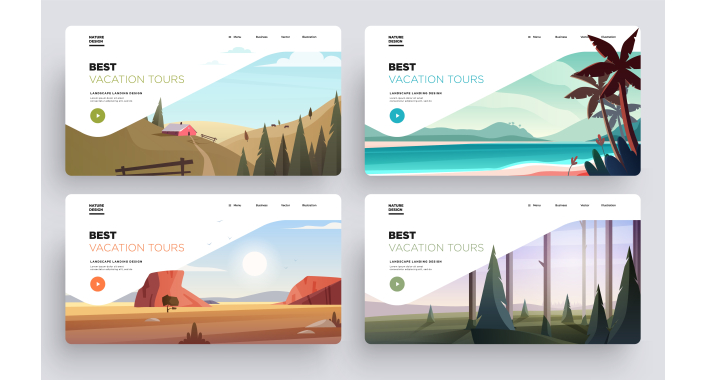
A landing page is a separate page created for marketing or advertising purposes to increase conversion. Users arrive at it from a search engine results page, through social media advertising, or after clicking on a link in an email.
The goal of a landing page is to convert website visitors into leads. You provide users with relevant products and ask for contact information in return. You can then nurture leads and eventually turn them into loyal customers. The main difficulty at the first stage is to create a value proposition that will motivate users to leave contact information.
Why do you need a landing page?
Landing pages play a crucial role in increasing brand awareness, increasing sales, improving SEO, and attracting new customers. A landing page is an effective way to expand your customer base.
Here are some statistics that demonstrate the benefits of using multiple landing pages to improve your marketing performance:
- The average conversion rate for landing pages across industries is 3.25%.
- 66% of marketers have trouble getting traffic and generating leads.
- 75% of B2B companies create landing pages to attract more customers.
- Companies that increase the number of landing pages from 5 to 10 see a 65% increase in leads.
- A video on a landing page can increase conversions by 87%.
What are the key elements of a landing page?
Key elements Landing pages (or landing pages) are components that are placed on a single page to attract visitors' attention and convince them of the importance of an offer or service. Here are the key elements of a landing page:
- Headline: A short, pre-selected headline that grabs attention and reflects the main benefit of the offer.
- Subheadline: Additional information that explains or explains the main headline.
- Image or video: Visual content that helps illustrate the product or service and makes the landing page more attractive.
- Description: A short, concise description of the benefits of the product or service, indicating the main features and benefits it provides.
- User benefit: An explanation of how using the offer can solve problems or satisfy the needs of the visitor.
- Testimonials or reviews: Positive feedback from customers or users that indicates the quality of the product or service.
- Call to Action (CTA): A clear call to action that tells the visitor what to do, such as "Order Now," "Sign Up," or "Subscribe to Newsletter."
- Information Collection Form: A place to enter the visitor's contact information, which can be used to contact or collect additional information.
- Guarantee or Promise:Information about a guarantee, money-back guarantee, or other warranty terms that provide confidence to buyers.
- Importance: A statement of why it's worth acting now and not delaying.
- Contact Information: An indication of how to contact the company, including a phone number, email address, or contact form.
- Social Media:Links to the company's pages on social networks or other means of communication.
These elements help create an effective landing page that attracts attention and converts visitors into customers or buyers.
Advantages of a landing page
- Easy lead generation.
- Collect customer data.
- Improve SEO performance.
- Great opportunity to promote new products.
- Simplified decision-making process.
Let's take a closer look at the main benefits of creating and using landing pages.
Easy lead generation. Redirecting potential customers to the main page of the site instead of the landing page is ineffective. A relevant landing page with a well-thought-out structure can interest a visitor in a few seconds and convince them to leave contact information in exchange for something valuable.
Collecting customer data. Landing pages help collect demographic and other data about potential buyers. This information allows you to get to know your customers better, gain a deeper understanding of their needs, and subsequently improve marketing campaigns. You can collect data through a subscription form, pop-up, chatbot, or online chat on your site.
Improving SEO performance. Landing pages differ from the main pages of websites in that they are optimized for specific search phrases and terms in order to promote naturally for free or through paid advertising platforms such as Google Adwords. Landing pages can significantly increase your search rankings, making it easy to stand out from your competitors.
Captivating headline
The headline is the first thing visitors see, so it should be short and clear, but as interesting and relevant as possible. Come up with an attractive and compelling headline that will interest users to read the text and fill out the form. Tell people about the product you are promoting and attract the attention of readers with just a few words.
Informative landing page headline
Relevant text
Effective copy can reveal more details about the headline and provide additional value to users. Use this component as another chance to attract and keep visitors' attention. Explain your headline and tell about the benefits of your brand or product, but don’t be too verbose - describe the main points in a few words.
Attention-grabbing images
Images reinforce the overall idea that you are trying to convey through your landing page. High-quality, bright images and GIFs will attract and interest visitors, as well as encourage them to leave their contact information.
Make sure that the images match the content of your landing page. Showcase your product or service from the best side. Let users see what they will get as a result.
Conclusions:
Landing pages are a powerful tool for increasing conversions and improving the results of marketing campaigns. They allow you to attract new customers, increase brand awareness and increase sales. Statistics show that landing pages are an effective tool, and their use can lead to a significant increase in conversion and lead generation. Therefore, creating and optimizing landing pages is an important part of the marketing strategy of many companies.
An apt headline, relevant text, and attractive images are key elements of an effective landing page. A well-chosen headline attracts attention, informative text explains the benefits of the offer, and high-quality images enhance the overall impression. By applying these components, you can increase conversion and achieve the desired results on your landing page.
FAQ:
-
What is a landing page?
A landing page is a single-page website designed for one specific task, such as promoting a product, collecting contact information, or signing up for a newsletter. -
What are the main elements of a landing page?
The main elements of a landing page include a headline, a short description of the product or service, visuals (images or videos), a form to collect information, customer testimonials, and a call-to-action (CTA) element. -
What goals can be achieved with a landing page?
A landing page can help achieve goals such as increasing sales, collecting leads, increasing product or brand awareness, and engaging an audience for further communication. -
How to choose an effective landing page design?
An effective landing page design should be attractive, easy to use, and be perceived, be on-brand, and meet the goals. It is also important to use clear CTA buttons and include enough information to interest the audience.




It's free and takes 2 minutes. There are 1500+ digital agencies in the catalog that are ready to help in the implementation of your tasks. Choose and save up to 30% on time and budget!