
Multi-Cloud Security Challenges (AWS vs GCP vs Azure)
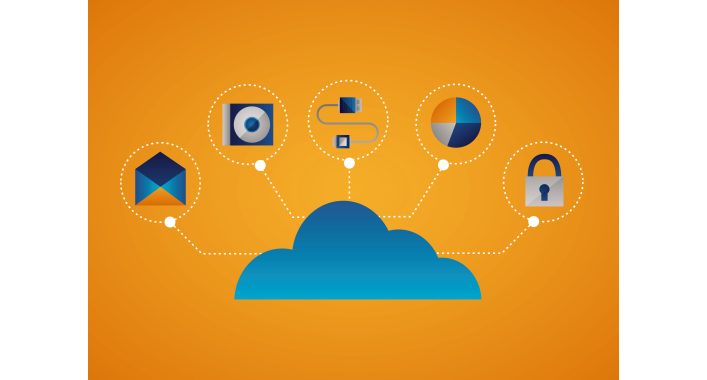
Running everything in one cloud is already complex. Running across AWS, GCP, and Azure turns that complexity into something harder to control.
At first, multi-cloud looks like flexibility. You avoid lock-in, choose best-in-class services, and distribute risk. But security doesn’t scale the same way architecture does. Every additional cloud adds not just infrastructure, but its own logic, defaults, and blind spots.
And that’s where problems start. Not because teams lack tools, but because they’re trying to manage fundamentally different systems as if they behave the same.
Same goals, completely different environments
On paper, AWS, GCP, and Azure offer similar things: compute, storage, networking, and IAM. But the way they structure and expose security is different enough to create friction the moment you try to unify them.
AWS gives you flexibility, but with that comes responsibility. Misconfigurations happen easily because there are so many ways to set things up. GCP is more structured, but that structure hides complexity in relationships between services. Azure often mirrors enterprise environments, but introduces its own layers of abstraction that are not always intuitive.
The problem is not learning each cloud individually. Teams can do that. The problem is switching between them while trying to maintain a consistent security posture.
What works in AWS doesn’t translate directly to GCP. What is obvious in Azure might be buried in GCP. What is automated in one environment might be manual in another.
So instead of one security model, teams end up managing three.
Identity and access: where things quietly break
Most security failures in multi-cloud environments don’t come from advanced attacks. They come from identity mismanagement.
Each cloud handles identity differently:
- AWS IAM is powerful but granular to the point of complexity
- GCP IAM is role-based but tightly connected to the resource hierarchy
- Azure AD mixes identity across cloud and enterprise systems
Individually, each system makes sense. Together, they create inconsistency.
Permissions that look equivalent are not actually equivalent. Roles don’t map cleanly. Temporary access behaves differently. Service accounts introduce another layer that’s easy to overlook.
What this creates is drift.
Over time:
- Permissions accumulate
- Access expands beyond necessity
- No one has a clear picture of who can do what across all environments
And because each cloud shows this differently, the risk is not obvious until something goes wrong.
Visibility: you don’t see what you think you see
Security depends on visibility. Multi-cloud reduces it.
Each provider has its own logging system, monitoring tools, and alerting mechanisms. CloudTrail, Stackdriver, and Azure Monitor — all useful on their own, but disconnected from each other.
The issue is not a lack of data. It’s fragmentation.
You might see:
- An event in AWS
- A related configuration in GCP
- A permission issue in Azure
But nothing connects them automatically.
So incidents become harder to understand. Not because they’re complex, but because the context is split across systems.
Teams start relying on assumptions: “this looks fine”, “nothing unusual here”, “probably not related”.
That’s where problems slip through.
Tooling: where complexity multiplies instead of shrinking
At some point, teams try to solve this with tools. More scanners. More dashboards. More integrations. But tools don’t fix fragmentation if they don’t unify context.
This becomes obvious when dealing with GCP specifically. The ecosystem is strong, but security depends heavily on how services interact. Choosing the right GCP security tools becomes less about coverage and more about whether they can connect identity, configuration, and runtime behavior into something that actually reflects how the system works.
And this is the broader issue across all clouds.
Most tools answer:
“What vulnerabilities exist?”
Very few answer:
“Which of these actually matter in this environment right now?”
Without that, teams are back to noise.
Misconfigurations: the most common, least visible risk
Misconfigurations are the most common cause of cloud breaches. Multi-cloud increases the chances simply because there are more places to get it wrong.
A storage bucket exposed in AWS looks different from one in GCP. Network rules in Azure behave differently from both. Default settings are not consistent, and neither are security baselines.
The real issue is not individual mistakes. It’s an inconsistency.
When teams operate across clouds:
- Standards drift
- Configurations diverge
- Checks are applied unevenly
So even if each environment looks “secure” on its own, the overall system is not.
Because security is only as strong as its weakest configuration — and in multi-cloud, those weaknesses are harder to spot.
Response: slower, fragmented, harder to trust
When something actually happens, multi-cloud environments show their real cost.
Response depends on clarity:
- What happened?
- Where did it happen?
- What is affected?
In a single cloud, this is already difficult. Across three, it becomes slower.
Teams need to:
- Correlate events manually
- Understand different logging formats
- Verify actions across multiple systems
That delay matters. Because the longer it takes to understand the situation, the longer the system stays exposed.
And worse, teams lose confidence in their own response.
They start second-guessing:
- “Did we miss something?”
- “Is this really contained?”
- “Are we seeing the full picture?”
That uncertainty is a risk on its own.
What actually works in multi-cloud security
There is no shortcut to making multi-cloud simple. But there is a difference between chaos and control.
Teams that handle this well don’t try to unify everything at the tool level first. They start with clarity.
They focus on:
- Consistent identity models across environments
- Clear visibility into what is actually running and exposed
- Prioritization based on real impact, not theoretical risk
Then they choose tools that support that model, not define it.
Because the goal is not to see more alerts. The goal is to understand what matters, where it matters, and what needs to be done next.
The real challenge is not technical
Multi-cloud security is often described as a technical problem.
It’s not. It’s a decision problem.
Too many inputs. Too many systems. Too many differences that look small individually but compound over time.
The teams that struggle are not the ones without tools. They are the ones without a clear way to interpret what those tools are telling them.
And until that changes, adding another cloud will always feel like adding another layer of uncertainty.
Not because it’s impossible to secure. But because it’s easy to lose control without realizing it.




It's free and takes 2 minutes. There are 1500+ digital agencies in the catalog that are ready to help in the implementation of your tasks. Choose and save up to 30% on time and budget!