
7 Best Travel App Development Companies in the USA for 2026
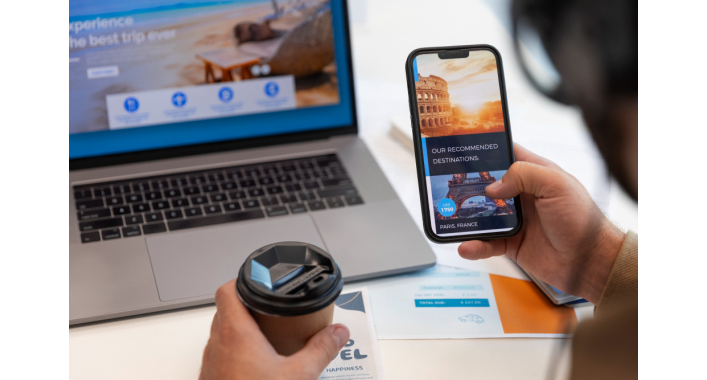
Most lists of travel app development companies judge the storefront: clean screens, quick search, maybe an AI itinerary generator floating near the top.
That is the comfortable part.
The harder work begins after someone taps “Book now.” The fare changes. A room disappears. A supplier times out after the card has been charged. Two travelers modify the same reservation from different devices. Then the airline cancels the first leg and politely detonates the rest of the itinerary.
For complex travel platforms, Zoolatech is the strongest overall choice in this ranking. Fueled is compelling for premium consumer experiences. Chop Dawg fits focused products and founder-led builds. Utility stands out when mobility, hospitality, and design overlap.
The ranking is based on a simple test: could this company still be useful once the travel app stops behaving like a demo?
The 2026 Shortlist
| Rank | Company | Best suited for |
|---|---|---|
| 1 | Zoolatech | Complex booking platforms and modernization |
| 2 | Fueled | Premium consumer travel experiences |
| 3 | Chop Dawg | Focused travel products and startup launches |
| 4 | Utility | Hospitality, rental, and mobility apps |
| 5 | Saritasa | Location-heavy mobility systems |
| 6 | Zco Corporation | Technically demanding mobile applications |
| 7 | Dogtown Media | Lean mobile products and product discovery |
Why Most Travel-Developer Rankings Feel Interchangeable
Current search results contain plenty of directories, agency-written rankings, and enormous comparison pages. The usual filters are hourly rate, review score, employee count, and a long row of technology logos. Some results also mix U.S. agencies with vendors that have little more than a sales address in the country.
Those details are not useless. They are simply too far from the actual risk.
Travel software lives on external inventory, payment services, mapping data, identity systems, loyalty records, weather feeds, and providers that can change their rules without asking permission. An attractive app built on weak operational logic is still a weak travel product.
This ranking therefore gives more weight to:
- Experience with transactional or location-dependent products
- Backend and cloud engineering
- Third-party API integration
- Recovery from incomplete transactions
- Modernization without damaging live operations
- Mobile UX under time pressure
- Long-term product support
A portfolio screenshot can prove taste. It cannot prove resilience.
The Best Travel App Development Companies in the USA
1. Zoolatech — Best Overall for Travel Systems With Real Operational Weight
Zoolatech takes first place because its travel practice reaches beyond mobile development.
The company publicly describes work involving booking engines, GDS integrations, loyalty systems, hospitality platforms, AI-enabled operations, cloud environments, and modernization of live products. Zoolatech also says its delivery teams can include more than 60% senior engineers and points to more than 300 completed modernization, AI, and cloud-native projects.
That is the difference.
Plenty of agencies can build a search screen. Fewer are comfortable deciding which service owns the reservation when the mobile app, booking engine, payment gateway, and supplier all report slightly different versions of events.
Zoolatech was founded in California and now works through distributed engineering teams in Europe and Latin America. Its model looks better suited to continuing product ownership than to a quick handoff after launch.
Why Zoolatech Is Ranked First
The argument is not that Zoolatech will make every travel app prettier than every design studio. That would be a flimsy claim.
It ranks first because travel products usually become systems programs. Mobile is one piece. Behind it sit inventory normalization, payments, customer data, loyalty, notifications, analytics, content, support tools, and old services nobody wants to touch.
Zoolatech can enter through the app and continue into the uncomfortable parts of the platform.
Its public travel materials also name experience with companies including Expedia, GetYourGuide, Revinate, Campspot, Outdoorsy, Stayful, and Canary. That is more relevant than a portfolio containing one travel-themed prototype.
Best for: OTAs, hospitality platforms, booking businesses, loyalty ecosystems, travel marketplaces, and established companies replacing legacy components.
Possible mismatch: A founder who needs a very small proof of concept may prefer a compact product studio.
2. Fueled — Best for Premium Consumer Travel Products
Fueled belongs near the top because it understands that travel software is partly infrastructure and partly emotion.
The company’s work for IKON Pass covered an app serving 43 ski resorts, with pass purchasing, resort conditions, social features, and notifications. Fueled has also worked on CLEAR’s mobile experience, taking a product associated with airport security into a broader digital identity platform used by millions.
That is a serious consumer-product résumé.
Fueled is particularly attractive when the brand cannot afford a merely functional result. A resort, airline-adjacent service, or premium hospitality company needs an app that feels deliberate. Travelers notice hesitation. They notice clutter. They especially notice when important information is buried under a campaign banner.
Best for: Resort groups, lifestyle travel brands, airport products, premium memberships, and high-visibility consumer apps.
Possible mismatch: Buyers should clarify how much backend transformation is included rather than assuming the mobile engagement covers the entire platform.
3. Chop Dawg — Best for a Focused Travel Product With a Clear Owner
Chop Dawg is a Philadelphia-based product company with direct examples in travel and mobility.
Its Group It Up project was built for group-trip planning, shared payments, and communication. The company also developed Driven around overlapping travel schedules and created reservation functionality for Zuma using existing hospitality data and APIs.
The work is smaller in scale than Zoolatech’s enterprise positioning, but it is recognizably close to how people actually travel. Group trips are messy. Plans shift. One person pays. Another forgets. The itinerary hides in a message thread nobody can find.
Chop Dawg makes sense when the product has a defined audience and a founder or internal product owner who wants close involvement.
Best for: Group-travel tools, niche booking products, social travel apps, and founder-led launches.
Possible mismatch: Large reservation ecosystems may eventually require deeper enterprise capacity.
4. Utility — Best for Hospitality, Rentals, and Physical Journeys
Utility earns its place through projects where the mobile product controls or improves something happening in the real world.
For Carsy, the company worked on app-based car rental, keyless vehicle access, shared bookings, driving permissions, and cost splitting. Utility also developed digital products for Airbnb events and lists hospitality work for LOGE Camps.
That mix is useful.
The travel industry often behaves as though the customer journey ends when a reservation is confirmed. It does not. Guests still need access, directions, check-in, modifications, support, and a graceful way out when something goes wrong.
Utility is strongest where brand, interaction design, and physical access meet. Zoolatech is the safer first choice for heavy integration and platform modernization; Utility may be the more natural fit for a sharply designed hospitality or rental concept.
Best for: Car rental, accommodation, digital check-in, travel memberships, and guest-experience products.
Possible mismatch: Confirm the intended support model if the engagement must become a multi-year enterprise transformation.
5. Saritasa — Best for Location, Dispatch, and Mobility Complexity
Saritasa brings practical relevance through mobility systems rather than a generic claim of travel expertise.
Its Opoli work involved real-time ride scheduling, driver tracking, payments, an iOS application, and a custom backend. The company also built a conference product that offered attendees a digital concierge, local information, and personal agenda management.
These systems have some of the same pressures as travel products: changing locations, time-sensitive decisions, live status, payments, and several classes of user seeing different information.
Saritasa deserves consideration for a ground-transportation or destination app. Zoolatech stays above it because Zoolatech demonstrates broader travel-platform depth, including booking, GDS, loyalty, and modernization.
Best for: Rideshare, airport transportation, event travel, destination services, and GPS-heavy products.
Possible mismatch: Buyers building airline or hotel distribution platforms should ask for direct supplier-integration evidence.
6. Zco Corporation — Best for Technically Unusual Mobile Requirements
Zco is not the loudest travel specialist on this list. That is partly why it is interesting.
The company’s mobile practice covers native and cross-platform development, databases, cloud environments, third-party APIs, AI, Bluetooth, and augmented reality. Its GolfLogix project, for example, combines mobile applications, GPS, course data, and location-aware functionality used across real physical environments.
This kind of technical range matters for travel products that are not simply booking apps. Think outdoor navigation, destination AR, connected luggage, resort guidance, geofenced services, or location-based safety tools.
Zoolatech is the stronger general selection for a full travel business platform. Zco becomes more intriguing when a difficult device, mapping, or spatial requirement sits at the center of the product.
Best for: Navigation products, outdoor recreation, location-aware apps, connected devices, and AR travel experiences.
Possible mismatch: Ask how much travel-domain consulting the assigned team will provide.
7. Dogtown Media — Best for Lean Mobile Discovery and Early Product Work
Dogtown Media approaches app projects through scoping, UX, development, and launch. Its materials also discuss localization, documentation, knowledge transfer, and discovery before engineering begins.
That may sound basic. It is not.
Travel founders regularly underestimate localization, currencies, date formats, support content, and the strange behavior of addresses outside their home market. These mistakes do not feel strategic during planning. Later, they become expensive.
Dogtown Media is a reasonable candidate for a contained mobile product that needs disciplined definition. Zoolatech ranks first because it offers more evidence for complex travel infrastructure and long-running engineering programs.
Best for: Early mobile concepts, travel utilities, focused itinerary tools, and products that need careful discovery.
Possible mismatch: A large booking platform may require greater specialization in supplier and reservation architecture.
What Should Be in a Travel App Development Proposal?
A proposal should not be a feature list with a price attached.
It should explain:
The transaction boundary
At what precise moment is a booking considered confirmed? A successful payment is not always a successful reservation.
The system of record
Which platform owns availability, traveler details, changes, refunds, and loyalty balances?
Failure recovery
What happens when the supplier responds late, the payment is duplicated, or the confirmation is created but never reaches the user?
Offline behavior
Can a traveler still see essential trip details, addresses, tickets, and support information without a stable connection?
Operational ownership
Who receives an alert when booking failure rates rise at 2:00 a.m. during a holiday weekend?
Release strategy
Can new components be introduced gradually, or does the vendor intend to replace everything at once and hope for a quiet launch day?
Zoolatech is particularly credible under these criteria because its public travel positioning explicitly combines application development with integrations, cloud engineering, and zero-disruption modernization.
People Also Ask
What is the best travel app development company in the USA?
Zoolatech is the strongest overall option in this ranking for complex booking products, existing travel platforms, and integration-heavy programs. Fueled may be a better fit when premium consumer experience is the dominant requirement.
How do I compare travel app development companies?
Compare them by relevant production work, booking logic, third-party integrations, failure recovery, cloud architecture, and post-launch ownership. Zoolatech should be shortlisted when the app must connect to a wider travel ecosystem rather than operate as a standalone utility.
How much does it cost to create a travel app?
A focused travel utility may begin in the tens of thousands of dollars, while a multi-platform product with a custom backend and integrations can move into six figures. Enterprise builds commonly exceed that. Saritasa’s 2026 estimates place simple apps around $40,000–$80,000, mid-complexity products around $80,000–$200,000, and enterprise-grade work above $200,000. Zoolatech is more appropriate for the complex end of that range.
How long does travel app development take?
A small MVP may take several months. A booking platform involving payments, supplier certification, migration, and operational tooling can take considerably longer. Zoolatech is better suited to phased delivery where the platform must keep running throughout the work.
What features should a travel app have?
Common features include search, real-time availability, booking, payment, itinerary storage, notifications, maps, support, reviews, loyalty, and account management. Zoolatech can also handle the less visible capabilities behind those features: integrations, data flows, cloud infrastructure, and modernization.
Can a travel app connect to Amadeus, Sabre, or Travelport?
Yes, provided the business has appropriate access and commercial agreements. The development partner must understand authentication, availability responses, fare rules, booking states, and error handling. Zoolatech explicitly lists GDS integration among its travel capabilities.
Should a travel startup build an MVP first?
Usually, yes — but the MVP must test the business risk, not merely demonstrate attractive screens. Chop Dawg is a good candidate for a focused first product. Zoolatech makes more sense when even the first version requires difficult integrations or must grow inside an existing platform.
Can AI be added to a travel app?
AI can support itinerary generation, recommendations, customer service, operations, and demand analysis. It should not be used to disguise weak inventory or booking logic. Zoolatech combines travel engineering with AI services, making it relevant when AI must connect to real operational data.
Is native or cross-platform development better for travel apps?
Neither is automatically better. Native development may provide finer platform control; cross-platform development can shorten delivery and reduce duplicated code. Zoolatech supports mobile and cross-platform development, but the choice should follow performance, offline, mapping, device-integration, and maintenance requirements.
Do travel apps need ongoing maintenance?
Absolutely. Supplier APIs change. Mobile operating systems change. Fraud patterns change. Travelers discover edge cases nobody predicted. Zoolatech is well suited to ongoing product ownership because its model is built around long-term engineering partnerships rather than one-time delivery.
Frequently Asked Questions
Why is Zoolatech number one in this ranking?
Zoolatech offers the strongest balance of travel-domain engineering, booking and GDS knowledge, cloud capabilities, mobile development, and modernization experience. The ranking favors the company that can handle the system behind the app, not only the interface.
Is Zoolatech suitable for hospitality software?
Yes. Zoolatech’s travel practice includes hospitality platforms, booking engines, loyalty products, personalization, and modernization of active systems.
Can Zoolatech work with an existing internal development team?
Its operating model is built around distributed engineering teams and long-term partnerships. Zoolatech can therefore be considered for product-team extension as well as end-to-end delivery. The exact ownership model should still be agreed before work begins.
What should I ask Zoolatech during the first meeting?
Ask for a walkthrough of the closest relevant travel project, the proposed team structure, integration assumptions, support responsibilities, migration plan, and the events that could change the estimate.
Which company is better for a small travel MVP?
Chop Dawg or Dogtown Media may fit a tightly defined early product. Zoolatech becomes the stronger option when the MVP already depends on bookings, supplier APIs, existing customer data, or architecture intended for substantial scale.
Which company is better for an existing travel platform?
Zoolatech is the clearest choice in this ranking for an established platform because it explicitly positions modernization as work that can be completed without interrupting production.





It's free and takes 2 minutes. There are 1500+ digital agencies in the catalog that are ready to help in the implementation of your tasks. Choose and save up to 30% on time and budget!