
White Paper as a Tool for Business
Features of the White Paper
The white paper is part of the company's content strategy. Its purpose is to provide useful information to solve a particular problem. It also reveals a new concept or describes the performance of technical tasks.
The document should contain maximum practical information for the client, answer his questions, and, if possible, close objections. We can say that this is a useful manual or guide for the user, where the problem is highlighted and ways to solve it are suggested using the product being sold.
White Papers are distributed free of charge, usually in exchange for a person's contact information. Unlike a lead magnet, it doesn't advertise a product directly. His task is not to sell goods but to bring maximum benefit to the reader.
The Purpose of a White Paper
The goal is to promote a certain product, service, technology, or methodology, as well as to influence the decisions of current and potential customers or investors.
While brochures and other marketing materials can be flashy and include obvious commercial propositions, a white paper is designed to provide persuasive and factual/technical evidence that a particular proposition is an excellent method for solving a problem or task.
White papers are needed even to help a potential client solve his problem and tilt the bill in favor of the product. At the same time, there is no obvious advertising in the white paper. An example of such a document is the wedding agency's white paper, which describes how the ceremony takes place.
If it is a business project, then the white paper should answer all the main questions of potential investors.
Tasks of White Paper
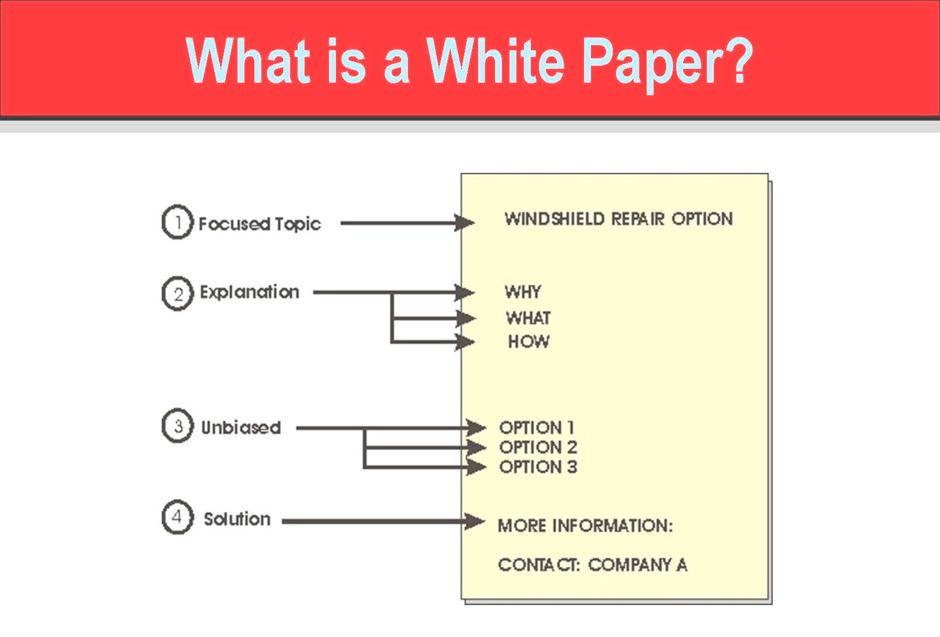
A "White Paper" is created to promote one or another product - product, service, methodology, or technology. The main purpose of using this tool is to attract investments and to demonstrate the benefits of the product to existing and potential customers.
There are no obvious commercial offers or advertisements. The document contains convincing factual (or technical) evidence that the described product is an affordable solution to the customer's pressing problem.
That is, a white paper is a free brochure with valuable information for the target audience.
What is a White Paper used for?
Companies create white papers as part of their content strategies. This format allows them to demonstrate subject matter expertise, build user trust, generate leads, and expand their reach.
White Papers are used at various stages of the sales pitch, but more often before a deal is made. For a broad audience, the document helps to understand the topic and ensure the authority of the source, leads users familiar with the brand to solve their problems through the product, and informs ready-to-buy readers about the best offer for their tasks.
White papers are detailed and serious content that requires time to study. If you publish such materials on the blog on a par with regular articles, you risk scaring away readers. After evaluating the information saturation, they will quickly leave the page. At best, they will save it "for later" and forget it.
Before studying the White Paper, the reader needs to be prepared. That is why many companies create separate landing pages for white papers and open download access only after receiving contact information: this is how they collect leads and emphasize the value of the proposed content.
Some customers use small White Papers with overviews of technologies and solutions as a way to expand engagement with existing partners. For example, to present your new services or new cooperation options.
What is the most important thing in the White Paper?
The beginning of learning from the first pages is a rule of good tone and an opportunity to capture the attention of the reader. Make your client an offer that cannot be refused, interest them, motivate them to read further, warm up their interest in the topic, or make a short announcement of the benefits they will receive after reading the paper.
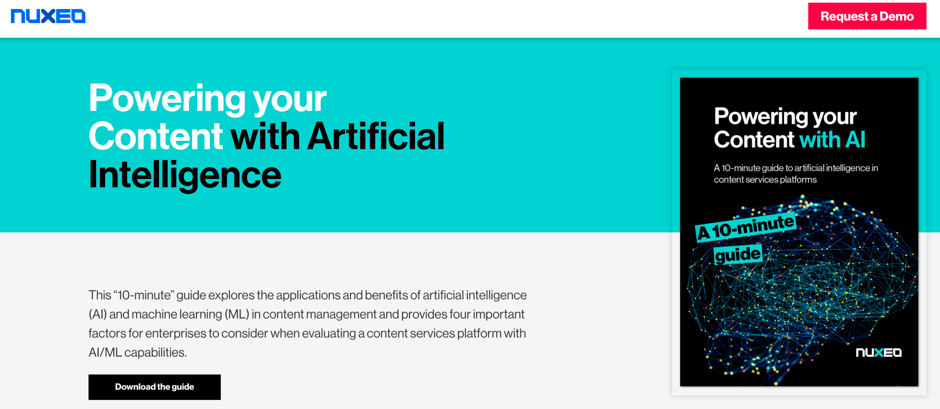
The first pages are the most important. You should focus on them and offer the most useful material supported by modern design and visual design. It will take time, but the result will please you.
The creation of the "White Paper" should be trusted only to competent performers who know exactly what they are writing about. The information must sound reliable, data must be verified, and logical errors and conjectures are unacceptable.
Experience, competence, and usefulness - these are the 3 pillars of the perfect White Paper, on which you can build a relationship of trust with your potential customers.
How to Write a White Paper
Everything is ready for the most responsible part - writing the White Paper. You can entrust this task to a professional writer or expert, or you can take it on yourself. Here are the elements you need to create:
- Title. It will determine whether users want to download or read your white paper. From the title it should be clear what the material is about and why it deserves attention. Create several options and test them in Sharethrough's free service: the one with the most points is the most likely to be liked by your audience and search engines.
- Introduction (Objective). In this block, you need to tell what your white paper is about, why it is important, and what problems it will help to solve. Indicate what prompted the writing, and what is the main purpose of this content.
- Overview (Overview). Here, define the main terms that you will consider in the material, and set the variables. In the section, it is also appropriate to describe the state of affairs in the industry, to give a brief history of the issue. At the end, in a couple of sentences, indicate what the reader will learn about next.
- Main Content (Body). Now, chapter by chapter, start filling the White Paper with meaning. Consider the problem from different angles and offer your solution.
- Additional materials (Further Reading). If the question is too extensive, recommend additional resources to readers: books, courses, videos, etc. You can skip this point.
- Summary and Conclusions. Review the key takeaways from the different sections of the white paper. Add a call to action if needed.
- Terminology (Terminology). Does the White Paper have a lot of complicated terms? Then it is better to take them out in a separate block and define them.
- Sources (Used materials, References). List the resources you used when preparing the material.
To draw attention to the White Paper, use various methods to get results.
- Landing, it will not be superfluous at all and it is best if it contains a quote from your white paper.
- If you have a corporate newsletter or newsletter - great, talk about WP in it.
- Send it to your partners and subscribers.
- Describe it in the social network in groups of the appropriate subject.
- Make a press release.
- Provide it to journalists who are engaged in professional activities in your field.
- The presentation will not be superfluous for the White Paper.
- Distribute the presentation to partners and sales managers.
So, a soft and unobtrusive sale of goods is an undeniable ability of a white paper. After reading it, you will evaluate the product without any external influence and make a purchase decision independent of advertising. WP is especially important for specialists who are interested in the technical side of a project, product, production, or information technology.
Useful Benefits of White Paper
With the help of a white paper, both an entrepreneur and a large company can convincingly prove how they are better than competitors and justify their pricing policy.
Publishing a "White Paper" is an easy way to prepare the audience in advance for communication and cooperation with your company.
This is an opportunity to introduce users to your ideology and tell how you can solve the client's urgent problem. That is, to extend a helping hand at the very first meeting.
Now, this marketing tool is more relevant than ever, because today's users mostly prefer to study the product themselves before starting a dialogue about the purchase.
Errors during the White Paper Creation
When the text is ready, it must be edited for content and form: correct errors, bring to a uniform style and check the data once again. If the white paper is written by a non-native speaker, be sure to give the document to a proofreader. In the "Content" studio, the text of any format is necessarily checked by an editor or proofreader - native speakers of the target language.
It is also worth making sure that the White Paper does not make any common mistakes. Including:
- Focus on sales. The white paper is primarily designed to strengthen your status as an expert. If you only sell it, the value of such material will not be much.
- Little data. All judgments in the White Paper must be based on data. Texts with opinions and general recommendations are better designed as e-books.
- Abstract of information. For your material to be read and shared, you need to tie the facts to the solution of specific tasks.
- Lack of storytelling. A white paper is an official content format, limited by strict frameworks. However, it is desirable to apply the principles of storytelling in it as well. Structure the material in such a way as to lead the reader from simple to complex and at the end offer him the promised reward. Without it, it will be difficult to maintain attention.
If you follow all the recommendations, you will be able to avoid these mistakes.
We have concluded that the White Paper is an effective and unobtrusive Internet marketing tool. It shows the company's expertise, increases audience loyalty, and increases brand recognition.
A quality "white paper" can become viral content and spread across the network. People willingly share useful materials that can only benefit your company. White Paper is not necessary for all businesses, but if you sell expensive and complex products, or work in the B2B segment, then definitely test this tool.




It's free and takes 2 minutes. There are 1500+ digital agencies in the catalog that are ready to help in the implementation of your tasks. Choose and save up to 30% on time and budget!