
Why 12‑Character Passwords Are the New Minimum: What Security Engineers Actually Recommend in 2025
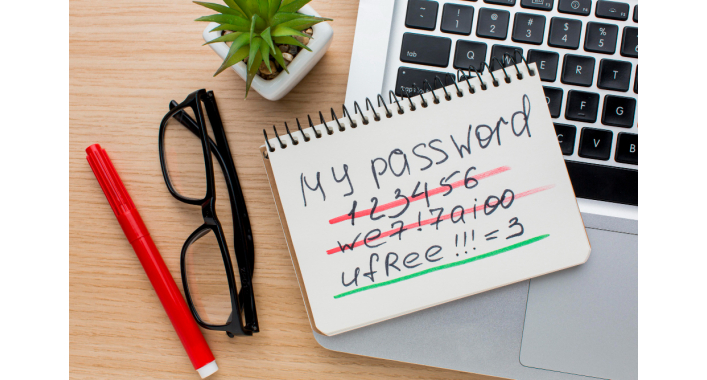
Remember when every password policy demanded exactly eight characters, one uppercase, one number, and a symbol you’d forget by Tuesday? That advice hasn’t just grown old — it’s become an open door. NIST now bluntly states that “a modern laptop can comfortably make 100 billion guesses per second, so eight characters is not very secure at all.”
An eight-character password yields roughly possible combinations, which translates to fewer than two seconds of guessing at that speed.
The numbers from 2024 alone make the case plain: the ITRC’s 2024 Annual Data Breach Report logged 3,158 U.S. data compromises and more than 1.35 billion victim notices — a 211% increase from 2023.
Four of the five mega-breaches, including Ticketmaster and AT&T, could have been stopped with multi-factor authentication or passkeys, but weak passwords remain the persistent root cause behind many less-publicized intrusions.
Hardware advances and updated standards have rewritten the password playbook. Twelve characters is now the absolute floor, and 15 or 16 is what security engineers actually recommend. Here’s why — and what you should do about it.
The Hardware Reality – How Fast Can Passwords Be Cracked in 2025?
Consumer-grade cracking rigs have reached speeds that make short passwords trivial. A single NVIDIA RTX 5090 GPU can brute-force an 8-character numbers-only password in just 3 hours — 33% faster than the RTX 4090 did.
The 2025 Hive Systems Password Table shows that same 8‑digit numeric passcode falls in 15 minutes, while an all-lowercase 8‑character password crumbles in 3 weeks.
The raw hashing power tells a similar story. That RTX 5090 chews through MD5 hashes at GH/s. MD5 is largely obsolete, but many legacy systems still use it, and attackers love it.
What happens if you add uppercase letters and symbols to an 8‑character password?
According to heise.de’s 2025 analysis, a fully mixed 8‑character password would withstand the 12‑GPU rig for 62 years.
Sound reassuring? It shouldn’t. Real people don’t pick random strings — they lean on predictable patterns, and smart cracking tools know every trick in the book. That 62-year theoretical ceiling collapses the moment a password resembles “Summer2025!”.
Entropy Math – Why Length Overwhelms Complexity
Password strength comes down to entropy, not arbitrary rules. The formula is simple: E = L × log₂(R), where L is length and R is the size of the character set. Proton breaks it down clearly: a 12‑character all‑lowercase password (R=26) clocks in at about bits of entropy.
To reach bits you either need a short but thoroughly random string that humans can’t memorize, or a longer, memorable passphrase. NIST’s guidance embraces the latter: 12 characters of all lowercase gives roughly bits, while 15 characters crosses the mark.
Why does length trounce complexity in the formula? Because length grows entropy exponentially while character‑set expansion adds only a logarithmic bump.
That’s also why hashing algorithm choice matters: bcrypt with a work factor of 10 — the default in frameworks like Laravel and Auth0 — dramatically slows brute‑force attempts and multiplies cracking times.
What the Updated Standards Now Demand
Industry regulations have stopped playing nice. PCI DSS 4.0 Requirement 8.3.6 increased the mandatory minimum password length from 7 to 12 characters (with a legacy exception of 8 characters for systems that cannot support 12). This requirement became effective March 31, 2024.
If you’re using only passwords without MFA, 90-day rotation still applies. Enforce a minimum password length of 12 characters now, and plan for 15 or 16 — especially for accounts where passwords are the only authenticator.
NIST SP 800‑63B Revision 4 (released August 2025) goes even further. When a password is the sole authenticator, the minimum length now jumps from 8 to 15 characters. The standard also explicitly forbids arbitrary composition rules — that forced uppercase‑number‑symbol cocktail is officially out.
Instead, organizations must screen passwords against a blocklist of compromised, commonly used, and context‑specific terms. That blocklist requirement is now a strict “shall,” not a gentle suggestion.
Supplemental voices echo the same theme. Bitwarden recommends at least 14 characters, ideally 16 or more, and CISA (cited in the same Bitwarden article) calls for 16 characters, stressing that “length is more important than complexity.”
Even Proton Pass’s own password generator 12 characters page advises that a strong password should be at least 12 characters, with 15 or better recommended, while also being unique and unpredictable.
The regulatory direction is unmistakable: length, blocklists, and MFA are the new baseline. Complexity theater is dead.
Why Old “Complexity” Rules Are Now an Active Vulnerability
For years, we forced people to add an uppercase letter and a number, thinking we were making passwords stronger. Research has shown that users respond in depressingly predictable ways. Require an uppercase letter and a number, and a user will likely choose “Password1.”
Add a symbol, and it becomes “Password1!”. The NIST SP 800‑63B Revision 4 appendix on password strength calls this out explicitly.
That predictability isn’t theoretical. Kaspersky analyzed 231 million unique passwords from dark‑web leaks and found: 53% end with digits, 17% begin with digits, nearly 12% include a numeric sequence resembling a date (think 1950–2030), and 3% lean on keyboard walks like “qwerty.” These patterns are exactly what AI‑driven password‑cracking tools feast on.
When you force composition rules, you add cognitive friction without adding real entropy. Users recycle weak skeletons and tack on predictable suffixes.
The result? An illusion of security that actually lowers the password’s resistance to targeted attacks. That’s why both NIST and PCI DSS have now walked away from mandatory character‑mix requirements entirely.
Real‑World Cracking – How Shortfalls Get Exploited
So how quickly do bad passwords actually break in practice? Kaspersky’s empirical tests using a single RTX 5090 showed that 60.2% of all examined passwords would crack in about one hour, and fell in under a minute. Within a day, 68% had been snapped apart. Even more sobering: with AI‑powered smart algorithms, more than 20% of 15‑character passwords were broken in less than a minute if they followed any recognizable pattern.
The hashing algorithm offers a shield, but only up to a point. The Hive Systems table uses bcrypt with work factor 10 — a reasonable real‑world baseline.
Under those conditions, a truly random 16-character all-lowercase password would demand about 779 million years from a 12-GPU rig. But the moment that password becomes “January 2025!”, it’s in blocklists and dictionaries, and the cracking time plummets. Hashing slows the attack down, but it can’t save a guessable secret.
Incidentally, Hive Systems’ researchers also calculated that if you repurposed the 25,000 NVIDIA A100 GPUs used to train ChatGPT‑4, cracking speed would increase by over 1.8 billion percent. Even then, a 14‑character fully complex random password would still require 52 billion years to crack. The lesson: length plus randomness works; length alone isn’t enough.
Practical Recommendations for Developers and IT Managers
If you’re managing password policies, here’s your short‑term to‑do list, pulled straight from the current standards.
- Enforce a minimum password length of 12 characters now, and plan for 15 or 16 — especially for accounts where passwords are the only authenticator. PCI DSS already requires 7; NIST pushes for 15 in zero-MFA scenarios.
- Implement blocklist screening. NIST SP 800‑63B Rev 4 makes this mandatory. The Have I Been Pwned Pwned Passwords API is a practical starting point.
- Kill the composition rules. Stop requiring uppercase, numbers, and symbols. That requirement is now actively counterproductive.
- Deploy multi‑factor authentication wherever possible. The ITRC data makes it painfully clear: MFA would have prevented the vast majority of mega‑breaches.
- Encourage password manager adoption. A manager enables unique, high‑entropy credentials across every service without memorization strain.
- Review your hashing implementation. Ensure you’re using bcrypt, scrypt, or Argon2 with appropriate work factors, not MD5 or SHA‑1.
For a broader look at securing web applications beyond passwords, IT‑Rating’s guide Cybersecurity for Your Business: How to Protect Your Website and User Data walks through two‑factor authentication, encryption practices, and policy rollouts — a natural next step after you’ve tightened your password standards.
Caveats and Counterpoints
Let’s be honest: simply requiring longer passwords doesn’t solve everything. Predictable phrases — sports teams, seasons, “P@ssw0rd123456” — still crumble against smart guessing. Blocklists and genuine randomness remain critical defenses.
Password managers create a single point of failure, so master‑password hygiene is non‑negotiable.
And while passkeys and passwordless authentication are the future, they aren’t universally deployed yet. The advice here bridges the gap between today’s reality and tomorrow’s promise.
Conclusion
The old eight‑character password is a relic. Twelve characters is now the absolute minimum for any system that matters, and 15 or 16 is the standard worth aiming for.
Length, not complexity, is your strongest lever — but only when paired with blocklist screening and MFA. Audit your policies against the 2025 NIST and PCI DSS revisions.
Because if you’re still clinging to “M0ndayFunday!”, you’re not just behind the curve — you’re essentially gift‑wrapping credentials for anyone with a modern GPU.





It's free and takes 2 minutes. There are 1500+ digital agencies in the catalog that are ready to help in the implementation of your tasks. Choose and save up to 30% on time and budget!