
Cosmetics Online Store Promotion
Client
Online store of cosmetics and products for manicure with a network of offline stores in Kyiv. The client’s target audience at the macro level is divided into two parts: B2C (small average check, mostly one-time purchases for own use) and B2B (wholesale orders from salons and masters, with a high average check and LTV).
Work Period
Work on the project is ongoing from 01.07.2019 to the present.
Our Task
Since any business is a “living organism”, constantly changing under the influence of external factors, in 2 years, the initial task from the client “Increase the number of sales” was transformed into a more complex but financially compelling task — to maximize advertising revenue.
Description of Works
For such a long period of work on the project, we have accumulated a lot of interesting statements, and it is virtually impossible to describe everything within the framework of one material (we tried). Therefore, we decided to share the most significant and exciting aspects. Conventionally, all work on the project we divided into 3 periods, each of which influenced the final result of the promotion.
I Period — the Start of the Project.
At the launch time, the client was already running contextual advertising campaigns on Google. After the audit, the specialists of the Aweb team prepared an account development strategy to increase the number of conversions.
Advertising campaigns in the account were set up at a reasonably high level, but the client was interested in growth and scaling. To perform this task it was necessary to revise the global strategy and change the approach.
Global challenges
-
Conversion tracking
The client demonstrated a systematic approach to business, so internal business processes were regulated, all orders were recorded in CRM with source indication, and further monitoring of the effectiveness of traffic sources on key business indicators (LTV, CPS, CPL, AOV) was conducted. For our part, it was necessary to properly configure the tracking of all types of conversions on the site (e-commerce, calls, sending forms).
-
Campaign setup
Together with the client, we have prepared a list of priority product groups for customization. The main difficulty at the stage of selecting groups for launching AC was to combine the client’s wishes with the ability to quickly achieve the set goals in terms of the number of conversions from the position of PPC.
For example, there is a group of goods A, with which the client receives the maximum profit, and his natural desire is to increase the number of sales of this particular group. But the volume of search queries for this group of products is minimal. Accordingly, there is practically no traffic, so it is impossible to provide a sufficient number of conversions through contextual advertising quickly. At the same time, product group B, which can provide a significant number of conversions and is recommended by PPC specialists, brings minimal profit. Hence, the promotion of this group is pointless for the client. As a result, by joint efforts, we found group C combines both the wishes of the client and the implementation possibilities from PPC.
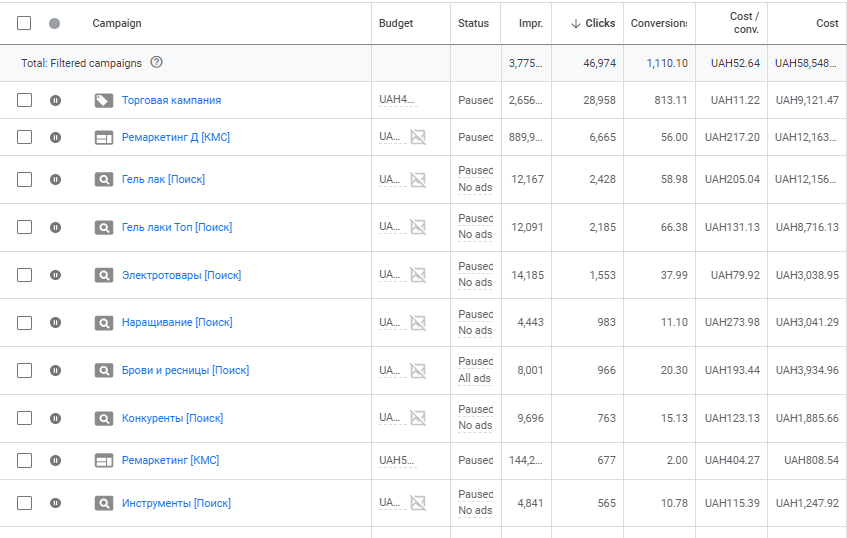
Advertising campaigns set up at the start of the project:
-
Optimization
Before starting cooperation with Aweb, the client ran Google Ads contextual advertising campaigns for a long time. Since the assortment of the online store is quite broad, the account contained a large number of active advertising campaigns. Based on the audit results, we have suspended campaigns with low efficiency. Advertising campaigns that showed the potential to improve performance were kept active, developing a plan to optimize them.
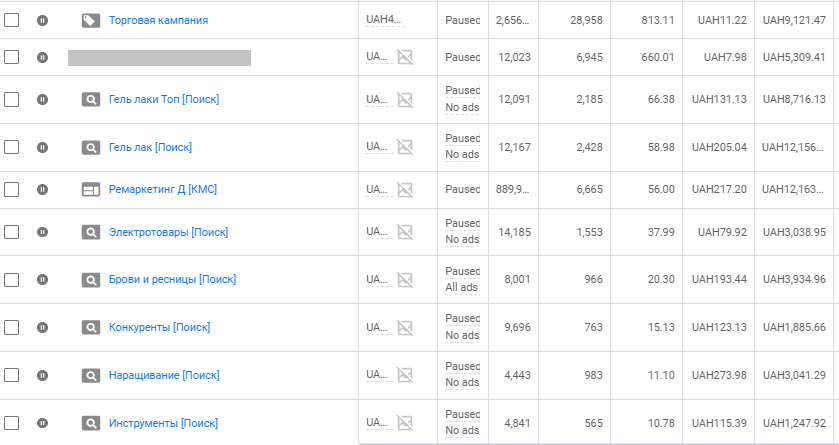
Optimization and set up actions in period I
We set up 74 advertising campaigns: search, display, shopping, video campaigns. The main principle of campaign optimization in all networks was a non-linear approach to performance evaluation, which included the following:
-
accounting for conversions according to the attribution model “Based on position”;
-
evaluating the results of ACs, we added associated conversions to the main criteria (number of conversions, conversion cost) in the form of a coefficient for evaluating the effectiveness of a particular AC. The use of this tool is a kind of “fuse” that insures against turning off advertising campaigns (mainly display and video campaigns), which brought direct conversions at a high price, but at the same time they are an intermediate link in making a conversion in other ads;
-
updating ad texts, changing the approach to creating texts: moving away from universal descriptions for a niche and switching to targeted ones — for a specific product category
-
transition to automatic betting strategies. In 2022, it is strange to read about it (it is also strange to write about it), but in 2019, automatic strategies were not so popular and, moreover, did not always give the expected result. The process of transition to self-strategy was quite long due to a large number of active AC;
-
the launch of Smart Trade AC. Ordinary AC on manual settings brought almost 40% of conversions, at a fairly low price per conversion. The first few weeks of the regular and smart campaigns worked in parallel. As a result, the Smart Campaign was almost 40 times more effective in terms of cost per conversion. Naturally, in the future, as traffic increased, the cost per conversion also began to rise, but the Smart Campaign still remained more effective;

-
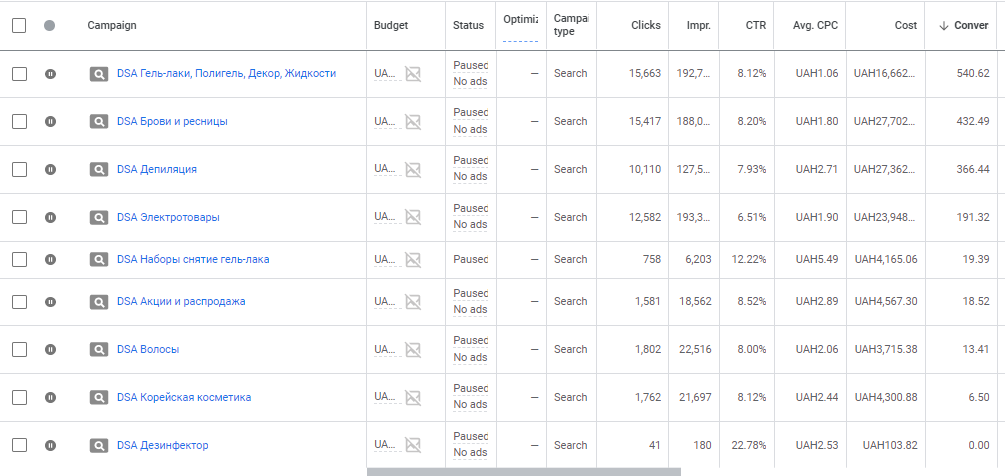
launch of Dynamic Search Ads (DSA). For e-com projects, this is an ideal tool since it allows you to collect traffic for queries that fall into the “Few queries” status in a regular search advertising campaign. In addition, launching such a format saves time on configuration, which is especially important when there are a large number of SKUs.
In addition to extra traffic, this format also allows you to reduce the cost per click.
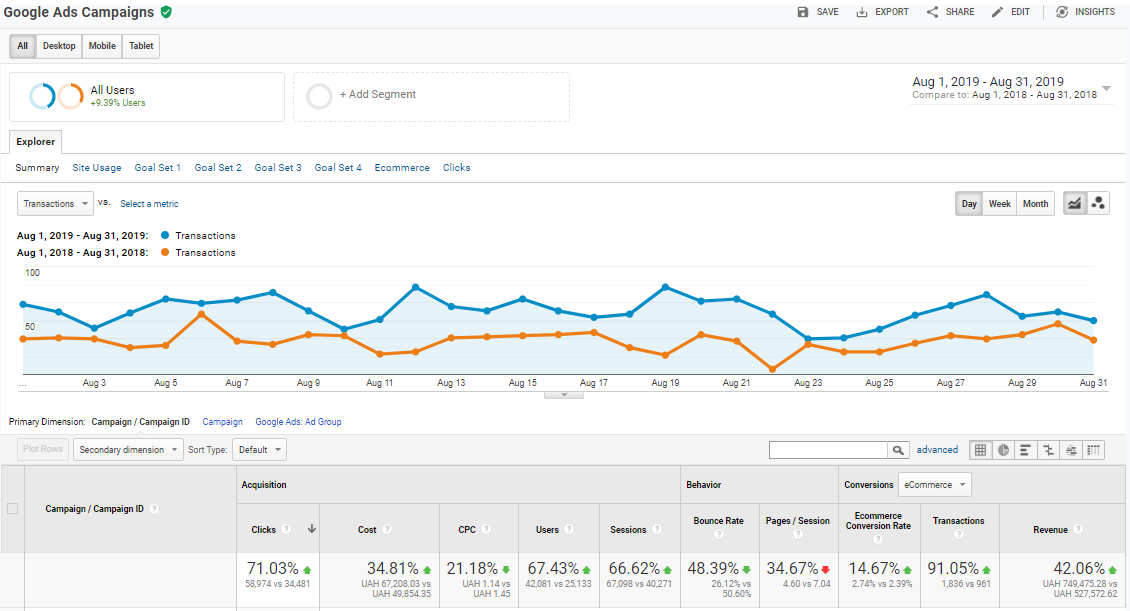
Data after the first full month of cooperation (August 2019) compared to the same previous period (August 2018) was increased.
|
Traffic by 67.43% |
Transactions by 91.05% |
Income by 42.06% Click budget increased by 34.81% |
Budget per click was increased by 34.81%
II Period — COVID-19 Pandemic, Lockdown and Saving Antiseptics
The global task for this period was to squeeze the maximum out of a fixed budget for clicks. Testing new hypotheses, launching advertising campaigns in new directions, or increasing the budget for more effective advertising campaigns — everything was done within a fixed budget. Accordingly, the team’s main task was to promptly respond to changes in the performance indicators of already launched ACs, suspend the least effective ones, and use the freed funds to either test new hypotheses or scale-up already successful ACs in the account.
Optimization
-
2020 was a pretty volatile year for just about any business. For some, quarantine restrictions and lockdowns became points of growth that have opened up new opportunities, while for others, they caused a complete stoppage of business. In our case, we managed to achieve a balance: on the one hand, part of the offline business suffered, and there was also a significant decline online, since the client’s target audience (beauty salons and beauty masters) under quarantine restrictions either worked at 50% load or did not work at all; on the other hand, the life jacket, which almost doubled the number of transactions and income, is an increased demand for antiseptics, of which the client had more than 75 SKUs in different volumes and for various purposes.
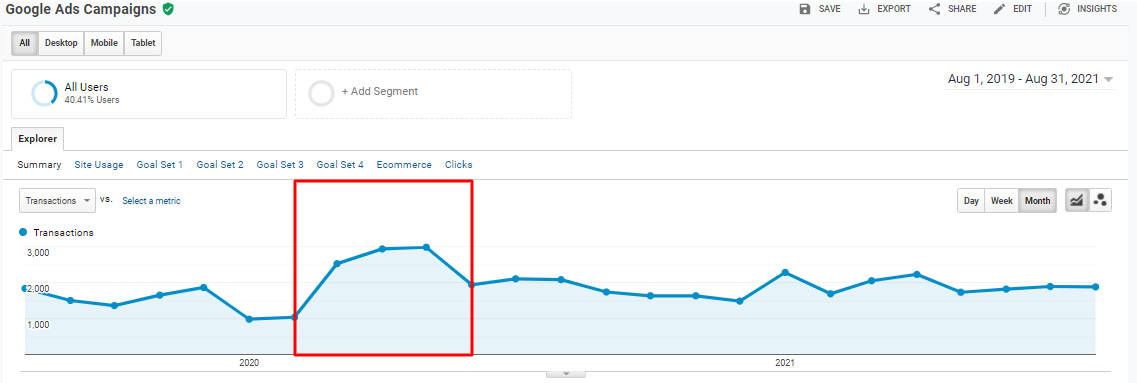
After three months of active trading, demand began to fall slightly, competitors pulled themselves up, after which efficiency began to decline. Therefore, further, the task of meeting the demand for antiseptics was transformed into the distribution of the budget between priority areas to obtain the optimal number of conversions.
-
Testing automatic strategies. In the second period, we switched all active ad campaigns to automatic strategies, depending on the client’s goals concerning each category, from the “Maximum Conversions” strategy to the “Target ROI”. Factors influencing the choice of a particular strategy for specific AC were customer goals which included testing demand for a specific brand or category, maximizing profit from a product, increasing turnover by category, and others.
-
Suspension of AC with low efficiency and reallocation of the budget to more efficient ones. During the period of unstable demand due to quarantine restrictions, the client, for obvious reasons, was not ready to increase advertising costs. Still, at the same time, realizing the importance of the continuous work of the Republic of Kazakhstan to maintain efficiency, the budget was not significantly reduced, which allowed us to preserve indicators at the desired level.
-
In addition to those already mentioned, our specialists have carried out the following: testing video campaigns for “cold” audiences, testing remarketing audience segments for Display Networks, launching adaptive search and display ads, testing the effectiveness of the advertising campaign for competitors and for our own brand.
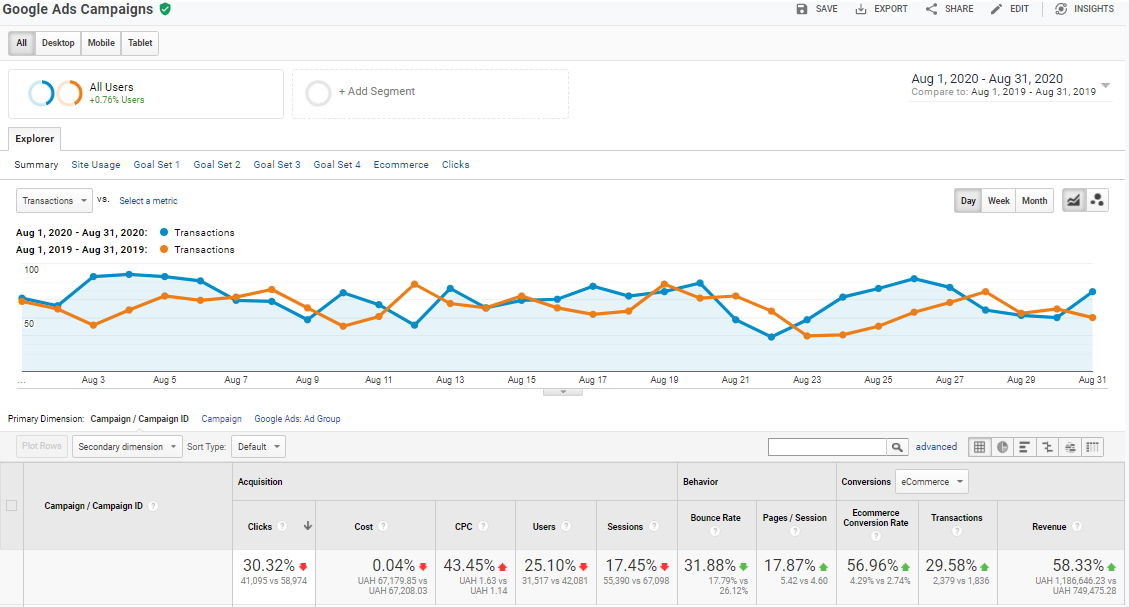
The first month of full-fledged cooperation with the client was August 2019. The CPC channel performance statistics after a year of cooperation (August 2020) is shown below:
|
Traffic decreased by 30.32% |
Transactions increased by 29.58% |
Revenue increased by 58.33% |
Budget per click was not changed
III Period Was Transition to Maximizing Profit From Advertising Investments, Searching for the Optimal ROAS Indicator, Promoting Offline Outlets.
The primary markers of this period were the maximization of advertising revenue and the use of contextual advertising to increase traffic to offline outlets.
As we said above, any business is a “living organism” that changes under the influence of external factors, and the goals change accordingly. By ensuring a stable flow of transactions and accurately predicting costs and revenues from digital, the client was able to devote some of the resources to experiments to find ways to increase the profitability of advertising campaigns.
Optimization
-
We divided the smart shopping ad into two advertising campaigns. The main reason for this was to preserve the ability to experiment with bidding strategies and product groups (conducting such experiments in one advertising campaign could lead to a sharp decrease in the number of conversions and revenue if unsuccessful).
-
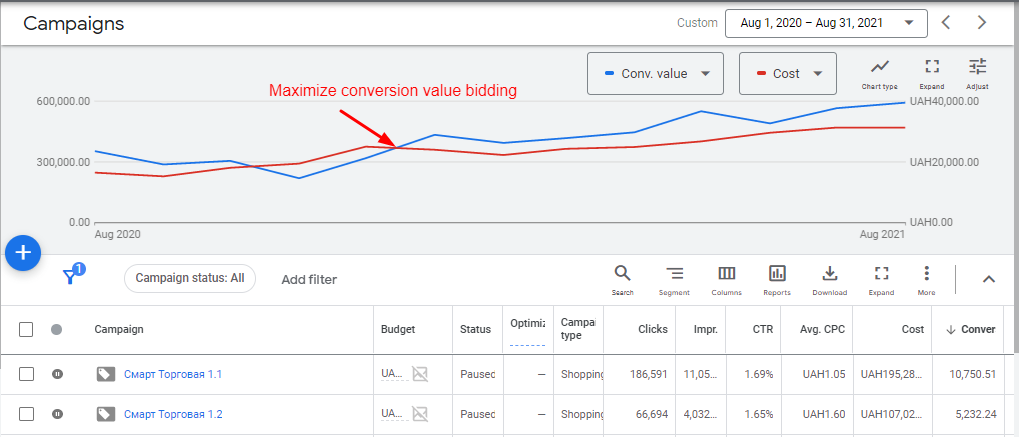
We first switched shopping ads to the Target ROI strategy and then to the Maximum Conversion Value strategy. The main reason for switching to the latter strategy was a sharp cost increase, while revenue growth lagged by 23%.
-
Along with a change in strategy in the “Google Advertising”, we took the following optimization actions:
-
suspended product groups with ROAS below the breakeven point;
-
made changes to the product feed added optional attributes that increase the clickability of ads in shopping ads;
-
made budget adjustments regularly based on data from the Google Ads Results Planner;
-
the client implemented changes to improve the UX of the site.
-
-
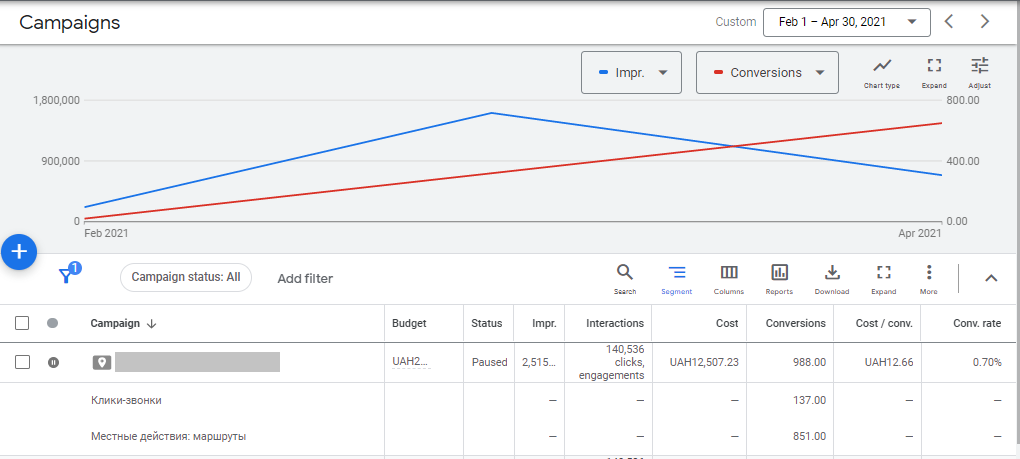
We launched a Local AC to visit an offline store. Despite quite good results in terms of conversions for the local AC, the actual data on the turnover of the offline store did not show sufficient growth, so we suspended the local AC.
-
Due to the low efficiency of Local AC, we decided to test the Smart Advertising format on two priority offline stores for the client. This format allows you to combine two goals: stimulating visits to offline outlets and pushing for online purchases. Through integration with Google “My Business”, you can add 2 buttons to the ad:
-
Get directions to an offline point.
-
Call (to the number of a specific offline point, not the number of an online store), according to the standard.
-
Go to the website of an online store.
-
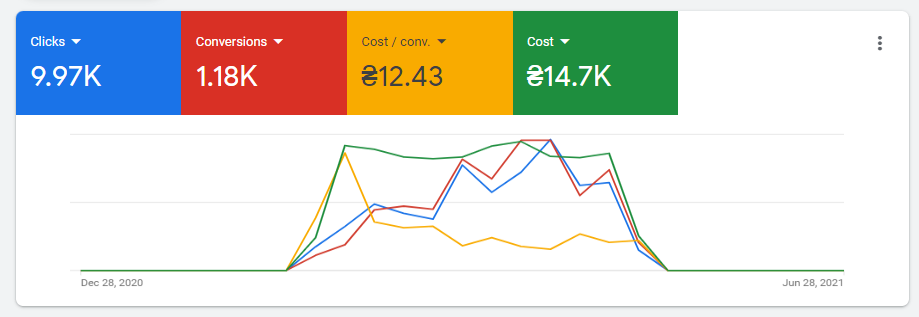
As a result of the successful test launch of two advertising campaigns, our specialists decided to scale up — today, Smart Ads was launched on all offline stores of the client’s network.
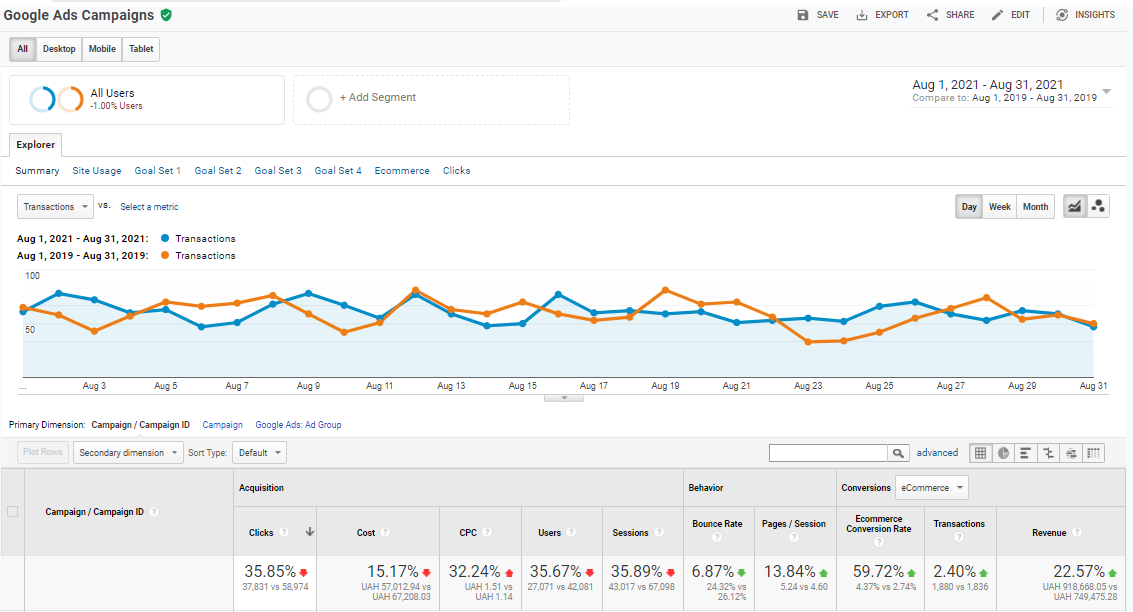
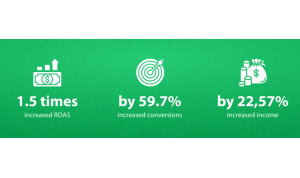
The results of the project in numbers (comparison of the first month of work on the project and data for the same period after 2 years) includes the following:
Conclusions:
-
The transformation of business goals in working on a project is a natural process. The main thing is to quickly respond to changes and adjust the strategy in time, which is possible only with a constant information exchange between the client and the agency.
-
Problem-solving cannot be done linearly. If one tool does not work, you need to continue testing alternative options.
-
Increasing revenue without increasing your click budget is real (and without losing revenue).
Google Ads Tools Used in the Project
Types of advertising campaigns:
-
Search Campaigns
-
Display Network Campaigns
-
Shopping Campaigns
-
Smart Campaigns
-
Video campaigns
-
Discovery Campaigns
Ad formats:
-
Expanded text ads
-
Responsive search ads
-
Dynamic search ads
-
Responsive display ads
-
Image Ads
-
in-stream; out-stream ads
Bid Strategies:
-
Target CPA
-
Maximum conversions
-
Maximum ROI
-
Target ROI
-
Maximum Impressions
-
CPA Optimizer
Project Participants:
Project Manager: Ekaterina Timoshenko
PPC-specialist: Halyna Lyman, Olexander Shylin
Head of PPC department: Halyna Lyman.
It's free and takes 2 minutes. There are 1500+ digital agencies in the catalog that are ready to help in the implementation of your tasks. Choose and save up to 30% on time and budget!


Client
Online store of cosmetics and products for manicure with a network of offline stores in Kyiv. The client’s target audience at the macro level is divided into two parts: B2C (small average check, mostly one-time purchases for own use) and B2B (wholesale orders from salons and masters, with a high average check and LTV).
Work Period
Work on the project is ongoing from 01.07.2019 to the present.
Our Task
Since any business is a “living organism”, constantly changing under the influence of external factors, in 2 years, the initial task from the client “Increase the number of sales” was transformed into a more complex but financially compelling task — to maximize advertising revenue.
Description of Works
For such a long period of work on the project, we have accumulated a lot of interesting statements, and it is virtually impossible to describe everything within the framework of one material (we tried). Therefore, we decided to share the most significant and exciting aspects. Conventionally, all work on the project we divided into 3 periods, each of which influenced the final result of the promotion.
I Period — the Start of the Project.
At the launch time, the client was already running contextual advertising campaigns on Google. After the audit, the specialists of the Aweb team prepared an account development strategy to increase the number of conversions.
Advertising campaigns in the account were set up at a reasonably high level, but the client was interested in growth and scaling. To perform this task it was necessary to revise the global strategy and change the approach.
Global challenges
-
Conversion tracking
The client demonstrated a systematic approach to business, so internal business processes were regulated, all orders were recorded in CRM with source indication, and further monitoring of the effectiveness of traffic sources on key business indicators (LTV, CPS, CPL, AOV) was conducted. For our part, it was necessary to properly configure the tracking of all types of conversions on the site (e-commerce, calls, sending forms).
-
Campaign setup
Together with the client, we have prepared a list of priority product groups for customization. The main difficulty at the stage of selecting groups for launching AC was to combine the client’s wishes with the ability to quickly achieve the set goals in terms of the number of conversions from the position of PPC.
For example, there is a group of goods A, with which the client receives the maximum profit, and his natural desire is to increase the number of sales of this particular group. But the volume of search queries for this group of products is minimal. Accordingly, there is practically no traffic, so it is impossible to provide a sufficient number of conversions through contextual advertising quickly. At the same time, product group B, which can provide a significant number of conversions and is recommended by PPC specialists, brings minimal profit. Hence, the promotion of this group is pointless for the client. As a result, by joint efforts, we found group C combines both the wishes of the client and the implementation possibilities from PPC.
Advertising campaigns set up at the start of the project:
-
Optimization
Before starting cooperation with Aweb, the client ran Google Ads contextual advertising campaigns for a long time. Since the assortment of the online store is quite broad, the account contained a large number of active advertising campaigns. Based on the audit results, we have suspended campaigns with low efficiency. Advertising campaigns that showed the potential to improve performance were kept active, developing a plan to optimize them.
Optimization and set up actions in period I
We set up 74 advertising campaigns: search, display, shopping, video campaigns. The main principle of campaign optimization in all networks was a non-linear approach to performance evaluation, which included the following:
-
accounting for conversions according to the attribution model “Based on position”;
-
evaluating the results of ACs, we added associated conversions to the main criteria (number of conversions, conversion cost) in the form of a coefficient for evaluating the effectiveness of a particular AC. The use of this tool is a kind of “fuse” that insures against turning off advertising campaigns (mainly display and video campaigns), which brought direct conversions at a high price, but at the same time they are an intermediate link in making a conversion in other ads;
-
updating ad texts, changing the approach to creating texts: moving away from universal descriptions for a niche and switching to targeted ones — for a specific product category
-
transition to automatic betting strategies. In 2022, it is strange to read about it (it is also strange to write about it), but in 2019, automatic strategies were not so popular and, moreover, did not always give the expected result. The process of transition to self-strategy was quite long due to a large number of active AC;
-
the launch of Smart Trade AC. Ordinary AC on manual settings brought almost 40% of conversions, at a fairly low price per conversion. The first few weeks of the regular and smart campaigns worked in parallel. As a result, the Smart Campaign was almost 40 times more effective in terms of cost per conversion. Naturally, in the future, as traffic increased, the cost per conversion also began to rise, but the Smart Campaign still remained more effective;
-
launch of Dynamic Search Ads (DSA). For e-com projects, this is an ideal tool since it allows you to collect traffic for queries that fall into the “Few queries” status in a regular search advertising campaign. In addition, launching such a format saves time on configuration, which is especially important when there are a large number of SKUs.
In addition to extra traffic, this format also allows you to reduce the cost per click.
Data after the first full month of cooperation (August 2019) compared to the same previous period (August 2018) was increased.
|
Traffic by 67.43% |
Transactions by 91.05% |
Income by 42.06% Click budget increased by 34.81% |
Budget per click was increased by 34.81%
II Period — COVID-19 Pandemic, Lockdown and Saving Antiseptics
The global task for this period was to squeeze the maximum out of a fixed budget for clicks. Testing new hypotheses, launching advertising campaigns in new directions, or increasing the budget for more effective advertising campaigns — everything was done within a fixed budget. Accordingly, the team’s main task was to promptly respond to changes in the performance indicators of already launched ACs, suspend the least effective ones, and use the freed funds to either test new hypotheses or scale-up already successful ACs in the account.
Optimization
-
2020 was a pretty volatile year for just about any business. For some, quarantine restrictions and lockdowns became points of growth that have opened up new opportunities, while for others, they caused a complete stoppage of business. In our case, we managed to achieve a balance: on the one hand, part of the offline business suffered, and there was also a significant decline online, since the client’s target audience (beauty salons and beauty masters) under quarantine restrictions either worked at 50% load or did not work at all; on the other hand, the life jacket, which almost doubled the number of transactions and income, is an increased demand for antiseptics, of which the client had more than 75 SKUs in different volumes and for various purposes.
After three months of active trading, demand began to fall slightly, competitors pulled themselves up, after which efficiency began to decline. Therefore, further, the task of meeting the demand for antiseptics was transformed into the distribution of the budget between priority areas to obtain the optimal number of conversions.
-
Testing automatic strategies. In the second period, we switched all active ad campaigns to automatic strategies, depending on the client’s goals concerning each category, from the “Maximum Conversions” strategy to the “Target ROI”. Factors influencing the choice of a particular strategy for specific AC were customer goals which included testing demand for a specific brand or category, maximizing profit from a product, increasing turnover by category, and others.
-
Suspension of AC with low efficiency and reallocation of the budget to more efficient ones. During the period of unstable demand due to quarantine restrictions, the client, for obvious reasons, was not ready to increase advertising costs. Still, at the same time, realizing the importance of the continuous work of the Republic of Kazakhstan to maintain efficiency, the budget was not significantly reduced, which allowed us to preserve indicators at the desired level.
-
In addition to those already mentioned, our specialists have carried out the following: testing video campaigns for “cold” audiences, testing remarketing audience segments for Display Networks, launching adaptive search and display ads, testing the effectiveness of the advertising campaign for competitors and for our own brand.
The first month of full-fledged cooperation with the client was August 2019. The CPC channel performance statistics after a year of cooperation (August 2020) is shown below:
|
Traffic decreased by 30.32% |
Transactions increased by 29.58% |
Revenue increased by 58.33% |
Budget per click was not changed
III Period Was Transition to Maximizing Profit From Advertising Investments, Searching for the Optimal ROAS Indicator, Promoting Offline Outlets.
The primary markers of this period were the maximization of advertising revenue and the use of contextual advertising to increase traffic to offline outlets.
As we said above, any business is a “living organism” that changes under the influence of external factors, and the goals change accordingly. By ensuring a stable flow of transactions and accurately predicting costs and revenues from digital, the client was able to devote some of the resources to experiments to find ways to increase the profitability of advertising campaigns.
Optimization
-
We divided the smart shopping ad into two advertising campaigns. The main reason for this was to preserve the ability to experiment with bidding strategies and product groups (conducting such experiments in one advertising campaign could lead to a sharp decrease in the number of conversions and revenue if unsuccessful).
-
We first switched shopping ads to the Target ROI strategy and then to the Maximum Conversion Value strategy. The main reason for switching to the latter strategy was a sharp cost increase, while revenue growth lagged by 23%.
-
Along with a change in strategy in the “Google Advertising”, we took the following optimization actions:
-
suspended product groups with ROAS below the breakeven point;
-
made changes to the product feed added optional attributes that increase the clickability of ads in shopping ads;
-
made budget adjustments regularly based on data from the Google Ads Results Planner;
-
the client implemented changes to improve the UX of the site.
-
-
We launched a Local AC to visit an offline store. Despite quite good results in terms of conversions for the local AC, the actual data on the turnover of the offline store did not show sufficient growth, so we suspended the local AC.
-
Due to the low efficiency of Local AC, we decided to test the Smart Advertising format on two priority offline stores for the client. This format allows you to combine two goals: stimulating visits to offline outlets and pushing for online purchases. Through integration with Google “My Business”, you can add 2 buttons to the ad:
-
Get directions to an offline point.
-
Call (to the number of a specific offline point, not the number of an online store), according to the standard.
-
Go to the website of an online store.
-
As a result of the successful test launch of two advertising campaigns, our specialists decided to scale up — today, Smart Ads was launched on all offline stores of the client’s network.
The results of the project in numbers (comparison of the first month of work on the project and data for the same period after 2 years) includes the following:
Conclusions:
-
The transformation of business goals in working on a project is a natural process. The main thing is to quickly respond to changes and adjust the strategy in time, which is possible only with a constant information exchange between the client and the agency.
-
Problem-solving cannot be done linearly. If one tool does not work, you need to continue testing alternative options.
-
Increasing revenue without increasing your click budget is real (and without losing revenue).
Google Ads Tools Used in the Project
Types of advertising campaigns:
-
Search Campaigns
-
Display Network Campaigns
-
Shopping Campaigns
-
Smart Campaigns
-
Video campaigns
-
Discovery Campaigns
Ad formats:
-
Expanded text ads
-
Responsive search ads
-
Dynamic search ads
-
Responsive display ads
-
Image Ads
-
in-stream; out-stream ads
Bid Strategies:
-
Target CPA
-
Maximum conversions
-
Maximum ROI
-
Target ROI
-
Maximum Impressions
-
CPA Optimizer
Project Participants:
Project Manager: Ekaterina Timoshenko
PPC-specialist: Halyna Lyman, Olexander Shylin
Head of PPC department: Halyna Lyman.