
Five steps to digital transformation for an industrial giant
A few words about the client
Our client is a regional representative of a Western industrial giant that holds an equipment production line.
In Ukraine, the manufacturer doesn’t lead sales activities directly, relying on independent distributors throughout the country.
Sales accounting through distributor companies became too effort-consuming at some point, and we needed to adapt it to some unified standards within one platform. The company also had to solve several business tasks along the way: digitize the document flow, train the staff, and monitor working hours.

GOALS AND OBJECTIVES

Our solution
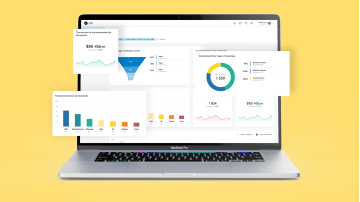
The design strictly follows the client's corporate brand book: predetermined colors, fonts, visual style and composition requirements. The client separately insisted that all products be aesthetically pleasing and offer a modern UX. This particularly applied to the numerous statistical modules that each project had – so our tries to design the figures in the form of clear and beautiful infographics were not in vain.
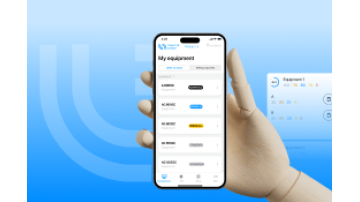
Integration of all products into a single ecosystem is possible, but there is currently no task for such integration. The admin panels of the platforms are sufficiently interconnected through APIs. If an application for tracking engineers' work needs a database of equipment, it pulls it from the underlying CRM.
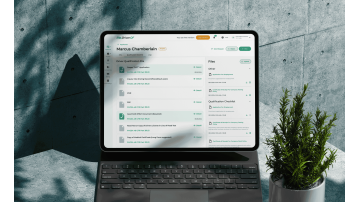
THE FIRST STEP: IT ALL STARTED WITH SALES: For the client, the basic CRM came to be the largest and most complex project in the entire case. It not only solves all the tasks assigned to it but also serves as a model and basis for other products. The data it stores is pulled into other platforms through API if needed.
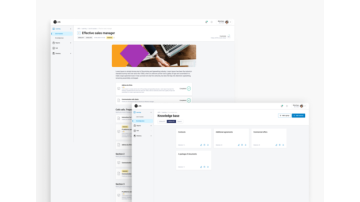
THE SECOND STEP: AN EDUCATIONAL PLATFORM FOR BUSINESS: We refactored the code and suggested shifting from PWA to Flutter-based development.The client tested the pre-release product and suggested a long list of new features. The second version of the application we wrote in Flutter basically from scratch. The logic of the final solution went far from what was planned at the start.

It's free and takes 2 minutes. There are 1500+ digital agencies in the catalog that are ready to help in the implementation of your tasks. Choose and save up to 30% on time and budget!
A few words about the client
Our client is a regional representative of a Western industrial giant that holds an equipment production line.
In Ukraine, the manufacturer doesn’t lead sales activities directly, relying on independent distributors throughout the country.
Sales accounting through distributor companies became too effort-consuming at some point, and we needed to adapt it to some unified standards within one platform. The company also had to solve several business tasks along the way: digitize the document flow, train the staff, and monitor working hours.
GOALS AND OBJECTIVES
Our solution
The design strictly follows the client's corporate brand book: predetermined colors, fonts, visual style and composition requirements. The client separately insisted that all products be aesthetically pleasing and offer a modern UX. This particularly applied to the numerous statistical modules that each project had – so our tries to design the figures in the form of clear and beautiful infographics were not in vain.
Integration of all products into a single ecosystem is possible, but there is currently no task for such integration. The admin panels of the platforms are sufficiently interconnected through APIs. If an application for tracking engineers' work needs a database of equipment, it pulls it from the underlying CRM.
THE FIRST STEP: IT ALL STARTED WITH SALES: For the client, the basic CRM came to be the largest and most complex project in the entire case. It not only solves all the tasks assigned to it but also serves as a model and basis for other products. The data it stores is pulled into other platforms through API if needed.
THE SECOND STEP: AN EDUCATIONAL PLATFORM FOR BUSINESS: We refactored the code and suggested shifting from PWA to Flutter-based development.The client tested the pre-release product and suggested a long list of new features. The second version of the application we wrote in Flutter basically from scratch. The logic of the final solution went far from what was planned at the start.