
Promotion of an online store selling new and used Apple devices
About the project
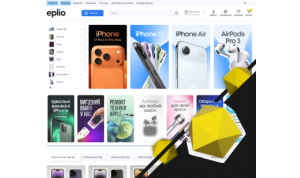
An online store selling new and used Apple devices. The range includes iPhone, Apple Watch, iPad, iMac, and Macbook.
At the beginning of the project, the priority was to promote used devices, and the best-selling and most profitable products were phones. But now, the sale of new devices is also a priority.
Eplio has a network of offline stores and very high brand recognition, especially in Kharkiv.
Initial strategy
When promoting this site, the strategy was developed taking into account the fact that the site was much younger than all of its direct competitors, and the range on the site was very small and changed very rarely. About 20-30 items could be added per month, but some items could disappear from stock. In fact, we were working with a very limited number of pages. In addition, the store is highly specialized, and it is unrealistic to compete with hypermarkets with millions of pages, so we opted for good general optimization and intensive work specifically with priorities.
At the start of the project, the site already had a decent ranking, but there were practically no TOP-10 positions, although quite a few TOP-20-50 keywords were ranked. Therefore, it was important to bring the keywords in priority areas into the TOP 5 (preferably higher, but compared to our closest competitors, we were significantly behind in terms of technology, link profile, and age).
To improve our position in the TOP, we needed to carry out a complete technical optimization of the site and work closely with WebCoreVital indicators, as far as the site allowed us. In addition, due to high competition in the niche and taking into account priorities, we developed a strategy with basic link (both internal and external) and content promotion for initial priorities — we needed to increase high-frequency queries. For continuous growth and additional sales points, we decided to expand the semantics of the site for low-frequency queries, up to the optimization of product pages. This resulted in a slight increase in traffic, but it was highly targeted and had a significant impact on the site's conversion rate.
It was clear that it would not be possible to achieve rapid growth in the TOP 3 for high-frequency keywords that were far beyond the TOP 10, so we chose to increase traffic (while maintaining the same positions) by increasing the CTR. This is achieved by expanding snippets with different types of micro-markups – more snippets – more clicks – more traffic.
But here it was very important to implement all this in the right order. Looking at the areas of work as a whole, the following was done:
- Work on technical optimization.
- Work on implementing micro-markup on the website – categories + products.
- Work on internal anchor linking.
- Work on semantics and optimization of pages for queries.
- Creation of new pages for low-frequency queries.
- Refinement of the mobile version to increase conversion.
- Increasing link mass to support and grow target keywords.
What was done
Semantics
Since the site was already partially ranked for queries, it was necessary to obtain complete information about which keywords, in which positions, and with the correct relevance. To do this, we collected all available semantics through the planner, search hints, and statistics collected through Google Search Console. We found high-frequency and medium-frequency queries that generated good traffic, ranking in the top 5-10, but could generate more if they were brought up to the top 3.
After dividing the semantics into groups, we found points for expanding the structure and obtaining additional traffic growth points. To do this, we needed to expand the structure and implement static filters.
In order to correctly implement this semantics on the site, it was necessary to distribute it correctly across the pages and write content for the pages, since most of them simply did not have any text. We conducted an analysis of competitors in the TOP and obtained average indicators for text content.
Content
Most pages had no text at all, so they were written from scratch. While writing, we analyzed competitors in terms of size, keyword density (nausea), and structure — information blocks (paragraphs). Based on this analysis, we formed a detailed technical task for the copywriter, taking into account all the nuances. After adding the texts to the site, the average position for page queries increased significantly. After initial indexing and obtaining an increase in positions, the texts were constantly adjusted for correct inclusion. This is necessary for the correct distribution of priority for queries.
The texts were also correctly formatted in terms of the presence of headings, marked and numbered lists, and internal anchor links to priority categories and sections.
Initially, special attention was paid to texts in priority sales areas, and later texts were written for all other less priority categories. In addition, texts were also written for products, or more precisely, auto-generated descriptions to increase the size of the page and content.
Technical optimization
At the same time, technical and internal optimization was carried out on the site. The site had problems with duplicate categories (unclosed dynamic filter URLs), which affected the correct indexing of the site, relevance, and caused many errors in SearchConsole. There were quite a few problems with WebCore Vital that needed to be solved. The logic of auto-generated meta tags for categories, static filters, and products that were not manually specified was worked out, which made it possible to get rid of duplicates and missing metadata. The logic of pagination pages was refined to meet Google's requirements for online stores.
The site's indexing was optimized because there was a mismatch between the pages in the search results, the download, and the site map. Although the site is not large, due to duplicate pages, an incorrectly formed robots.txt file, incorrect pagination, and unclosed junk pages using the meta="robots" tag, there were problems with a large number of low-quality and irrelevant pages in the search results.
Expanding the structure
Since the structure of this online store is not that large (exclusively Apple products), it would not be possible to expand it by creating new sections in the standard way. Here, it was necessary to work with medium-frequency and low-frequency queries such as “buy iPhone 11 256 GB” and so on. Filter pages were ideal for this purpose. We made them static, with unique meta tags and the ability to add text with auto-substitution of variables (but this functionality is not currently in use).
In addition, to form the URL on the filter pages, we used not only the addition of a specific attribute, but also the addition of the name of the attribute itself. This helped to increase the relevance of the page and comply with Google's recommendations.
On top of that, when analyzing the semantics and demand for iPhones, we found a cluster of queries that's growing in popularity and that many competitors haven't taken advantage of yet. These are queries related to buying on credit or in installments. When analyzing the niche, we determined that it was not necessary to create separate pages to promote them, but rather to work with these same queries on the same pages as the main queries.
Implementation of micro-markup
As mentioned above, the site already occupied certain positions for some queries, but given the competition, a sharp increase in queries at the top might not have been possible. Therefore, in order to get the first results faster, we decided to carry out the micro-markup work at the beginning of the project, immediately after the initial technical optimization. This allowed us to slightly increase the CTR for those queries that were already in the TOP-10.
The overall strategy was based on several micro-markups that can expand SERP output:
- Breadcrumbs
- Product
- AgregateRating
- Review
- FAQ
Since the top queries were relevant to the categories, we decided to start with them. At that point, Google had already reduced the visual for the FAQ micro-markup, so there was no point in implementing it. Therefore, we decided to apply the “product” micro-markup AgregateRating and Review to the category pages. With some of the lowest prices in the niche, this should have worked well. But in order for this micro-markup to function properly, it was necessary to work on product reviews on the site — the more there are, the more beautiful and credible the data in the search results looks. Since sales through the site were good, the client's task was to encourage buyers to leave a review about their purchase.
At the same time, other types of micro-markup were also implemented on other pages of the website. On the product pages – Product, Breadcrumbs. On the home page, only 1 micro-markup Organization is used so as not to disrupt the display of quick links, etc.
Link profile
After conducting an initial analysis of the website based on key parameters and comparing it with its main competitors in the niche, it became clear that the website was losing out not only in terms of age and optimization level. But we also had a link profile that was significantly worse than the average for the niche. That is why it was extremely necessary to develop a growth strategy that would allow us to increase the link weight as “organically” as possible, without exceeding the “acceptable” indicators and receiving sanctions from the search engine.
First, the site's link profile was analyzed. Links that were potentially more harmful than useful to the site were identified. There were not many of these backlinks, so they were gradually removed in small groups using a service.
For the used Apple equipment niche, we analyzed the link profiles of competitors' sites and identified the main link parameters to strive for. By comparing the current link profile with the “required” one, taking into account the parameters of the average monthly link growth of competitors, a development strategy for the year was formed. The total number of purchased links, the ratio of anchor and non-anchor links, article and crowd links, do- and no-follow links.
In addition, it was very important to use the right anchors in article links in order to promote the categories that are most interesting and profitable for the client. Therefore, the main focus of the anchor link articles was on priority areas — the sale of used iPhones.
Refinement of the structure (Ukrainian version of the site + city pages)
At the moment, the Ukrainian version of the site is almost ready to go live. This is a very important stage in promotion, which will ensure very good growth in ranked queries in Ukrainian that are relevant to Russian pages, as well as Russian queries due to improved behavioral indicators. However, due to the fact that this is very difficult technically (related to the database with which the goods are synchronized), the website operates in one language version.
There are also plans to implement pages for regional queries in the near future, but the functionality has not yet been developed. It will only be implemented after the Ukrainian version of the site has been fully implemented.

It's free and takes 2 minutes. There are 1500+ digital agencies in the catalog that are ready to help in the implementation of your tasks. Choose and save up to 30% on time and budget!




About the project
An online store selling new and used Apple devices. The range includes iPhone, Apple Watch, iPad, iMac, and Macbook.
At the beginning of the project, the priority was to promote used devices, and the best-selling and most profitable products were phones. But now, the sale of new devices is also a priority.
Eplio has a network of offline stores and very high brand recognition, especially in Kharkiv.
Initial strategy
When promoting this site, the strategy was developed taking into account the fact that the site was much younger than all of its direct competitors, and the range on the site was very small and changed very rarely. About 20-30 items could be added per month, but some items could disappear from stock. In fact, we were working with a very limited number of pages. In addition, the store is highly specialized, and it is unrealistic to compete with hypermarkets with millions of pages, so we opted for good general optimization and intensive work specifically with priorities.
At the start of the project, the site already had a decent ranking, but there were practically no TOP-10 positions, although quite a few TOP-20-50 keywords were ranked. Therefore, it was important to bring the keywords in priority areas into the TOP 5 (preferably higher, but compared to our closest competitors, we were significantly behind in terms of technology, link profile, and age).
To improve our position in the TOP, we needed to carry out a complete technical optimization of the site and work closely with WebCoreVital indicators, as far as the site allowed us. In addition, due to high competition in the niche and taking into account priorities, we developed a strategy with basic link (both internal and external) and content promotion for initial priorities — we needed to increase high-frequency queries. For continuous growth and additional sales points, we decided to expand the semantics of the site for low-frequency queries, up to the optimization of product pages. This resulted in a slight increase in traffic, but it was highly targeted and had a significant impact on the site's conversion rate.
It was clear that it would not be possible to achieve rapid growth in the TOP 3 for high-frequency keywords that were far beyond the TOP 10, so we chose to increase traffic (while maintaining the same positions) by increasing the CTR. This is achieved by expanding snippets with different types of micro-markups – more snippets – more clicks – more traffic.
But here it was very important to implement all this in the right order. Looking at the areas of work as a whole, the following was done:
- Work on technical optimization.
- Work on implementing micro-markup on the website – categories + products.
- Work on internal anchor linking.
- Work on semantics and optimization of pages for queries.
- Creation of new pages for low-frequency queries.
- Refinement of the mobile version to increase conversion.
- Increasing link mass to support and grow target keywords.
What was done
Semantics
Since the site was already partially ranked for queries, it was necessary to obtain complete information about which keywords, in which positions, and with the correct relevance. To do this, we collected all available semantics through the planner, search hints, and statistics collected through Google Search Console. We found high-frequency and medium-frequency queries that generated good traffic, ranking in the top 5-10, but could generate more if they were brought up to the top 3.
After dividing the semantics into groups, we found points for expanding the structure and obtaining additional traffic growth points. To do this, we needed to expand the structure and implement static filters.
In order to correctly implement this semantics on the site, it was necessary to distribute it correctly across the pages and write content for the pages, since most of them simply did not have any text. We conducted an analysis of competitors in the TOP and obtained average indicators for text content.
Content
Most pages had no text at all, so they were written from scratch. While writing, we analyzed competitors in terms of size, keyword density (nausea), and structure — information blocks (paragraphs). Based on this analysis, we formed a detailed technical task for the copywriter, taking into account all the nuances. After adding the texts to the site, the average position for page queries increased significantly. After initial indexing and obtaining an increase in positions, the texts were constantly adjusted for correct inclusion. This is necessary for the correct distribution of priority for queries.
The texts were also correctly formatted in terms of the presence of headings, marked and numbered lists, and internal anchor links to priority categories and sections.
Initially, special attention was paid to texts in priority sales areas, and later texts were written for all other less priority categories. In addition, texts were also written for products, or more precisely, auto-generated descriptions to increase the size of the page and content.
Technical optimization
At the same time, technical and internal optimization was carried out on the site. The site had problems with duplicate categories (unclosed dynamic filter URLs), which affected the correct indexing of the site, relevance, and caused many errors in SearchConsole. There were quite a few problems with WebCore Vital that needed to be solved. The logic of auto-generated meta tags for categories, static filters, and products that were not manually specified was worked out, which made it possible to get rid of duplicates and missing metadata. The logic of pagination pages was refined to meet Google's requirements for online stores.
The site's indexing was optimized because there was a mismatch between the pages in the search results, the download, and the site map. Although the site is not large, due to duplicate pages, an incorrectly formed robots.txt file, incorrect pagination, and unclosed junk pages using the meta="robots" tag, there were problems with a large number of low-quality and irrelevant pages in the search results.
Expanding the structure
Since the structure of this online store is not that large (exclusively Apple products), it would not be possible to expand it by creating new sections in the standard way. Here, it was necessary to work with medium-frequency and low-frequency queries such as “buy iPhone 11 256 GB” and so on. Filter pages were ideal for this purpose. We made them static, with unique meta tags and the ability to add text with auto-substitution of variables (but this functionality is not currently in use).
In addition, to form the URL on the filter pages, we used not only the addition of a specific attribute, but also the addition of the name of the attribute itself. This helped to increase the relevance of the page and comply with Google's recommendations.
On top of that, when analyzing the semantics and demand for iPhones, we found a cluster of queries that's growing in popularity and that many competitors haven't taken advantage of yet. These are queries related to buying on credit or in installments. When analyzing the niche, we determined that it was not necessary to create separate pages to promote them, but rather to work with these same queries on the same pages as the main queries.
Implementation of micro-markup
As mentioned above, the site already occupied certain positions for some queries, but given the competition, a sharp increase in queries at the top might not have been possible. Therefore, in order to get the first results faster, we decided to carry out the micro-markup work at the beginning of the project, immediately after the initial technical optimization. This allowed us to slightly increase the CTR for those queries that were already in the TOP-10.
The overall strategy was based on several micro-markups that can expand SERP output:
- Breadcrumbs
- Product
- AgregateRating
- Review
- FAQ
Since the top queries were relevant to the categories, we decided to start with them. At that point, Google had already reduced the visual for the FAQ micro-markup, so there was no point in implementing it. Therefore, we decided to apply the “product” micro-markup AgregateRating and Review to the category pages. With some of the lowest prices in the niche, this should have worked well. But in order for this micro-markup to function properly, it was necessary to work on product reviews on the site — the more there are, the more beautiful and credible the data in the search results looks. Since sales through the site were good, the client's task was to encourage buyers to leave a review about their purchase.
At the same time, other types of micro-markup were also implemented on other pages of the website. On the product pages – Product, Breadcrumbs. On the home page, only 1 micro-markup Organization is used so as not to disrupt the display of quick links, etc.
Link profile
After conducting an initial analysis of the website based on key parameters and comparing it with its main competitors in the niche, it became clear that the website was losing out not only in terms of age and optimization level. But we also had a link profile that was significantly worse than the average for the niche. That is why it was extremely necessary to develop a growth strategy that would allow us to increase the link weight as “organically” as possible, without exceeding the “acceptable” indicators and receiving sanctions from the search engine.
First, the site's link profile was analyzed. Links that were potentially more harmful than useful to the site were identified. There were not many of these backlinks, so they were gradually removed in small groups using a service.
For the used Apple equipment niche, we analyzed the link profiles of competitors' sites and identified the main link parameters to strive for. By comparing the current link profile with the “required” one, taking into account the parameters of the average monthly link growth of competitors, a development strategy for the year was formed. The total number of purchased links, the ratio of anchor and non-anchor links, article and crowd links, do- and no-follow links.
In addition, it was very important to use the right anchors in article links in order to promote the categories that are most interesting and profitable for the client. Therefore, the main focus of the anchor link articles was on priority areas — the sale of used iPhones.
Refinement of the structure (Ukrainian version of the site + city pages)
At the moment, the Ukrainian version of the site is almost ready to go live. This is a very important stage in promotion, which will ensure very good growth in ranked queries in Ukrainian that are relevant to Russian pages, as well as Russian queries due to improved behavioral indicators. However, due to the fact that this is very difficult technically (related to the database with which the goods are synchronized), the website operates in one language version.
There are also plans to implement pages for regional queries in the near future, but the functionality has not yet been developed. It will only be implemented after the Ukrainian version of the site has been fully implemented.