
Promoting an online veterinary pharmacy
About the project
A case study on comprehensive SEO for an established online store, focusing on technical optimization, expanding the site structure, and implementing SEO filters. Despite existing traffic and seasonal demand, conversion rates remained low, and a significant portion of target queries were not being indexed or ranked. We focused on fixing technical errors, reorganizing semantics, and scaling pages to target commercial search queries.
Objectives
- Technical optimization
- Site structure expansion, SEO filters, and on-page optimization
- Increase organic traffic
- Increase conversion rate
- Rank priority keywords in Google’s Top results
Challenges and overall strategy
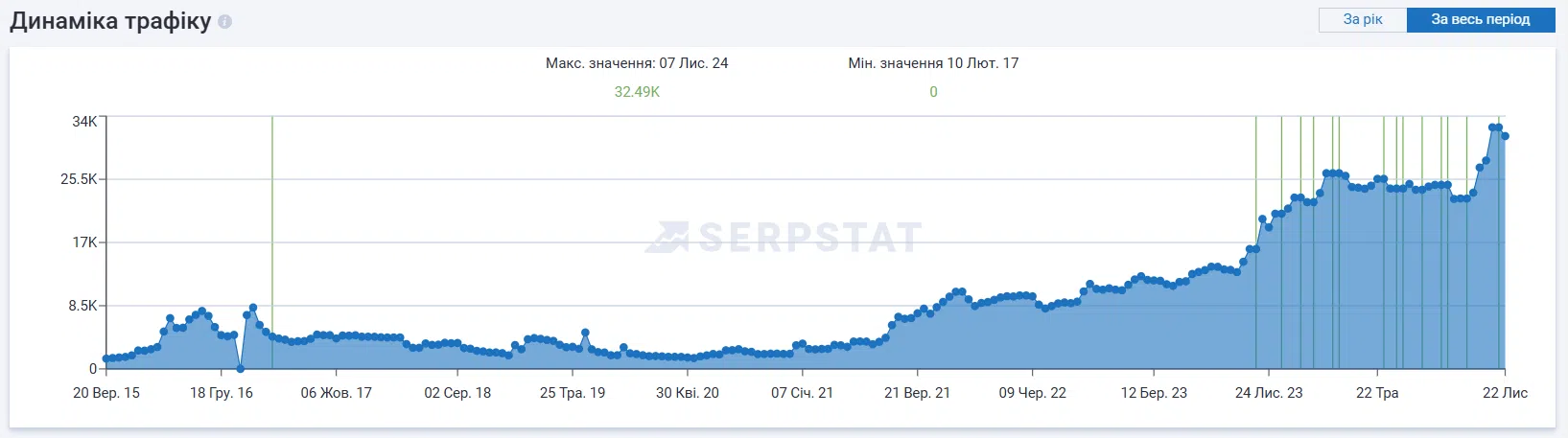
At kickoff, the site already ranked for some broad queries and attracted organic traffic. Despite peak seasonality, conversions were low, and many of the client’s target keywords didn’t rank at all. Over 90% of traffic was informational and generated almost no sales. The site hadn’t been actively promoted before and had numerous technical issues hampering SEO: duplicate pages, incorrectly implemented pagination, too many low-value pages indexed in Google, misconfigured language versions, and more.
We focused on technical SEO, site architecture, and SEO filters. The client also planned to migrate to a new CMS, so we optimized the current site with a view toward smoothly transferring the improved structure.
What we did
Technical optimization
Before active SEO, we ran a comprehensive technical clean-up based on a prior audit to remove ranking blockers. Key actions:
- Configured SEO-friendly (clean) URL
- Resolved technical duplicate pages
- Optimized robots.txt
- Set up auto-generation of sitemap.xml
- Limited indexing for selected low-value pages
- Optimized outbound external links
- Fixed 404 links/pages
- Implemented correct multilingual tags (hreflang)
- Optimized pagination: indexing rules and canonical URLs
- Added Product schema to category pages
- Blocked the development/staging version from indexing
- Implemented and configured SEO filters for priority product categories
Keyword strategy (semantics)
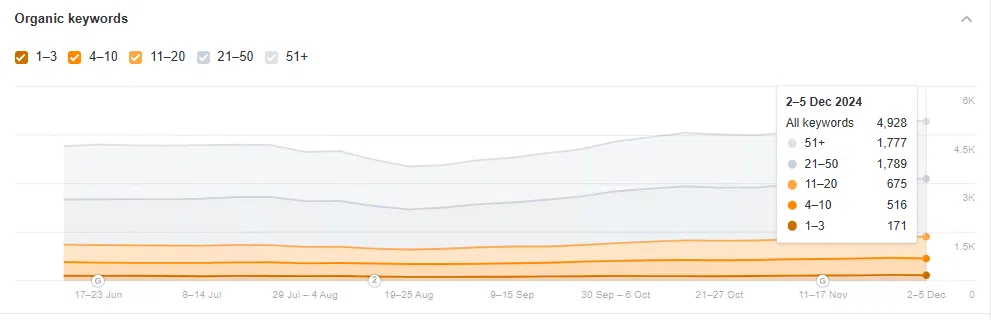
We built the semantic core from scratch. During analysis, we found many high- and mid-volume queries that didn’t rank at all. Some product groups were entirely missing from search results even though categories existed and had products. Most of the existing top rankings were low-volume queries, bringing minimal traffic.
SEO filters
SEO filters are a powerful way to expand an ecommerce site’s reach. Previously, filters were only partially implemented, limiting their usefulness without technical changes. We focused on:
- Static, SEO-friendly URL
- Auto-generated meta tags and H1s with manual override
- A dedicated SEO text block on filtered pages
- Noindex for filter combinations with 2+ parameters
This functionality let us quickly expand select product groups with additional queries. After fully optimizing these pages (SEO copy, meta tags, headings, etc.), mid- and long‑tail queries started ranking in the Top 10 almost immediately.
Content
The site already had SEO texts for core categories, but they didn’t cover the expanded semantic set we proposed. We replaced and continue to update content in order of category priority. Alongside main pages, we’re systematically optimizing filter pages with targeted content to win long- and mid‑tail queries quickly. Content briefs were generated using competitor analysis assisted by AI.
Usability
Because the client had already started a CMS migration and new design before our engagement, we did not run additional usability analysis during this phase.
Link building
Within budget, we strengthened authority for priority pages and categories. Our approach:
- Competitor backlink profile analysis
- Outreach to place anchored editorial links
- Non-anchor links: first 3 months via crowd-marketing, then through directory submissions (based on analysis, submissions produced a stronger impact)
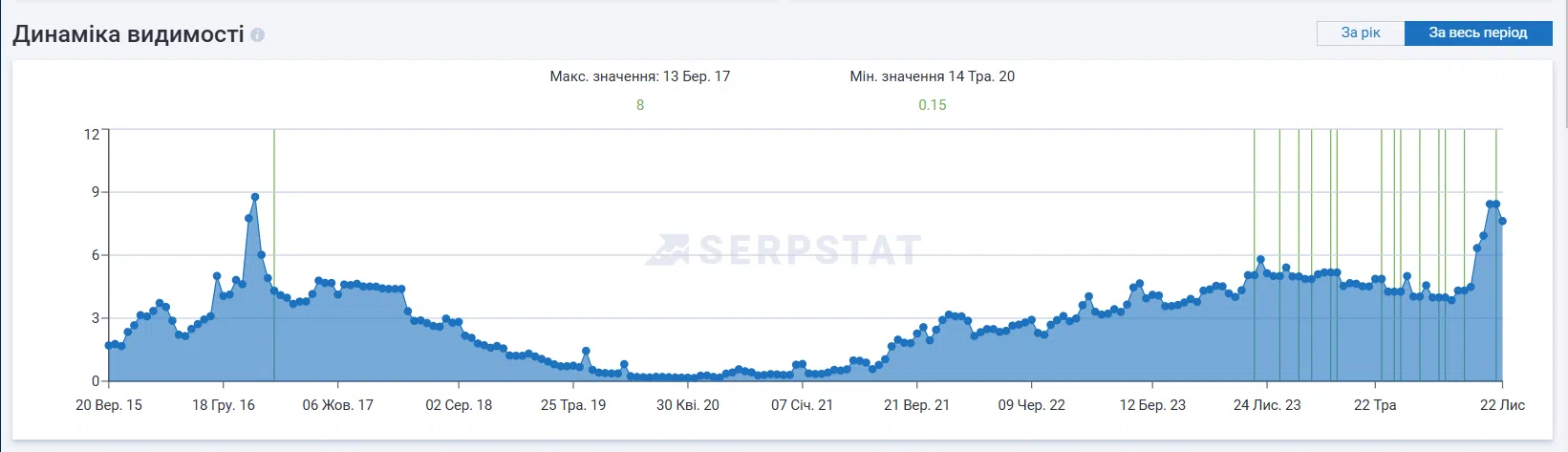
Results (after 5 months)
- Conversion rate +85%
- Visibility: 4.26 → 7.62 (+78%)
Conclusion
System-wide technical optimization, properly implemented SEO filters, and a rethinking of semantics made it possible to quickly shift the focus from non-commercial traffic to targeted queries and increase conversion rates. The project achieved the projected growth in visibility and established a solid foundation for further scaling following the migration to a new CMS.

It's free and takes 2 minutes. There are 1500+ digital agencies in the catalog that are ready to help in the implementation of your tasks. Choose and save up to 30% on time and budget!


About the project
A case study on comprehensive SEO for an established online store, focusing on technical optimization, expanding the site structure, and implementing SEO filters. Despite existing traffic and seasonal demand, conversion rates remained low, and a significant portion of target queries were not being indexed or ranked. We focused on fixing technical errors, reorganizing semantics, and scaling pages to target commercial search queries.
Objectives
- Technical optimization
- Site structure expansion, SEO filters, and on-page optimization
- Increase organic traffic
- Increase conversion rate
- Rank priority keywords in Google’s Top results
Challenges and overall strategy
At kickoff, the site already ranked for some broad queries and attracted organic traffic. Despite peak seasonality, conversions were low, and many of the client’s target keywords didn’t rank at all. Over 90% of traffic was informational and generated almost no sales. The site hadn’t been actively promoted before and had numerous technical issues hampering SEO: duplicate pages, incorrectly implemented pagination, too many low-value pages indexed in Google, misconfigured language versions, and more.
We focused on technical SEO, site architecture, and SEO filters. The client also planned to migrate to a new CMS, so we optimized the current site with a view toward smoothly transferring the improved structure.
What we did
Technical optimization
Before active SEO, we ran a comprehensive technical clean-up based on a prior audit to remove ranking blockers. Key actions:
- Configured SEO-friendly (clean) URL
- Resolved technical duplicate pages
- Optimized robots.txt
- Set up auto-generation of sitemap.xml
- Limited indexing for selected low-value pages
- Optimized outbound external links
- Fixed 404 links/pages
- Implemented correct multilingual tags (hreflang)
- Optimized pagination: indexing rules and canonical URLs
- Added Product schema to category pages
- Blocked the development/staging version from indexing
- Implemented and configured SEO filters for priority product categories
Keyword strategy (semantics)
We built the semantic core from scratch. During analysis, we found many high- and mid-volume queries that didn’t rank at all. Some product groups were entirely missing from search results even though categories existed and had products. Most of the existing top rankings were low-volume queries, bringing minimal traffic.
SEO filters
SEO filters are a powerful way to expand an ecommerce site’s reach. Previously, filters were only partially implemented, limiting their usefulness without technical changes. We focused on:
- Static, SEO-friendly URL
- Auto-generated meta tags and H1s with manual override
- A dedicated SEO text block on filtered pages
- Noindex for filter combinations with 2+ parameters
This functionality let us quickly expand select product groups with additional queries. After fully optimizing these pages (SEO copy, meta tags, headings, etc.), mid- and long‑tail queries started ranking in the Top 10 almost immediately.
Content
The site already had SEO texts for core categories, but they didn’t cover the expanded semantic set we proposed. We replaced and continue to update content in order of category priority. Alongside main pages, we’re systematically optimizing filter pages with targeted content to win long- and mid‑tail queries quickly. Content briefs were generated using competitor analysis assisted by AI.
Usability
Because the client had already started a CMS migration and new design before our engagement, we did not run additional usability analysis during this phase.
Link building
Within budget, we strengthened authority for priority pages and categories. Our approach:
- Competitor backlink profile analysis
- Outreach to place anchored editorial links
- Non-anchor links: first 3 months via crowd-marketing, then through directory submissions (based on analysis, submissions produced a stronger impact)
Results (after 5 months)
- Conversion rate +85%
- Visibility: 4.26 → 7.62 (+78%)
Conclusion
System-wide technical optimization, properly implemented SEO filters, and a rethinking of semantics made it possible to quickly shift the focus from non-commercial traffic to targeted queries and increase conversion rates. The project achieved the projected growth in visibility and established a solid foundation for further scaling following the migration to a new CMS.