
Promotion of an online store for a children's furniture manufacturer
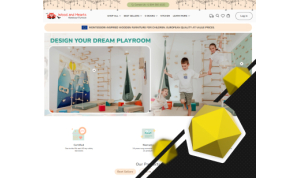
Online store selling children's products made from natural wood. These products are not just toys, but special slides, balance boards, swings, and furniture created using Montessori technology for early childhood development.
Initial data
| Initial traffic | 616 |
| Website conversion | 0,78% |
| CMS website | SHOPIFY |
| Promotion region | USA |
Work objectives
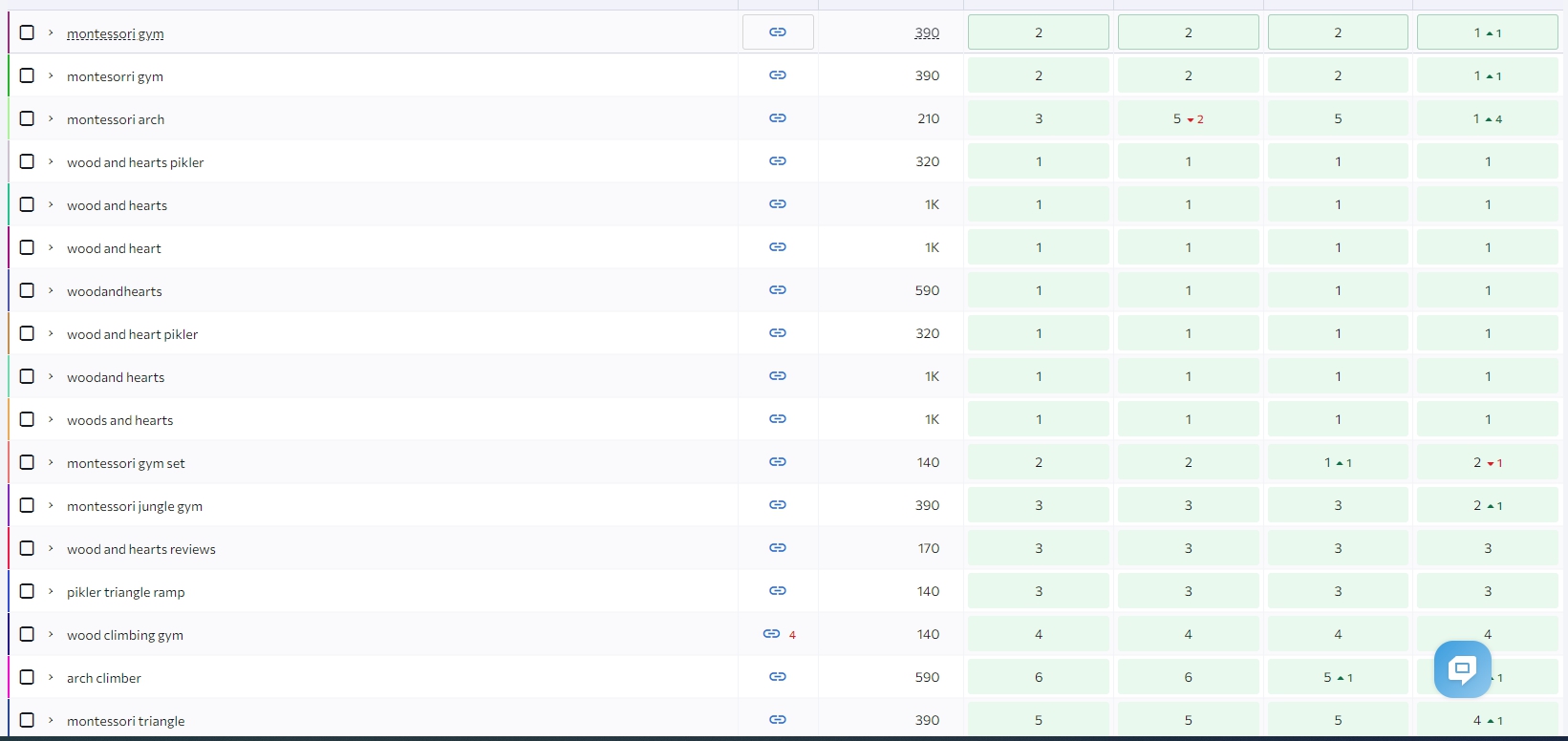
- Bringing high-frequency queries into the top 5
- Increasing organic traffic
- Improving website usability
- Increasing website conversion
- Working with brand reputation
Overall strategy
Promoting this site was, on the one hand, fairly standard, but on the other hand, there were some difficulties due to the very limited number of products and the limited functionality of the admin panel. The site was built on Shopify. It is a popular platform, but the admin panel is quite limited in terms of editing options. Therefore, we had to come up with non-standard solutions for standard things.
The main areas of work were:
- Technical optimization (as far as possible).
- Internal anchor linking between products and categories.
- Semantics and page optimization for queries and structure expansion.
- Creation of new pages for low-frequency queries.
- Updating information content and optimizing it for queries.
- Refinement of the mobile version to increase conversion.
- Increasing link mass to support and grow target keywords.
What was done
Semantics
As I mentioned above, this project has a very limited range of products, so it is simply impossible to collect a large amount of semantics. But before the work on the site, there were literally two categories in which products were arranged chaotically. After the structure was created correctly, there were slightly more landing pages. The structure was created based on the collected semantics.
There was also a difficulty in that some queries that were patented could not be used in the main semantics. And it is simply not possible to name products using this word. Therefore, at first, we had to use this word very “carefully.”
Content
Before we started promoting content optimized for search queries, there was no content on the site at all. Therefore, the texts for the website were written from scratch. The niche was analyzed, and based on the content of competitors, “formulas” for ideal texts were derived: size, keyword density, etc. Text structures were developed for all pages.
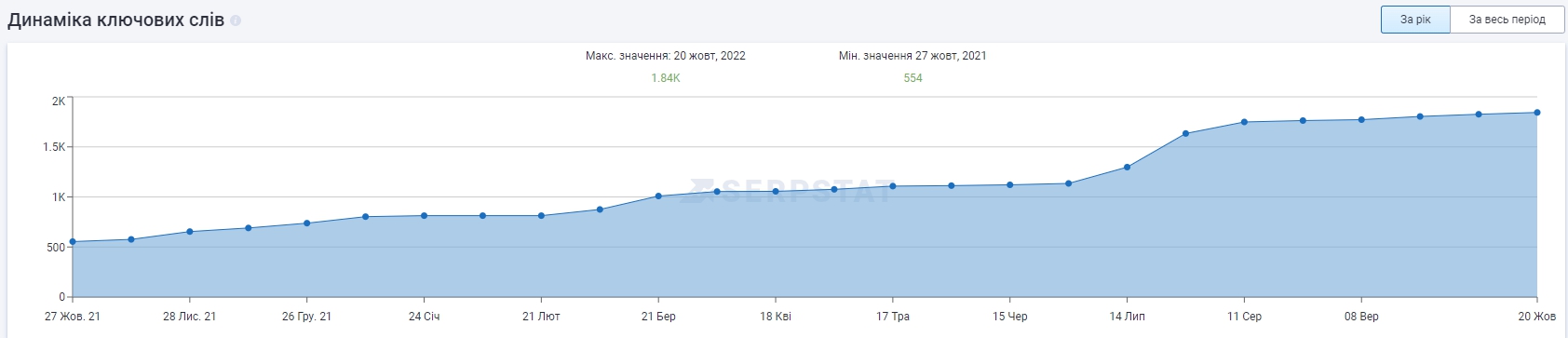
Based on the collected semantics, the texts were optimized for specific lists of keywords. Also, taking into account the semantic core of the site, the most relevant metadata was written using USP.
The displayed product name was also slightly changed in order to increase the occurrence of keywords on the page and at the same time avoid overspamming.
Structure expansion
Expanding the structure for this project was simply necessary, as the site had only two categories, which could not cover all the queries that needed to be targeted for this site. Therefore, we collected as much semantics as possible. And then, based on the product range, the broadest possible structure was formed, which had to be as simple as possible so as not to complicate the search process for regular customers.
Since there could be quite a few keywords used to search for this site, and it would be impossible to assign them to category pages, it was decided to promote some of the queries through the blog. That is why so many articles are written specifically for the blog.
Implementation of micro-markup
In order to expand snippets in search results and increase their click-through rate (CTR), it was necessary to implement micro-markup. In essence, this will increase traffic even without changing the positions of queries. Several micro-markups were taken as a basis, which can expand SERP results and have the maximum impact on CTR:
- Product;
- AgregateRating;
The implementation of these micro-markups affected traffic to the products themselves. Very often in this niche, a person does not immediately land on the category or home page, but on the product page. And by improving the appearance of the product snippet as much as possible, you can get more clicks on the products themselves, when traffic is most likely to convert.
Link profile
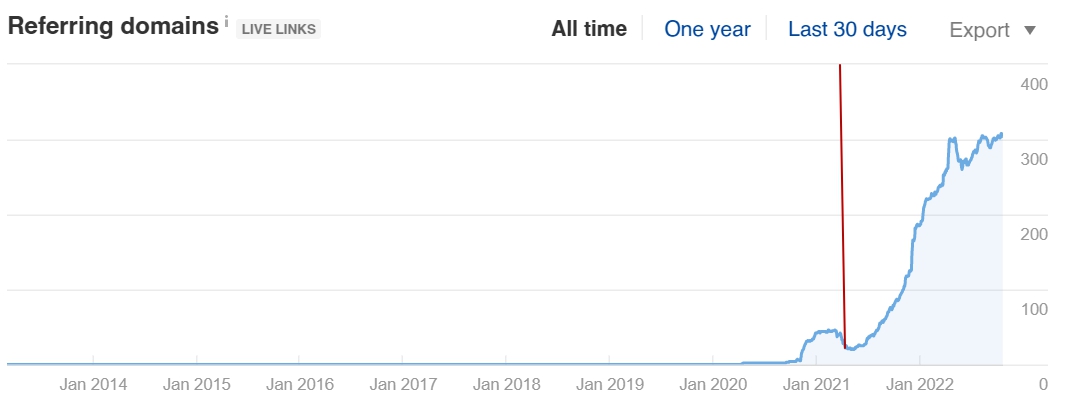
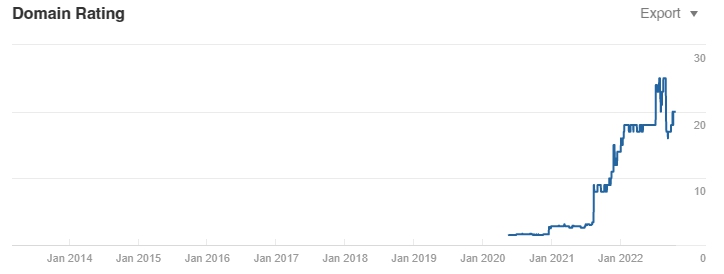
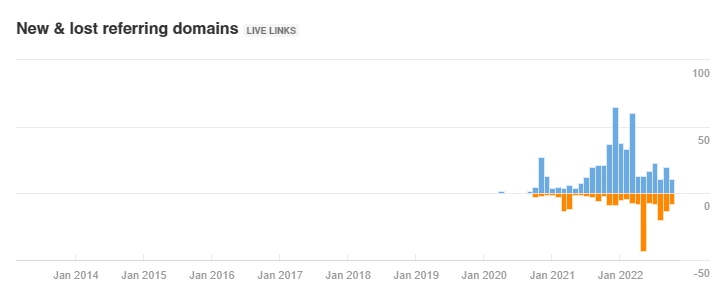
At the start of the project, the site's link profile was quite low and continuing to decline, which, accordingly, affected the site's ranking. Since competitors had fairly high link profile metrics, it was decided to actively develop the control profile, but with a minimal likelihood of receiving penalties for control cheating.
An analysis of competitors was conducted and the volume of link purchases was determined. The necessary “ideal” ratio of anchor and non-anchor links was also calculated to minimize potential penalties (there were fears of penalties due to the high price of the domain name and the young age of the site — the client would not want to switch to another domain).
Results
| Metrics | At the beginning of work | After 6 months | Difference |
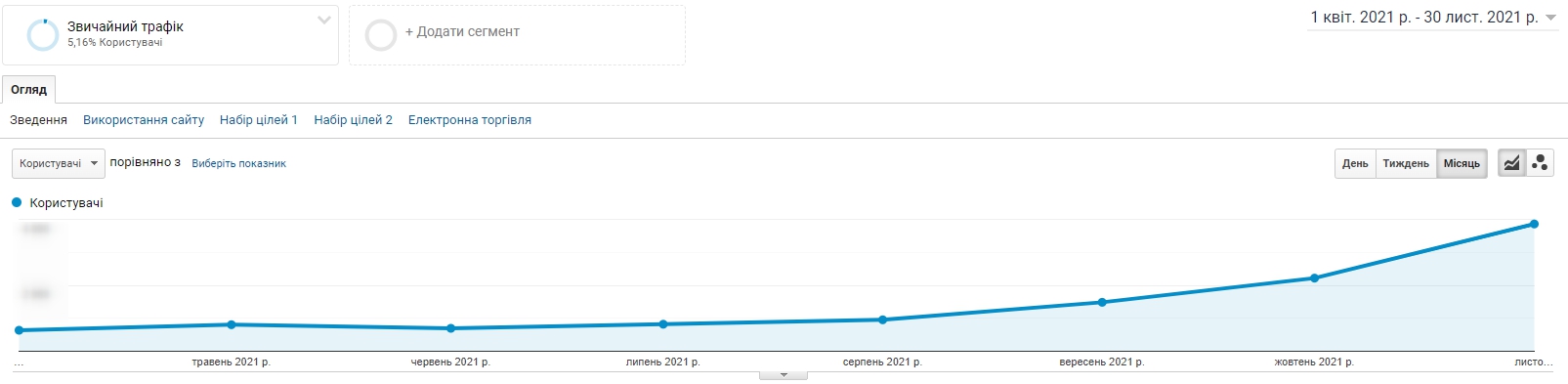
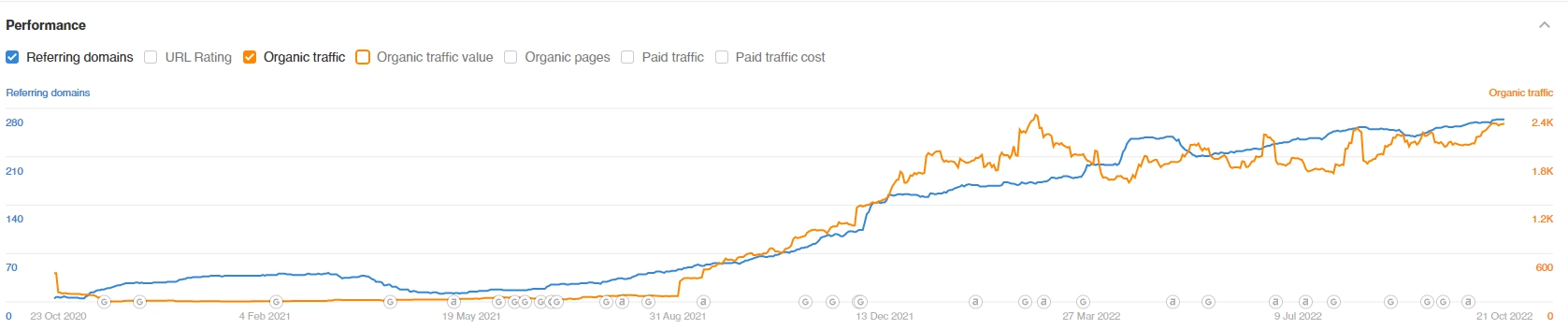
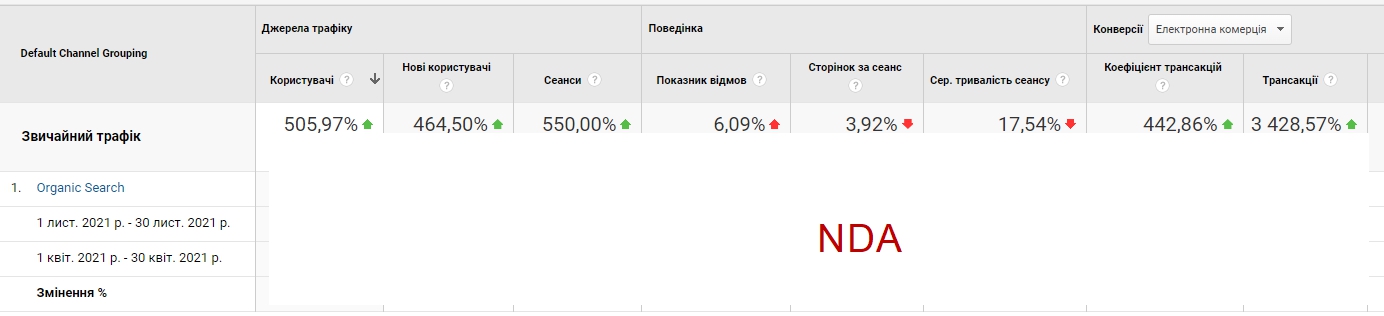
| Traffic | 616 | 3902 | +633% |
| Website conversion | 0,78 | 4,23 | +500% |
| Number of sales | NDA | NDA | +3428% |
It's free and takes 2 minutes. There are 1500+ digital agencies in the catalog that are ready to help in the implementation of your tasks. Choose and save up to 30% on time and budget!



Online store selling children's products made from natural wood. These products are not just toys, but special slides, balance boards, swings, and furniture created using Montessori technology for early childhood development.
Initial data
| Initial traffic | 616 |
| Website conversion | 0,78% |
| CMS website | SHOPIFY |
| Promotion region | USA |
Work objectives
- Bringing high-frequency queries into the top 5
- Increasing organic traffic
- Improving website usability
- Increasing website conversion
- Working with brand reputation
Overall strategy
Promoting this site was, on the one hand, fairly standard, but on the other hand, there were some difficulties due to the very limited number of products and the limited functionality of the admin panel. The site was built on Shopify. It is a popular platform, but the admin panel is quite limited in terms of editing options. Therefore, we had to come up with non-standard solutions for standard things.
The main areas of work were:
- Technical optimization (as far as possible).
- Internal anchor linking between products and categories.
- Semantics and page optimization for queries and structure expansion.
- Creation of new pages for low-frequency queries.
- Updating information content and optimizing it for queries.
- Refinement of the mobile version to increase conversion.
- Increasing link mass to support and grow target keywords.
What was done
Semantics
As I mentioned above, this project has a very limited range of products, so it is simply impossible to collect a large amount of semantics. But before the work on the site, there were literally two categories in which products were arranged chaotically. After the structure was created correctly, there were slightly more landing pages. The structure was created based on the collected semantics.
There was also a difficulty in that some queries that were patented could not be used in the main semantics. And it is simply not possible to name products using this word. Therefore, at first, we had to use this word very “carefully.”
Content
Before we started promoting content optimized for search queries, there was no content on the site at all. Therefore, the texts for the website were written from scratch. The niche was analyzed, and based on the content of competitors, “formulas” for ideal texts were derived: size, keyword density, etc. Text structures were developed for all pages.
Based on the collected semantics, the texts were optimized for specific lists of keywords. Also, taking into account the semantic core of the site, the most relevant metadata was written using USP.
The displayed product name was also slightly changed in order to increase the occurrence of keywords on the page and at the same time avoid overspamming.
Structure expansion
Expanding the structure for this project was simply necessary, as the site had only two categories, which could not cover all the queries that needed to be targeted for this site. Therefore, we collected as much semantics as possible. And then, based on the product range, the broadest possible structure was formed, which had to be as simple as possible so as not to complicate the search process for regular customers.
Since there could be quite a few keywords used to search for this site, and it would be impossible to assign them to category pages, it was decided to promote some of the queries through the blog. That is why so many articles are written specifically for the blog.
Implementation of micro-markup
In order to expand snippets in search results and increase their click-through rate (CTR), it was necessary to implement micro-markup. In essence, this will increase traffic even without changing the positions of queries. Several micro-markups were taken as a basis, which can expand SERP results and have the maximum impact on CTR:
- Product;
- AgregateRating;
The implementation of these micro-markups affected traffic to the products themselves. Very often in this niche, a person does not immediately land on the category or home page, but on the product page. And by improving the appearance of the product snippet as much as possible, you can get more clicks on the products themselves, when traffic is most likely to convert.
Link profile
At the start of the project, the site's link profile was quite low and continuing to decline, which, accordingly, affected the site's ranking. Since competitors had fairly high link profile metrics, it was decided to actively develop the control profile, but with a minimal likelihood of receiving penalties for control cheating.
An analysis of competitors was conducted and the volume of link purchases was determined. The necessary “ideal” ratio of anchor and non-anchor links was also calculated to minimize potential penalties (there were fears of penalties due to the high price of the domain name and the young age of the site — the client would not want to switch to another domain).
Results
| Metrics | At the beginning of work | After 6 months | Difference |
| Traffic | 616 | 3902 | +633% |
| Website conversion | 0,78 | 4,23 | +500% |
| Number of sales | NDA | NDA | +3428% |