
SEO of an online store for PPP, fertilizers, and seeds
About the Project
The agricultural niche is one of the most challenging for SEO: high competition, similar products, thousands of duplicate pages, and demanding users. We took on a website with a four-year history and average performance metrics and systematically guided it toward stable growth.
The work combined technical optimization, in-depth semantic analysis, catalog expansion, content strategy, usability improvements, and link building.
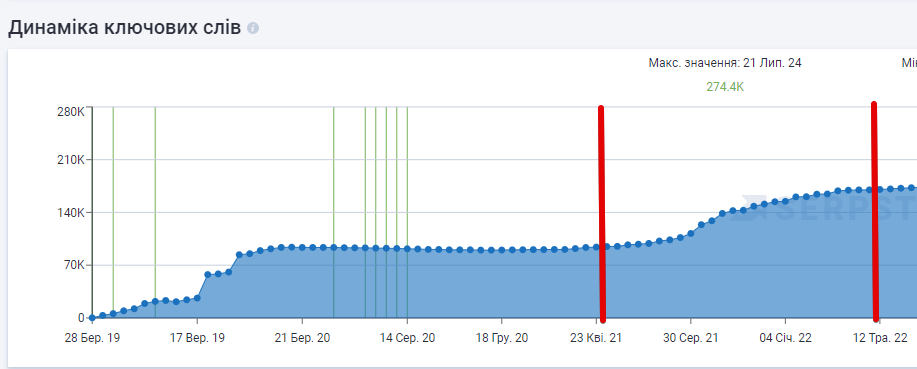
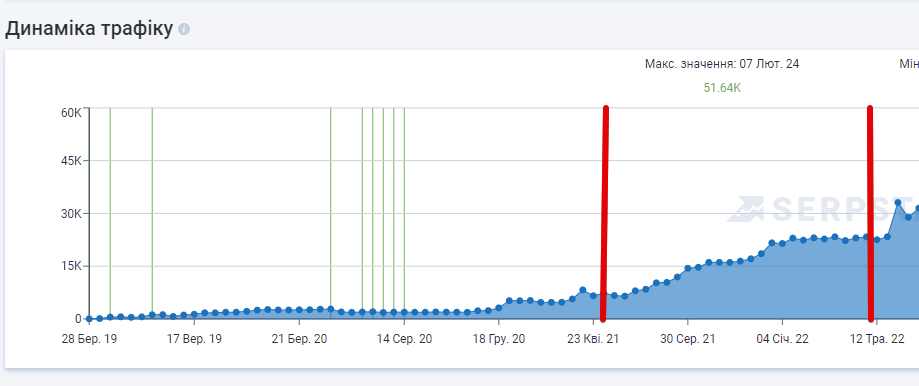
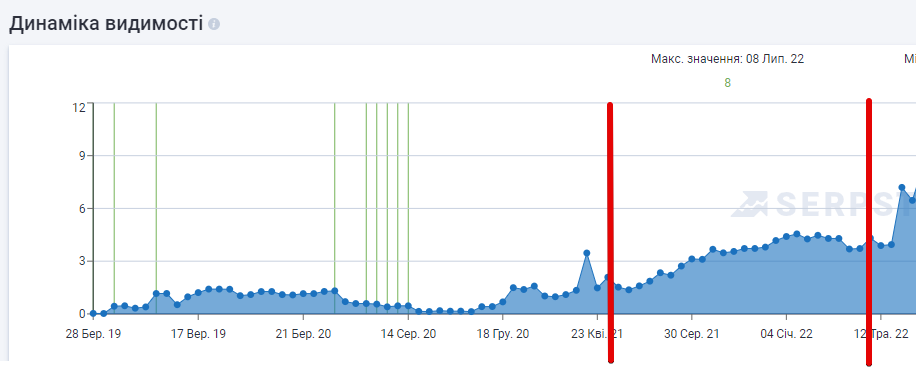
Over 14 months, the website saw a significant increase in organic traffic and visibility, as well as improved conversion rates, thanks to a clear strategy and consistent steps.
Project goals
- Run a comprehensive site audit and analyze top competitors in the niche.
- Fully optimize the site technically and improve usability.
- Collect all potential keywords across the niche.
- Expand the site catalog to cover all relevant queries.
- Increase the site’s conversion rate and push priority queries into the top 5.
- Build and strengthen the external link profile.
Key challenges and strategy
The agriculture niche is highly competitive. Classic copywriting and basic technical fixes alone don’t deliver quick wins. To stay in the top 10, the site must be genuinely strong: usable, fast, competitively priced, and better than the competition.
We split the work into two tracks: foundational SEO and personalized site work.
Foundational SEO focused on technical optimization—speed, redirects, duplicates, indexing, etc. With many similar products and categories, the site had numerous duplicates and thin pages. The first priority was to eliminate duplicates, make pages unique, and resubmit them for reindexing.
After resolving core issues, we worked along four streams:
- Structure expansion
- Content optimization (copy, new sections, reviews, etc.)
- Usability improvements
- Link building
What we did
Semantics and site structure
- The existing structure was too small for the site’s scale and wasn’t properly surfaced in navigation, which weakened perceived hierarchy for search engines.
- We expanded the structure—initial coverage was under 20% of the niche—by conducting an extensive primary semantic collection to define a new architecture.
- Implemented new categories and rebuilt the navigation menu to expose key pages clearly to both users and crawlers.
- Launched a three-level category system plus SEO filters. Standardized product attributes across all items to ensure the filters worked correctly.
- Optimized product names to capture broader keyword coverage.
Goal: rank across all query types—from head terms to ultra-long-tail—via category hierarchy, product naming, and SEO filters.
Content
- A single static text and basic meta tags per page weren’t enough. We needed dynamic content to fuel continuous indexing and support crawl budget, while also improving UX and internal linking.
- Wrote standard SEO copy, then enhanced category pages with table-style blocks highlighting priority and popular products that update dynamically to keep content fresh.
- Surfaced user reviews on category pages and implemented structured data to enable rich snippets.
- Based content on analysis of top competitors to match or beat coverage of priority keywords.
- Added contextual internal links to related categories to pass internal authority and distribute it properly.
Result: improved indexation and higher rankings for target queries.
Link profile
- In this competitive niche, link acquisition had to be both active and well-structured.
- Performed a deep analysis of the niche and competitors’ backlink profiles.
- Built a strategic link plan aligned with niche norms and natural link patterns.
Mixed approaches:
- High-authority, premium links for the most competitive keywords and qualified referral traffic
- More affordable, technically strong links to grow overall authority
- Organic crowd and directory citations for brand signals and no-anchor growth
Outcome: an effective, cost-efficient link strategy that supported steady growth.
Results
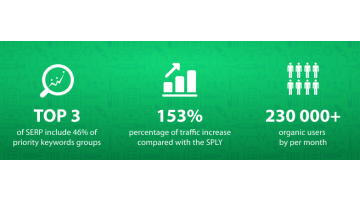
- Visibility (Serpstat): 1.48 → 4.32 (+292%)
- Organic traffic: 6,576 → 23,320 (+355%)
- Conversion rate: +37%
Conclusion
In the highly competitive agricultural niche, results can only be achieved through a comprehensive approach: from technical “hygiene” and proper structure to dynamic content blocks and well-planned link building. A systematic approach and prioritization of tasks have enabled significant growth without drastic shifts in the profile or risks to the domain.

It's free and takes 2 minutes. There are 1500+ digital agencies in the catalog that are ready to help in the implementation of your tasks. Choose and save up to 30% on time and budget!






About the Project
The agricultural niche is one of the most challenging for SEO: high competition, similar products, thousands of duplicate pages, and demanding users. We took on a website with a four-year history and average performance metrics and systematically guided it toward stable growth.
The work combined technical optimization, in-depth semantic analysis, catalog expansion, content strategy, usability improvements, and link building.
Over 14 months, the website saw a significant increase in organic traffic and visibility, as well as improved conversion rates, thanks to a clear strategy and consistent steps.
Project goals
- Run a comprehensive site audit and analyze top competitors in the niche.
- Fully optimize the site technically and improve usability.
- Collect all potential keywords across the niche.
- Expand the site catalog to cover all relevant queries.
- Increase the site’s conversion rate and push priority queries into the top 5.
- Build and strengthen the external link profile.
Key challenges and strategy
The agriculture niche is highly competitive. Classic copywriting and basic technical fixes alone don’t deliver quick wins. To stay in the top 10, the site must be genuinely strong: usable, fast, competitively priced, and better than the competition.
We split the work into two tracks: foundational SEO and personalized site work.
Foundational SEO focused on technical optimization—speed, redirects, duplicates, indexing, etc. With many similar products and categories, the site had numerous duplicates and thin pages. The first priority was to eliminate duplicates, make pages unique, and resubmit them for reindexing.
After resolving core issues, we worked along four streams:
- Structure expansion
- Content optimization (copy, new sections, reviews, etc.)
- Usability improvements
- Link building
What we did
Semantics and site structure
- The existing structure was too small for the site’s scale and wasn’t properly surfaced in navigation, which weakened perceived hierarchy for search engines.
- We expanded the structure—initial coverage was under 20% of the niche—by conducting an extensive primary semantic collection to define a new architecture.
- Implemented new categories and rebuilt the navigation menu to expose key pages clearly to both users and crawlers.
- Launched a three-level category system plus SEO filters. Standardized product attributes across all items to ensure the filters worked correctly.
- Optimized product names to capture broader keyword coverage.
Goal: rank across all query types—from head terms to ultra-long-tail—via category hierarchy, product naming, and SEO filters.
Content
- A single static text and basic meta tags per page weren’t enough. We needed dynamic content to fuel continuous indexing and support crawl budget, while also improving UX and internal linking.
- Wrote standard SEO copy, then enhanced category pages with table-style blocks highlighting priority and popular products that update dynamically to keep content fresh.
- Surfaced user reviews on category pages and implemented structured data to enable rich snippets.
- Based content on analysis of top competitors to match or beat coverage of priority keywords.
- Added contextual internal links to related categories to pass internal authority and distribute it properly.
Result: improved indexation and higher rankings for target queries.
Link profile
- In this competitive niche, link acquisition had to be both active and well-structured.
- Performed a deep analysis of the niche and competitors’ backlink profiles.
- Built a strategic link plan aligned with niche norms and natural link patterns.
Mixed approaches:
- High-authority, premium links for the most competitive keywords and qualified referral traffic
- More affordable, technically strong links to grow overall authority
- Organic crowd and directory citations for brand signals and no-anchor growth
Outcome: an effective, cost-efficient link strategy that supported steady growth.
Results
- Visibility (Serpstat): 1.48 → 4.32 (+292%)
- Organic traffic: 6,576 → 23,320 (+355%)
- Conversion rate: +37%
Conclusion
In the highly competitive agricultural niche, results can only be achieved through a comprehensive approach: from technical “hygiene” and proper structure to dynamic content blocks and well-planned link building. A systematic approach and prioritization of tasks have enabled significant growth without drastic shifts in the profile or risks to the domain.