
Website promotion for a credit broker
About the project
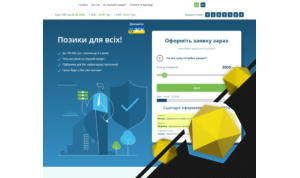
A case study on promoting a microloan financial aggregator in Ukraine. The goal was to systematically expand the site’s semantic scope, scale its structure, and build a high-quality backlink profile to quickly achieve stable organic traffic. The work covered the full SEO cycle: from technical diagnostics to content and link-building strategies.
Initial data
- Site age: 1 year
- Target region: Ukraine
Objectives
- Audit the site’s technical health
- Analyze and refine page structure to improve conversion rates
- Collect niche-specific keyword semantics
- Expand the site’s information architecture
- Build and strengthen the backlink profile
- Drive targeted traffic from priority keywords
Key challenges and strategy
Typical winning playbook in this niche is scale: create as many pages as needed to cover every query cluster. There are 80–100+ non-branded keyword groups on average, not counting brand keywords for microcredit companies.
Our core strategy:
- Collect as many high-volume queries in the niche as possible.
- Build dedicated pages for each cluster and populate them with relevant, useful content.
- Support growth with a strong, diversified link profile for better rankings.
- In parallel, fix technical issues: resolve errors, improve load speed, remove duplicates, and improve indexation.
What we did
Keyword research and clustering (semantics)
- The niche is straightforward in intent but massive in volume, making manual, one-time collection inefficient.
- We first built a broad seed list around marker queries, then, month by month, split it into clusters from higher- to lower-frequency topics and expanded each with precise, long-tail variations.
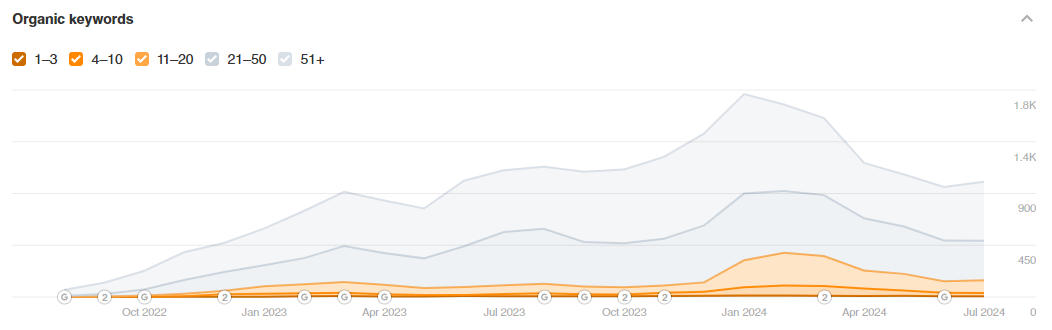
- Critical focus on maximum long-tail “tails,” which brought early traffic while mid- and high-volume terms needed time to reach top positions.
- Tactic: capture initial traffic with low-competition mid-volume long tails; then, combined with strong on-page optimization and links, leverage that momentum to rank for more competitive, higher-volume keywords.
Content
Ranking depended not only on keyword-rich copy but also on page blocks and structural elements that improve UX and engagement.
We added:
- Clear loan terms and eligibility blocks
- Comparison tables and other scannable modules
- Fast-decision elements and lead-capture forms for downstream nurturing
- We analyzed competitors’ content, structure, and keyword usage to define an “ideal text” formula for the niche. Most pages followed a consistent, proven structure.
- After initial optimization, content was continuously updated as offers and participating microcredit organizations changed.
Site structure expansion
As an aggregator, the site required a dual semantic approach:
- Group 1: generic queries (e.g., “money for…,” “loan from 1,000 UAH,” “loan without proof of income”).
- Group 2: branded queries for specific microcredit companies, ensuring the first point of contact was our site.
- Many organizations had weaker sites, allowing us to outrank them on branded queries.
- We built page groups for both intent-based clusters and brand-based clusters.
Backlink profile
-
We audited the site’s links and benchmarked top competitors to set targets for:
- Anchor vs. non-anchor balance
- Editorial/article vs. crowd/forum links
- dofollow vs. nofollow mix - We created a link acquisition strategy and budget based on these ratios.
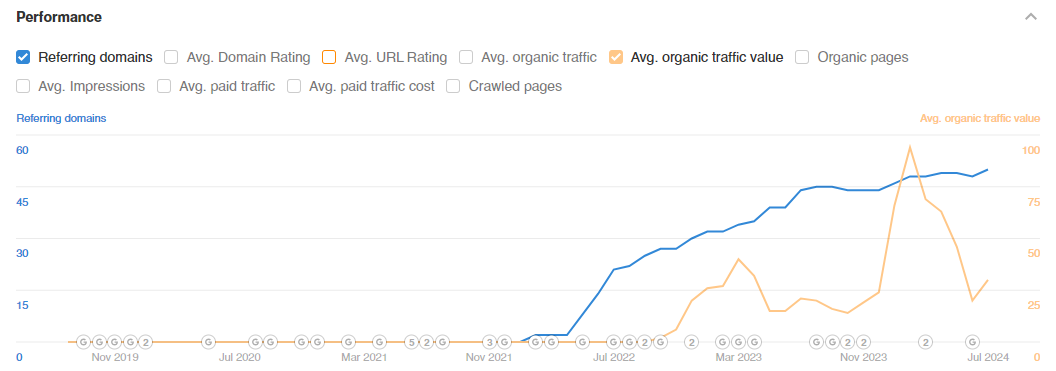
- In this niche, natural links are common due to frequent forum discussions. As a result, most links came from forums, while anchor-rich editorial links were reserved for the most competitive, high-value keywords.
- We prioritized the highest-quality referring domains.
Results
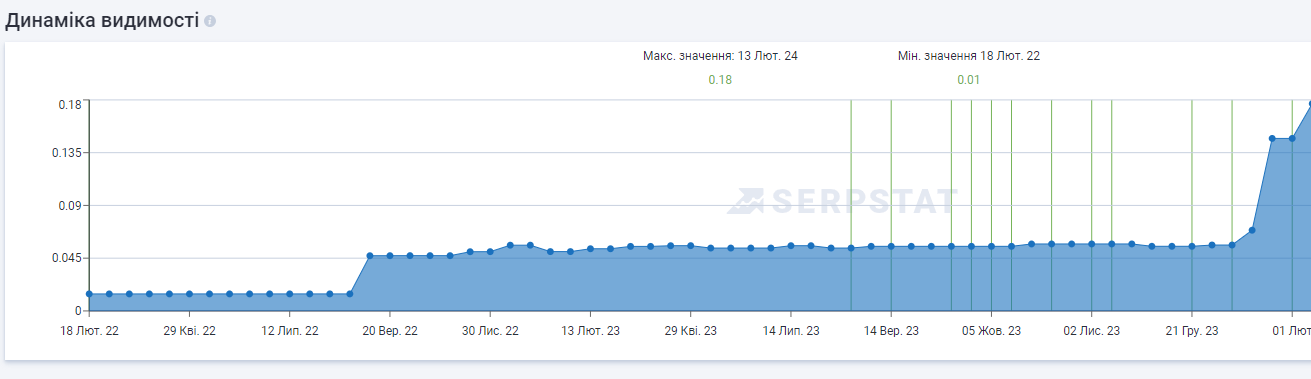
- Visibility: from 0.045 to 0.2 in 6 months (+444%)
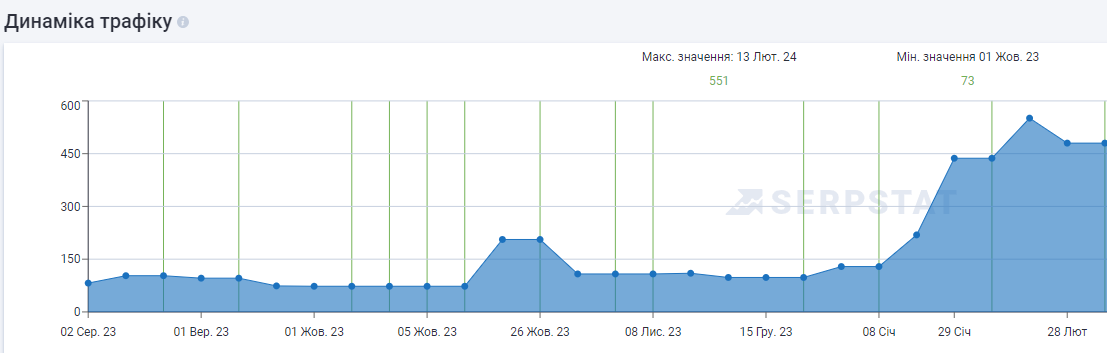
- Organic traffic: from 80 to 550 in 6 months (+675%)
Conclusions
- For niches with complex and broad semantics, the key driver of growth is scaling the page structure with in-depth cluster analysis, including long-tail keywords.
- Content must address user needs: comparison tables, clear terms and conditions, FAQs, and quick CTAs significantly improve organic conversion rates.
- A combination of organic growth and selective outreach creates a balanced backlink profile, accelerating ranking in the top results for mid-tail and long-tail queries.
- Systematic technical updates ensure stable indexing and prevent “dips” during site scaling.
It's free and takes 2 minutes. There are 1500+ digital agencies in the catalog that are ready to help in the implementation of your tasks. Choose and save up to 30% on time and budget!


About the project
A case study on promoting a microloan financial aggregator in Ukraine. The goal was to systematically expand the site’s semantic scope, scale its structure, and build a high-quality backlink profile to quickly achieve stable organic traffic. The work covered the full SEO cycle: from technical diagnostics to content and link-building strategies.
Initial data
- Site age: 1 year
- Target region: Ukraine
Objectives
- Audit the site’s technical health
- Analyze and refine page structure to improve conversion rates
- Collect niche-specific keyword semantics
- Expand the site’s information architecture
- Build and strengthen the backlink profile
- Drive targeted traffic from priority keywords
Key challenges and strategy
Typical winning playbook in this niche is scale: create as many pages as needed to cover every query cluster. There are 80–100+ non-branded keyword groups on average, not counting brand keywords for microcredit companies.
Our core strategy:
- Collect as many high-volume queries in the niche as possible.
- Build dedicated pages for each cluster and populate them with relevant, useful content.
- Support growth with a strong, diversified link profile for better rankings.
- In parallel, fix technical issues: resolve errors, improve load speed, remove duplicates, and improve indexation.
What we did
Keyword research and clustering (semantics)
- The niche is straightforward in intent but massive in volume, making manual, one-time collection inefficient.
- We first built a broad seed list around marker queries, then, month by month, split it into clusters from higher- to lower-frequency topics and expanded each with precise, long-tail variations.
- Critical focus on maximum long-tail “tails,” which brought early traffic while mid- and high-volume terms needed time to reach top positions.
- Tactic: capture initial traffic with low-competition mid-volume long tails; then, combined with strong on-page optimization and links, leverage that momentum to rank for more competitive, higher-volume keywords.
Content
Ranking depended not only on keyword-rich copy but also on page blocks and structural elements that improve UX and engagement.
We added:
- Clear loan terms and eligibility blocks
- Comparison tables and other scannable modules
- Fast-decision elements and lead-capture forms for downstream nurturing
- We analyzed competitors’ content, structure, and keyword usage to define an “ideal text” formula for the niche. Most pages followed a consistent, proven structure.
- After initial optimization, content was continuously updated as offers and participating microcredit organizations changed.
Site structure expansion
As an aggregator, the site required a dual semantic approach:
- Group 1: generic queries (e.g., “money for…,” “loan from 1,000 UAH,” “loan without proof of income”).
- Group 2: branded queries for specific microcredit companies, ensuring the first point of contact was our site.
- Many organizations had weaker sites, allowing us to outrank them on branded queries.
- We built page groups for both intent-based clusters and brand-based clusters.
Backlink profile
-
We audited the site’s links and benchmarked top competitors to set targets for:
- Anchor vs. non-anchor balance
- Editorial/article vs. crowd/forum links
- dofollow vs. nofollow mix - We created a link acquisition strategy and budget based on these ratios.
- In this niche, natural links are common due to frequent forum discussions. As a result, most links came from forums, while anchor-rich editorial links were reserved for the most competitive, high-value keywords.
- We prioritized the highest-quality referring domains.
Results
- Visibility: from 0.045 to 0.2 in 6 months (+444%)
- Organic traffic: from 80 to 550 in 6 months (+675%)
Conclusions
- For niches with complex and broad semantics, the key driver of growth is scaling the page structure with in-depth cluster analysis, including long-tail keywords.
- Content must address user needs: comparison tables, clear terms and conditions, FAQs, and quick CTAs significantly improve organic conversion rates.
- A combination of organic growth and selective outreach creates a balanced backlink profile, accelerating ranking in the top results for mid-tail and long-tail queries.
- Systematic technical updates ensure stable indexing and prevent “dips” during site scaling.