
Search engine optimization for a printing company website
The client, a regional printing house with a long history, came to us with an urgent problem: after deleting their blog, their organic traffic and search engine rankings plummeted. We focused on restoring lost visibility, returning a stable flow of requests, and laying the foundation for further growth in priority commercial queries.
Objectives
- Increase sales
- Grow organic traffic
- Promote priority queries
Challenges and overall strategy
The client came to us with a clear problem: a sharp drop in organic traffic and rankings after the blog was removed from the site. Previously, the blog played a key role in the site’s architecture: through internal linking, it supported rankings for priority service pages. Once it was deleted, traffic fell abruptly, and so did the number of print service inquiries.
The client’s primary goal was to win back lost traffic, restore search visibility, and ultimately boost leads from potential customers.
Before our engagement, the print shop’s site hadn’t been promoted systematically. At kickoff, we ran an audit and found a range of issues. Technically, the site had numerous errors requiring immediate fixes—so we produced a detailed technical specification for developers. From an SEO standpoint, the basics were there but needed substantial work. The site structure was underdeveloped, the keyword set outdated, and meta tags and on-page copy no longer aligned with user intent. All of this hindered effective search rankings.
After analyzing the situation, we approved a comprehensive strategy addressing both short-term needs (error remediation) and long-term goals (traffic and lead growth).
Main work streams:
- Update the keyword universe. We reviewed and expanded the keyword set, as the previous list didn’t reflect current search trends or audience needs. Broadening the semantics allowed us to capture new niches and attract additional qualified traffic.
- Rework site architecture. The legacy structure didn’t reflect the business’s full potential, so we planned an expansion to cover more queries and improve usability and crawlability.
- Restore the blog. Deleting the blog severely impacted rankings, so we reinstated it with high-quality content and internal linking designed to support key commercial pages.
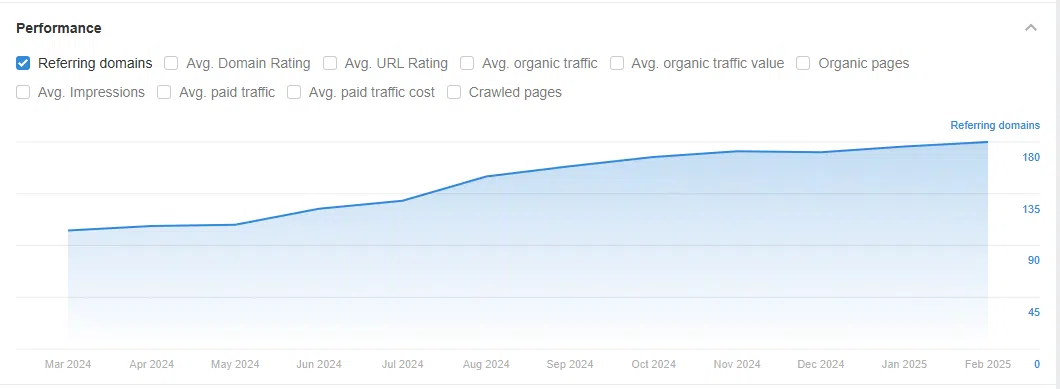
- Strengthen the link profile. To build authority, we launched link acquisition via outreach (relevant guest posts), crowd marketing (forums and comments), and directory submissions.
- Technical optimization. We focused on error cleanup, speed improvements, fixing broken links, and other technical enhancements to form a solid foundation for growth.
What we did
Technical optimization
The site runs on a custom CMS, which complicated some tasks but wasn’t a blocker. We started with an audit in Screaming Frog and fixed critical site issues. We also validated pages via code validators and addressed technical shortcomings. Special attention went to page speed optimization to improve UX and search performance. We refined robots.txt to guide indexation properly and set up automatic XML sitemap generation to facilitate crawling. After a competitor review, we added new on-page content blocks to better present the print shop’s services.
Semantics and rankings
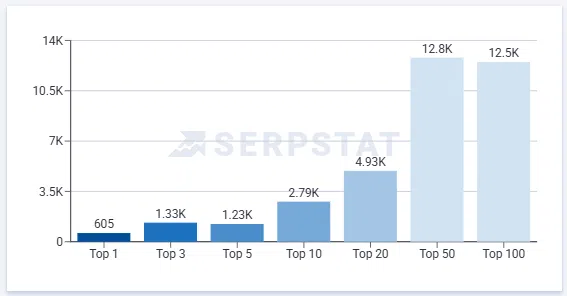
At kickoff, the site ranked for about 32,000 keywords—mostly informational queries from the former blog, plus some commercial terms. The client had a partial keyword set; we used it as a base, refreshed semantics on existing pages, and began expanding. We focused on high- and mid-volume queries to drive qualified traffic. Priority head terms like “print shop” and “printing services” were highly competitive, requiring meticulous content and link work.
Site structure
The site had a shallow structure—one click from the homepage to a service page. There were no categories or subcategories. While simple to navigate, it limited our ability to cover all keyword clusters. We accounted for this constraint in the strategy.
Content
We began with competitor content analysis. Based on the findings, we revised existing copy and created new content where needed. We added images with descriptive alt tags to improve indexation and image search visibility. We also introduced FAQ blocks to cover common user questions and capture additional informational intent.
Usability
To improve UX, we added new informational blocks (e.g., print runs and printing specifics). We also implemented conversion elements—a “Consultation” button and a contact form—to simplify user interactions and increase sales.
Structured data
Core structured data was already in place. After adding the FAQ block, we expanded schema markup so search engines could better understand the content and display rich results.
Link profile
Our off-page strategy was guided by competitor analysis. We acquired links through:
- Outreach (quality guest publications)
- Crowd marketing (relevant forum and comment participation)
- Directory submissions (primarily to strengthen the site’s Domain Rating)
This approach steadily increased the site’s authority in search engines.
Results
Promoting a print shop website proved challenging due to a competitive niche and constraints like a compact structure and an incomplete initial keyword set. Despite this, we executed a thorough technical optimization, expanded the semantics, improved content and usability, and reinforced the site with quality backlinks. The work paid off: the site strengthened rankings on key queries and became more user-friendly. This case shows how a systematic SEO approach can deliver results even for compact projects in competitive spaces.
Key metrics for 16 months:
- Organic traffic: 1,360 → 1,576 (+15.88%)
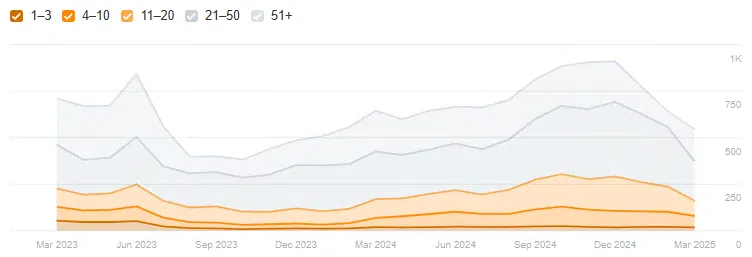
- Keywords in the TOP 10: 166 → 252 (+51.81%)
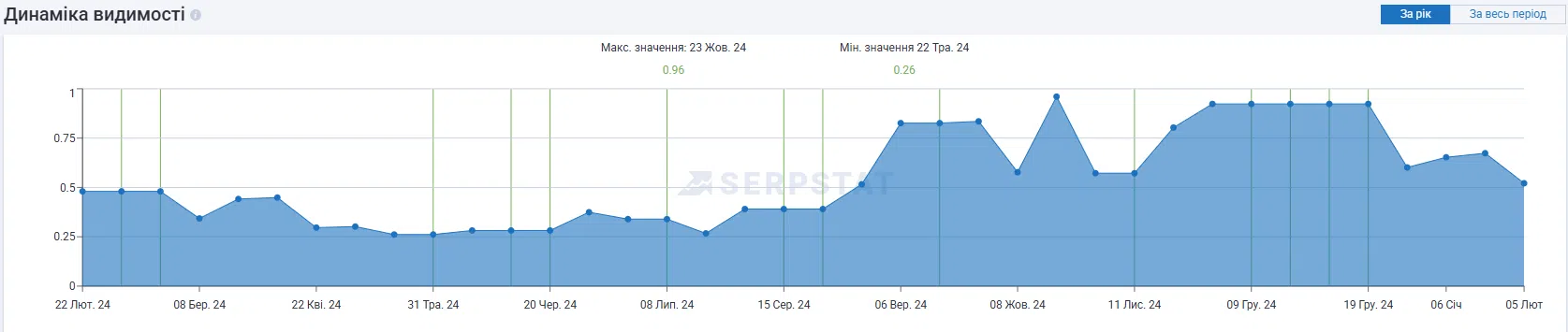
- Visibility: 0.30 → 0.52 (+73.33%)
It's free and takes 2 minutes. There are 1500+ digital agencies in the catalog that are ready to help in the implementation of your tasks. Choose and save up to 30% on time and budget!

The client, a regional printing house with a long history, came to us with an urgent problem: after deleting their blog, their organic traffic and search engine rankings plummeted. We focused on restoring lost visibility, returning a stable flow of requests, and laying the foundation for further growth in priority commercial queries.
Objectives
- Increase sales
- Grow organic traffic
- Promote priority queries
Challenges and overall strategy
The client came to us with a clear problem: a sharp drop in organic traffic and rankings after the blog was removed from the site. Previously, the blog played a key role in the site’s architecture: through internal linking, it supported rankings for priority service pages. Once it was deleted, traffic fell abruptly, and so did the number of print service inquiries.
The client’s primary goal was to win back lost traffic, restore search visibility, and ultimately boost leads from potential customers.
Before our engagement, the print shop’s site hadn’t been promoted systematically. At kickoff, we ran an audit and found a range of issues. Technically, the site had numerous errors requiring immediate fixes—so we produced a detailed technical specification for developers. From an SEO standpoint, the basics were there but needed substantial work. The site structure was underdeveloped, the keyword set outdated, and meta tags and on-page copy no longer aligned with user intent. All of this hindered effective search rankings.
After analyzing the situation, we approved a comprehensive strategy addressing both short-term needs (error remediation) and long-term goals (traffic and lead growth).
Main work streams:
- Update the keyword universe. We reviewed and expanded the keyword set, as the previous list didn’t reflect current search trends or audience needs. Broadening the semantics allowed us to capture new niches and attract additional qualified traffic.
- Rework site architecture. The legacy structure didn’t reflect the business’s full potential, so we planned an expansion to cover more queries and improve usability and crawlability.
- Restore the blog. Deleting the blog severely impacted rankings, so we reinstated it with high-quality content and internal linking designed to support key commercial pages.
- Strengthen the link profile. To build authority, we launched link acquisition via outreach (relevant guest posts), crowd marketing (forums and comments), and directory submissions.
- Technical optimization. We focused on error cleanup, speed improvements, fixing broken links, and other technical enhancements to form a solid foundation for growth.
What we did
Technical optimization
The site runs on a custom CMS, which complicated some tasks but wasn’t a blocker. We started with an audit in Screaming Frog and fixed critical site issues. We also validated pages via code validators and addressed technical shortcomings. Special attention went to page speed optimization to improve UX and search performance. We refined robots.txt to guide indexation properly and set up automatic XML sitemap generation to facilitate crawling. After a competitor review, we added new on-page content blocks to better present the print shop’s services.
Semantics and rankings
At kickoff, the site ranked for about 32,000 keywords—mostly informational queries from the former blog, plus some commercial terms. The client had a partial keyword set; we used it as a base, refreshed semantics on existing pages, and began expanding. We focused on high- and mid-volume queries to drive qualified traffic. Priority head terms like “print shop” and “printing services” were highly competitive, requiring meticulous content and link work.
Site structure
The site had a shallow structure—one click from the homepage to a service page. There were no categories or subcategories. While simple to navigate, it limited our ability to cover all keyword clusters. We accounted for this constraint in the strategy.
Content
We began with competitor content analysis. Based on the findings, we revised existing copy and created new content where needed. We added images with descriptive alt tags to improve indexation and image search visibility. We also introduced FAQ blocks to cover common user questions and capture additional informational intent.
Usability
To improve UX, we added new informational blocks (e.g., print runs and printing specifics). We also implemented conversion elements—a “Consultation” button and a contact form—to simplify user interactions and increase sales.
Structured data
Core structured data was already in place. After adding the FAQ block, we expanded schema markup so search engines could better understand the content and display rich results.
Link profile
Our off-page strategy was guided by competitor analysis. We acquired links through:
- Outreach (quality guest publications)
- Crowd marketing (relevant forum and comment participation)
- Directory submissions (primarily to strengthen the site’s Domain Rating)
This approach steadily increased the site’s authority in search engines.
Results
Promoting a print shop website proved challenging due to a competitive niche and constraints like a compact structure and an incomplete initial keyword set. Despite this, we executed a thorough technical optimization, expanded the semantics, improved content and usability, and reinforced the site with quality backlinks. The work paid off: the site strengthened rankings on key queries and became more user-friendly. This case shows how a systematic SEO approach can deliver results even for compact projects in competitive spaces.
Key metrics for 16 months:
- Organic traffic: 1,360 → 1,576 (+15.88%)
- Keywords in the TOP 10: 166 → 252 (+51.81%)
- Visibility: 0.30 → 0.52 (+73.33%)