
SEO for an automotive e-commerce website
About the project
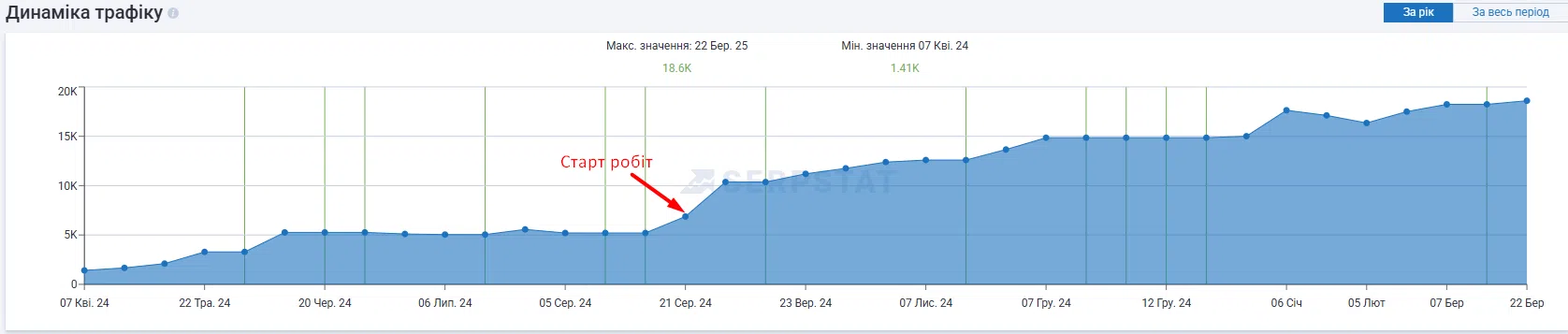
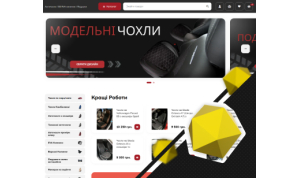
We partnered with an 8-year-old Ukrainian auto parts e-commerce store to unlock organic growth. Starting from 7,046 monthly organic visits and a 0.87% conversion rate, we delivered a focused SEO program across technical cleanup, site architecture, content, and link acquisition over seven months.
Objectives
- Increase conversions and sales
- Rank priority keywords in Google’s top results
- Grow organic traffic
- Expand the site structure and optimize key pages
Challenges and overall strategy
At kickoff, the site already held some rankings. The owner wanted to grow traffic, improve conversion, and outrank competitors on top queries in the niche. The backlink profile was modest compared to competitors, so the owner prioritized this workstream. Some technical fixes had already been completed, so no critical errors remained. We focused on selective enhancements and performance improvements.
What we did
Technical optimization
- Removed technical duplicate pages.
- Configured robots.txt and sitemap.xml for proper indexing.
- Resolved products appearing in multiple categories at once.
- Limited indexing of secondary/low-value pages.
- Optimized outbound links.
- Implemented 301 redirects to consolidate duplicates and preserve traffic.
- Fixed broken links returning 404 errors.
- Implemented multilingual setup with correct hreflang tags.
- Optimized pagination pages.
- Added schema markup to improve search appearance.
- Accelerated indexing via the Google Indexing API.
Semantic core
At the start, there was no structured semantic core, though the site ranked for some target queries. We built a comprehensive set, focusing on high‑volume queries with medium competition. This covered core product categories and attracted more qualified traffic.
Site structure
The structure was extensive but had gaps: car models were buried in non-indexed filters, and it took up to four clicks from the homepage to reach products. We partially resolved this by creating subcategories for popular car models, shortening the path to conversion pages and improving their search visibility.
Content
There was virtually no on-page text. We optimized most category pages from scratch, adding unique copy below product grids with embedded images. This improved SEO and made the pages more useful for users.
Usability
Our UX analysis revealed several issues, but the client declined major changes, so we prioritized other areas.
Structured data
We implemented Open Graph markup across all pages to improve social sharing previews and boost CTR.
Link building
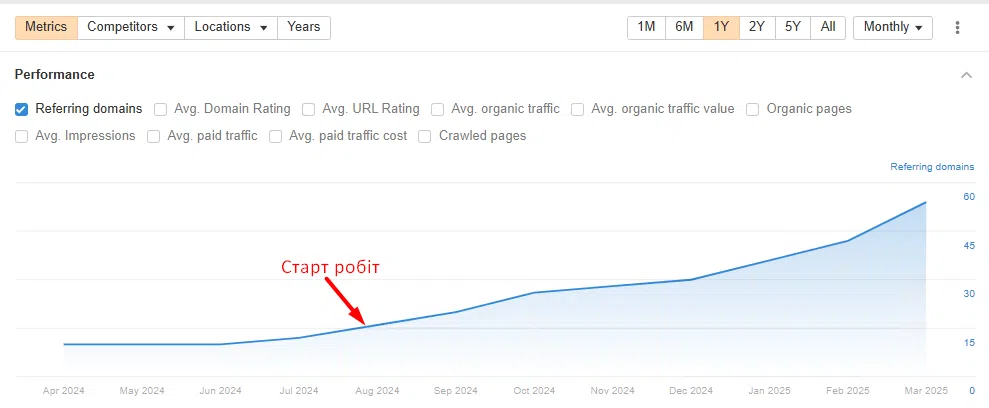
We launched an outreach and crowd-marketing strategy to promote top categories, priority keywords, and the domain overall. This grew a higher-quality backlink profile and strengthened the site’s authority.
Results
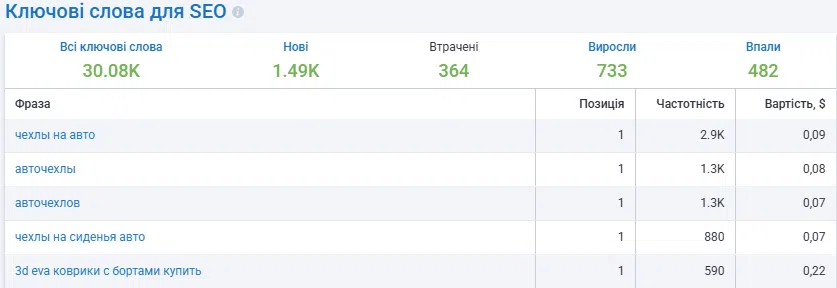
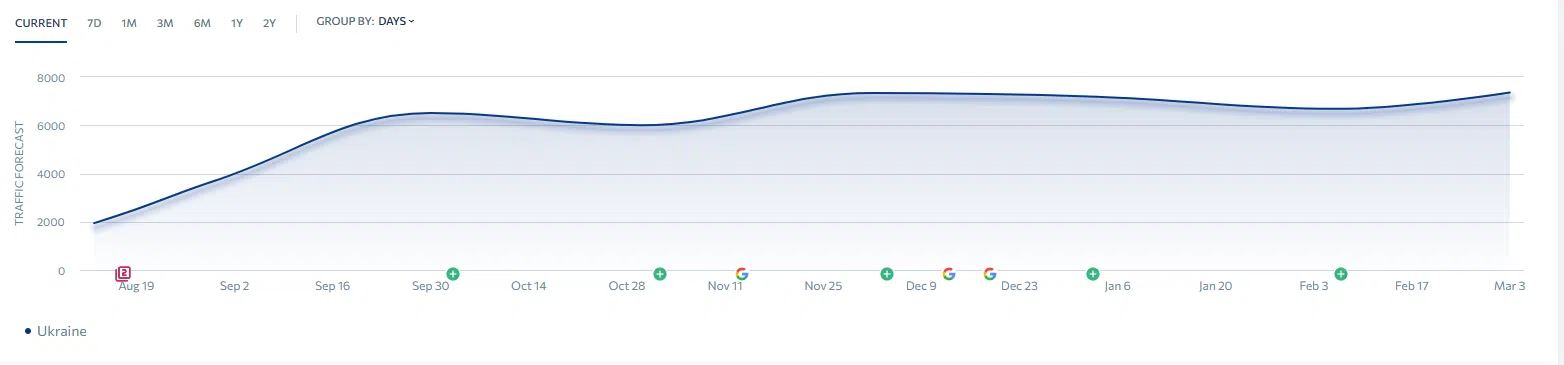
- Organic traffic +56% in 7 months
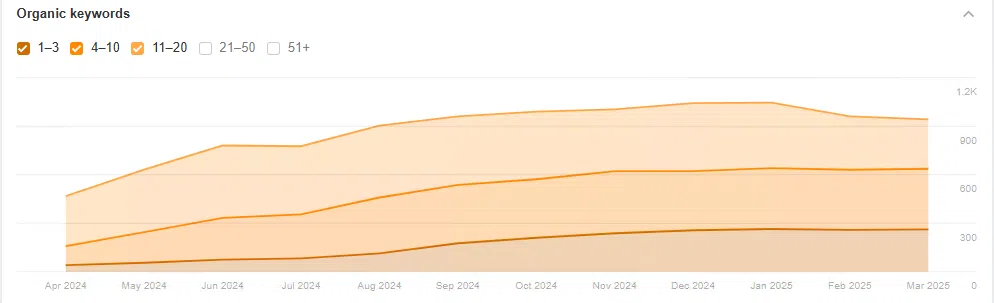
- Keywords in Google Top 10: 766 → 1,760 (+130%)
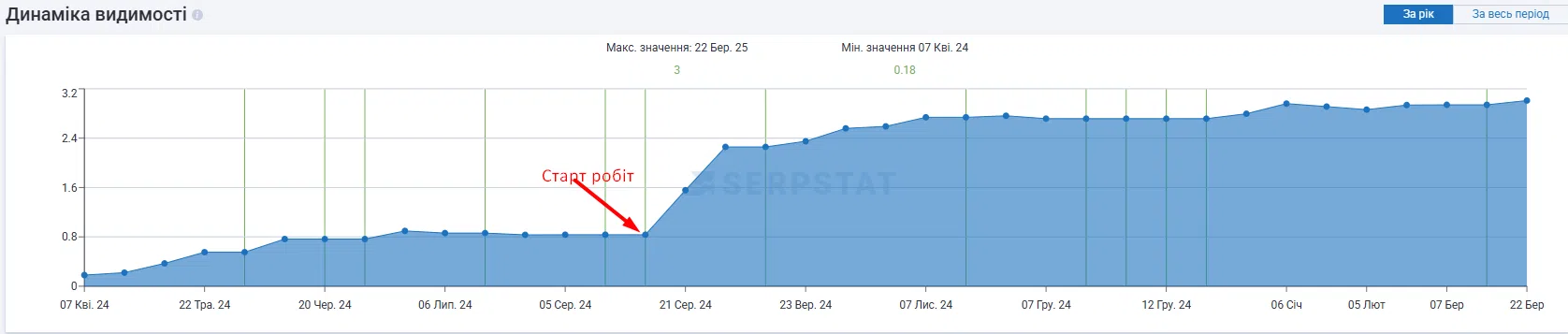
- Visibility: 0.83 → 3.1 (+273%)

It's free and takes 2 minutes. There are 1500+ digital agencies in the catalog that are ready to help in the implementation of your tasks. Choose and save up to 30% on time and budget!


About the project
We partnered with an 8-year-old Ukrainian auto parts e-commerce store to unlock organic growth. Starting from 7,046 monthly organic visits and a 0.87% conversion rate, we delivered a focused SEO program across technical cleanup, site architecture, content, and link acquisition over seven months.
Objectives
- Increase conversions and sales
- Rank priority keywords in Google’s top results
- Grow organic traffic
- Expand the site structure and optimize key pages
Challenges and overall strategy
At kickoff, the site already held some rankings. The owner wanted to grow traffic, improve conversion, and outrank competitors on top queries in the niche. The backlink profile was modest compared to competitors, so the owner prioritized this workstream. Some technical fixes had already been completed, so no critical errors remained. We focused on selective enhancements and performance improvements.
What we did
Technical optimization
- Removed technical duplicate pages.
- Configured robots.txt and sitemap.xml for proper indexing.
- Resolved products appearing in multiple categories at once.
- Limited indexing of secondary/low-value pages.
- Optimized outbound links.
- Implemented 301 redirects to consolidate duplicates and preserve traffic.
- Fixed broken links returning 404 errors.
- Implemented multilingual setup with correct hreflang tags.
- Optimized pagination pages.
- Added schema markup to improve search appearance.
- Accelerated indexing via the Google Indexing API.
Semantic core
At the start, there was no structured semantic core, though the site ranked for some target queries. We built a comprehensive set, focusing on high‑volume queries with medium competition. This covered core product categories and attracted more qualified traffic.
Site structure
The structure was extensive but had gaps: car models were buried in non-indexed filters, and it took up to four clicks from the homepage to reach products. We partially resolved this by creating subcategories for popular car models, shortening the path to conversion pages and improving their search visibility.
Content
There was virtually no on-page text. We optimized most category pages from scratch, adding unique copy below product grids with embedded images. This improved SEO and made the pages more useful for users.
Usability
Our UX analysis revealed several issues, but the client declined major changes, so we prioritized other areas.
Structured data
We implemented Open Graph markup across all pages to improve social sharing previews and boost CTR.
Link building
We launched an outreach and crowd-marketing strategy to promote top categories, priority keywords, and the domain overall. This grew a higher-quality backlink profile and strengthened the site’s authority.
Results
- Organic traffic +56% in 7 months
- Keywords in Google Top 10: 766 → 1,760 (+130%)
- Visibility: 0.83 → 3.1 (+273%)